Thank you for subscribing!
Public institutions cannot afford to be frightened of rocking the multicultural boat, political commentator Rakib Ehsan writes
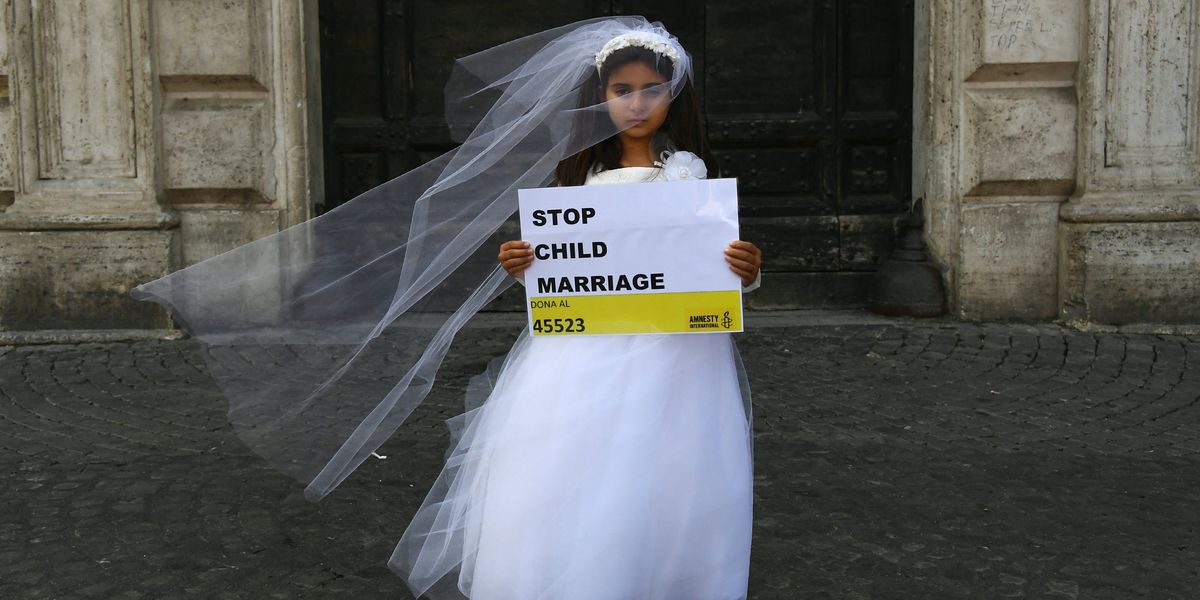
At least 100 children under 12 in 'forced marriage' concerns, shocking new figure
Exposing the dark underbelly of modern multicultural Britain, which is all too often celebrated without question by pro-diversity zealots, it has been revealed that at least 100 children aged 12 years and below have been referred to the UK Government’s forced marriage unit (FMU) in the past five years.
What is especially troubling is that within this pool of children, 27 are up to the age of just five (according to figures obtained by the Press Association through a Freedom of Information [FOI] request).
Under the Anti-social Behaviour, Crime and Policing Act 2014 passed under the Conservative-Liberal Democrat coalition government, forcing someone to marry is a criminal offence across England, Wales, and Scotland.
This includes doing anything intended to cause a child to marry before their eighteenth birthday (irrespective of whether coercion was involved or not).
In England and Wales, the legal minimum age of marriage was raised from 16 to 18 through the Marriage and Civil Partnership (Minimum Age) Act 2022.
Forced marriage is also criminalised in Northern Ireland under the Human Trafficking and Exploitation (Criminal Justice and Support for Victims) Act 2015. Victims are usually female, but a significant proportion are male.
The UK Government has correctly stated that “forced marriage is not a problem specific to one country, religion, or culture”, with the FMU handling cases relating to countries across six continents – reflecting the global nature of the issue.
However, existing data suggests that it is a scourge which disproportionately impacts young adults and children in South Asian communities – especially families which can trace their origins back to the Mirpur district of Pakistan’s Azad Kashmir region.
Indeed, back in 2022, the ‘focus country’ with the highest number of forced-marriage cases was Pakistan – with around half being connected to the country, while one in seven were associated with my country of origin, Bangladesh.
Outside of the UK’s populations of South Asian heritage, forced marriage also affects Gypsy, Roma, and Traveller communities.
However, it largely remains under-reported due to cultural isolation, distrust in public institutions, and the fear of being ostracised by clan-like community structures – or even worse, becoming a victim of honour-based abuse.
One of the leading voices in the fight against forced marriage and honour-based abuse in the UK is Dame Jasvinder Sanghera, who escaped from her family home in the East Midlands city of Derby when aged 14 as she was faced with the possibility of being forced into marriage.
Born into an ultra-conservative Indian Sikh family, Dame Jasvinder has warned of perpetrators – usually parents and other family ‘elders’ – seeking to hide behind accusations of racism and bigotry towards minority cultures, insisting that forced marriage is a clear safeguarding matter.
In what is a firm rejection of multicultural dogma, the charity founder - who received a damehood for her services to victims of child, forced marriage and honour-based abuse – has declared that “cultural acceptance does not mean accepting the unacceptable”.
While the vast majority of forced marriages tend to involve other countries, recent data published by the Home Office has shown that the number of cases with no overseas element has risen in recent years – with 14 per cent falling into this category in 2025 (a sharp increase from the 2023 figure of four per cent).
This suggests that forced marriage in the UK is an increasingly ‘internal’ matter – especially within inward-looking communities which are culturally distanced from the mainstream (if not the same family network who are keen to keep wealth and property within their own biraderi-style clans through cousin-marriage reinforcement).
Statutory services must not be fearful of taking the fight to forced marriage in the UK – our public institutions should reject accusations of racism and ultimately prioritise their duty of care to some of the most vulnerable people in society.
Public institutions cannot afford to be frightened of rocking the multicultural boat – this dehumanising custom, especially when involving young children, has no place on these islands.