Thank you for subscribing!
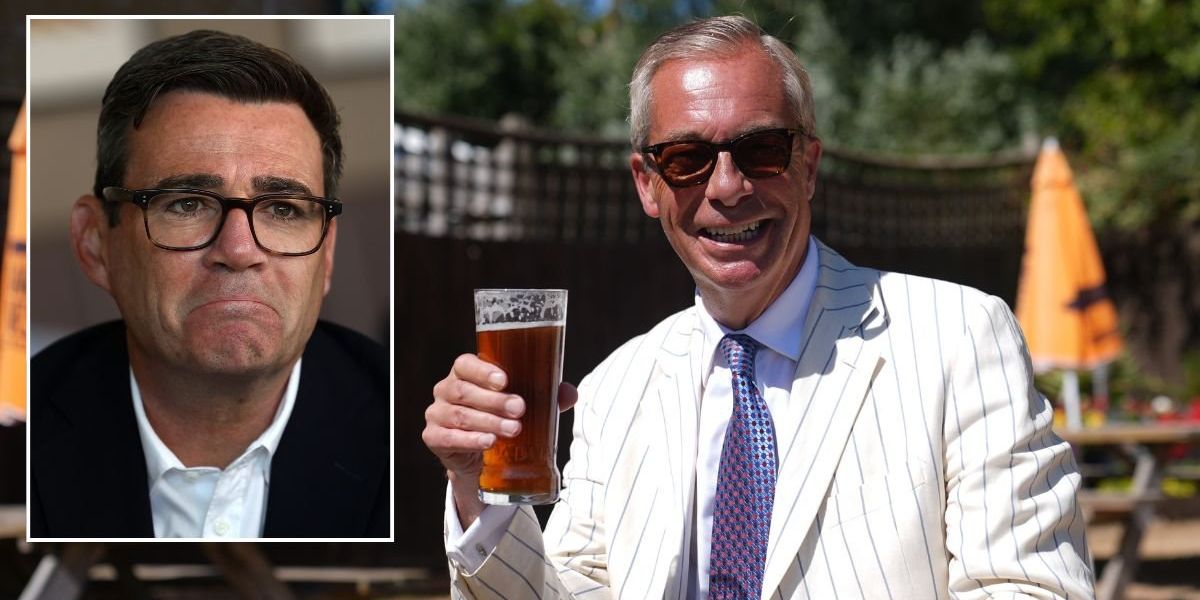
Polling guru Sir John Curtice gives his snap reaction to Nigel Farage's victory in Clacton
With 63 per cent of the vote, Nigel Farage has won the Clacton by-election comfortably.
Even Count Binface's record 27 per cent – secured after a favourable wave of media publicity – left him as much as 36 points behind.
Meanwhile, the 44 per cent turnout – nearly as high as in Runcorn and Gorton & Denton – suggested voters in Clacton did not agree with Mr Farage's opponents that the by-election was a farce.
But in truth, whatever the turnout, Mr Farage's victory was never in doubt.
Given Reform support is still much higher now than then, even if the other main parties had fought the seat, he would likely have won more than half the vote – as indeed a poll conducted during the by-election campaign confirmed.
Doubtless Mr Farage was aware he was certain to win when he decided to precipitate the by-election in the first place.
However, the challenges he will now face on his return to the Commons look more formidable than securing re-election in Clacton.
His victory will not end the various inquiries into the financial support he received before the 2024 election and his party secured during it, let alone the controversy.
But even if the hopes of Reform's political opponents that Mr Farage will be forced to fight a second by-election are not realised, the issue has seemingly already taken its toll.
When, in the wake of the various allegations, Mr Farage announced on July 7 that he was putting himself before the voters of Clacton, support for Reform stood on average at 26 to 27 per cent.
Immediately thereafter, it fell to 24 per cent, the party's lowest standing in more than a year.
There is so far little sign of this drop being significantly reversed.
Irrespective of his popularity in Clacton, Mr Farage has to persuade some of those across the country who were backing his party a few weeks ago that he and Reform are still worthy of their support.
Moreover, he now faces competition for their support from Rupert Lowe's Restore Britain, for whom, like Reform, curbing immigration is a key issue.
The party now has four per cent support in the national polls, much of it seemingly secured at Reform's expense.
Reform can no longer assume there is nowhere else for disenchanted Brexiteers to go.
Meanwhile, Reform now finds the poll lead it has enjoyed for over a year has been snatched from it by Labour, following the improvement in its fortunes in the wake of Andy Burnham's arrival in Downing Street.
Labour's lead is slender – just one point – but it potentially denies Reform some of the oxygen of publicity that comes from being apparent favourites to win the next general election.
But perhaps the biggest headache facing Mr Farage is that there are signs of life once more in the Conservative Party.
With the help of a marked improvement in the personal popularity of its leader, Kemi Badenoch, Tory support has edged up from the 17 per cent to which it fell last September to 20 per cent now.
Consequently, the party is now just four to five points adrift of Reform.
Mr Farage wants Reform to displace the Conservatives as the principal party on the right.
But achieving that objective is now looking like a much more formidable challenge than just a few weeks ago.