Thank you for subscribing!
Ex-diplomat Ameer Kotecha writes for GB News about Labour's sanctions on Israeli settlements
The decision by Ed Miliband and Andy Burnham to impose sanctions on Israeli settlements in the West Bank has already prompted a firestorm.
The Israelis are predictably appalled and have announced severe retaliatory action.
A dozen British political figures have been banned from travelling to Israel.
More importantly, the British personnel at the US-led Gaza coordination centre – at which I spent many days and helped US troops as they measured out the astroturf lawn and erected fold-out tables after Trump announced its creation – have all been booted out.
Further, the British consulate in East Jerusalem has been given 30 days to close itself down.
Meanwhile, the Americans will, in the coming days and weeks, show their displeasure at our decision in a manner we cannot yet predict.
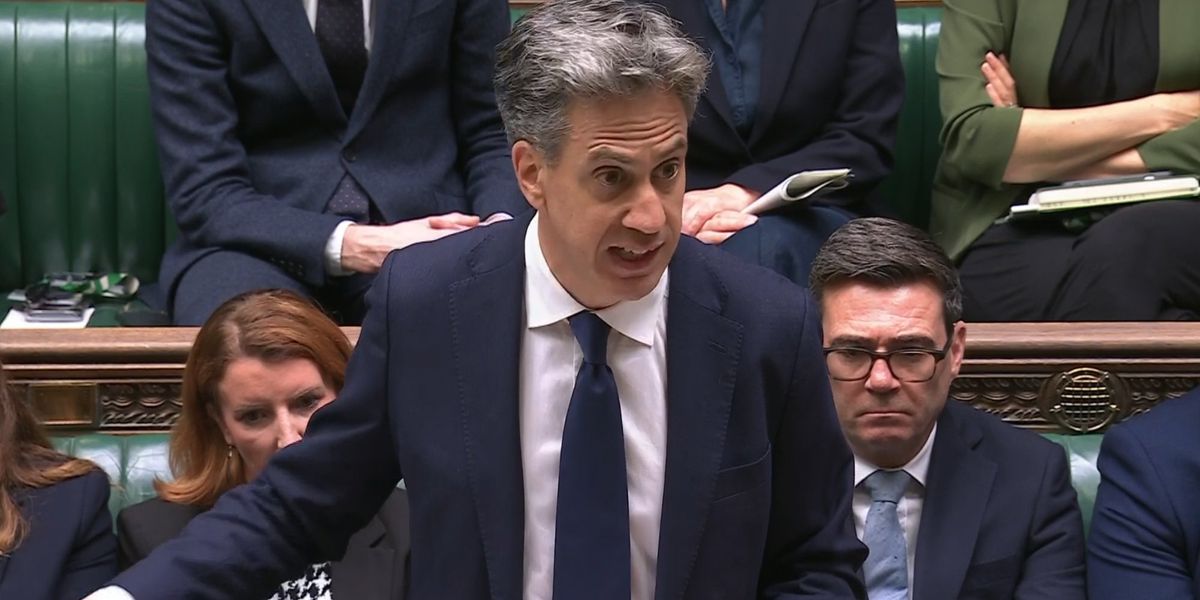
Burnham doubled down on his decision in PMQs yesterday, saying that Britain would "always stand with the underdog".
That is a curious choice of phrase given Israel has historically been surrounded on all sides by states that wish to destroy it.
Mr Burnham also, of course, neglected to mention the pressure from Labour backbenchers and sectarian voters that has been as powerful a driver of this totemic foreign policy decision as any deeply-held moral imperative on the part of the Prime Minister or Foreign Secretary.
Even if the announcement yesterday does come from a place of deep conviction, no one seriously believes that it will do anything to change the reality of the situation on the ground.
It will not stop Israeli settlements being built in the West Bank. It will not stop the E1 settlement, often seen as the most egregious because it would effectively split the West Bank into two, therefore making a Palestinian state a much less viable proposition. It will not stop settler violence.
It could not possibly do any of these things, because West Bank settlements do not rely for their survival on exporting things to the UK.
Tellingly, Mr Miliband refrained even from giving an estimate of the value of trade between the UK and West Bank settlements when he made the announcement. Because there is precious little.
While there is no discernible benefit to our decision, there are real costs: it burns our leverage with the Israelis.
It jeopardises our all-important security and intelligence relationship with the Israelis, collaboration that stops terrorists attacking us in the streets of Britain.
And it opens up a gulf of diverging policy with the Americans, which will be a thorn in the side of our alliance with the US.
It will also – and this is something that presumably Miliband and Burnham do care about – make more difficult our humanitarian assistance to ordinary Gazans, for these aid programmes have largely been coordinated and delivered out of our consulate in East Jerusalem.
There are then real costs: weakened alliances, jeopardised security collaboration, and reduced diplomatic presence.
And for what? For nothing, really, except the chance to show the Israelis how cross we are with them.
For that is the heart of the matter. This is gesture politics, as was the UK's recognition of a Palestinian state back in September last year.
Our crass symbolism will do nothing to reduce settlement building, will do nothing to secure a two-state solution, and will do nothing to find a pathway towards peace between the Israelis and the Palestinians.
The truth is that this is what our foreign policy today has increasingly become: a series of empty gestures, which we fool ourselves into thinking are courageous moral crusades.
Gone is realpolitik; gone is the careful building of alliances and leverage to deploy in pursuit of British interests and turning the dial on international crises. This is not smart diplomacy; it is simply virtue signalling on the world stage.
Ameer Kotecha is CEO of the Centre for Government Reform and was formerly head of Palestinian issues at the British Embassy in Tel Aviv.