Thank you for subscribing!
Both parties should drop their hands before this row over political funding does lasting damage, writes the trade unionist and political commentator
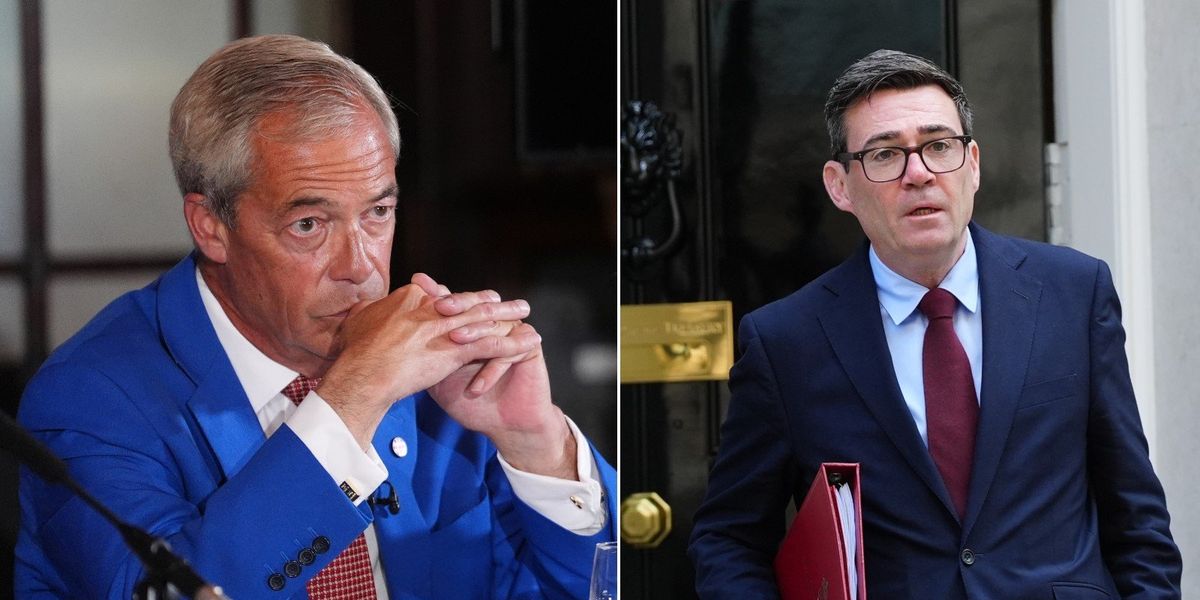
The whole political donations row is turning very toxic. In one corner, Reform UK, soon to be the beneficiary of an eye-watering £72million bounty, pledged by the crypto kings Ben Delo and Christopher Harborne.
In the other, the Labour Government, which argues that such lavish financial gifts debauch our democratic system and show that Farage and co. are stooges of the super-rich.
In a move that seriously raises the temperature, the Government is introducing legislation which may retrospectively make the donations illegal – though the optics of clawing back the money after it had been deposited quite lawfully in Reform's coffers would be pretty dreadful.
In return, Reform has declared that, should it ever form a Government, it will ban Labour from accepting funds, as it does currently to the tune of millions of pounds a year, from its "paymasters" in the trade unions.
But even though the gloves are well and truly off and the stage appears set for an almighty punch-up, it would surely be wise for both parties to drop their hands and turn their backs on this particular fight.
Not merely because each potentially stands to lose a great deal from such a tit-for-tat squabble, but also because there are bigger issues at stake here – namely the right, in a free society, of political parties to seek funds from legitimate sources, and the prerogative of citizens and organisations to pledge their own money to parties whose objectives they share.
If Reform wishes to accept vast sums from crypto kings who have paid all their taxes and are giving their dosh freely, let it do so.
Of course, there are considerable upsides for a party being showered with such generous offerings. But there are downsides, too.
The danger for Reform is that it ends up being seen as a party exclusively for the ruling class and billionaires and thus finds itself unable to develop the type of broad-based appeal – including support from hard-pressed working-class constituencies – that is essential for any party intent on winning power in this country. That is the dilemma the party would be required to navigate.
Equally, if Labour wishes to accept funding from its allies in the unions, it should be at liberty to do so. There is nothing immoral about such an arrangement. After all, the Labour Party was, as the saying goes, "born out of the bowels" of the trade union movement and was created with the express purpose of giving representation in parliament to working men and women.
And let us be clear about one thing: trade union money is the cleanest in politics. That isn't trite rhetoric. I say it as someone who once served on the national executive committee of a trade union and has been an activist in the movement for three decades.
The donations granted to the Labour Party from trade unions are drawn from the small subscriptions of thousands of members, all of whom have chosen to contribute to their union's political fund. These funds are tightly regulated by law, with every union obliged to file a public report each year setting out how the monies have been spent.
Decisions on where donations are directed are made by the union's elected representatives. Moreover, the law permits any member to inspect the accounting records of his or her union, ensuring that no transaction can be hidden.
And whereas there is often no way of knowing what favours business tycoons seek privately from party leaders in return for their donations, the demands of unions are tabled only after internal discussion and debate, and usually through formal policy being adopted democratically – and quite publicly – at the union's annual conference. It is the most honest method of political lobbying.
So the next time you hear talk of trade union "barons" funnelling money to the Labour Party in a shady or undemocratic manner, just remember that unions are subject to the kind of transparency and accountability that simply doesn't apply to big business.
For all its faults, and while there is certainly room for greater openness, the current system of political parties being funded by voluntary donations is, in the end, the most preferable arrangement. We should be slow to dismantle it.
The last thing this country needs right now is a move towards state funding of political parties. At a time when the establishment parties are held in such low regard by the voters, and faith in the entire political system is wearing so thin, such a step would be controversial in the extreme.
If a party is not able to attract sufficient support that people are willing to give it money to help advance shared beliefs and objectives, then frankly it shouldn't be in the business of politics, and it certainly has no right to expect public money to help it stay alive. But if senseless and unnecessary rows over donations keep breaking out, that is where we may end up.
The Trades Union Congress (TUC) decided against demanding a legal cap on donations to political parties at its annual get-together in Brighton this week. Delegates plainly understood that such a demand might backfire on their movement and inadvertently weaken its links with Labour and its influence over party policy.
It was a wise call. And one that politicians across the divide, for all their desires to place a financial stranglehold on their opponents, would do well to follow.