Thank you for subscribing!
The sanctions have triggered one of the most serious diplomatic disputes between Britain and Israel in decades
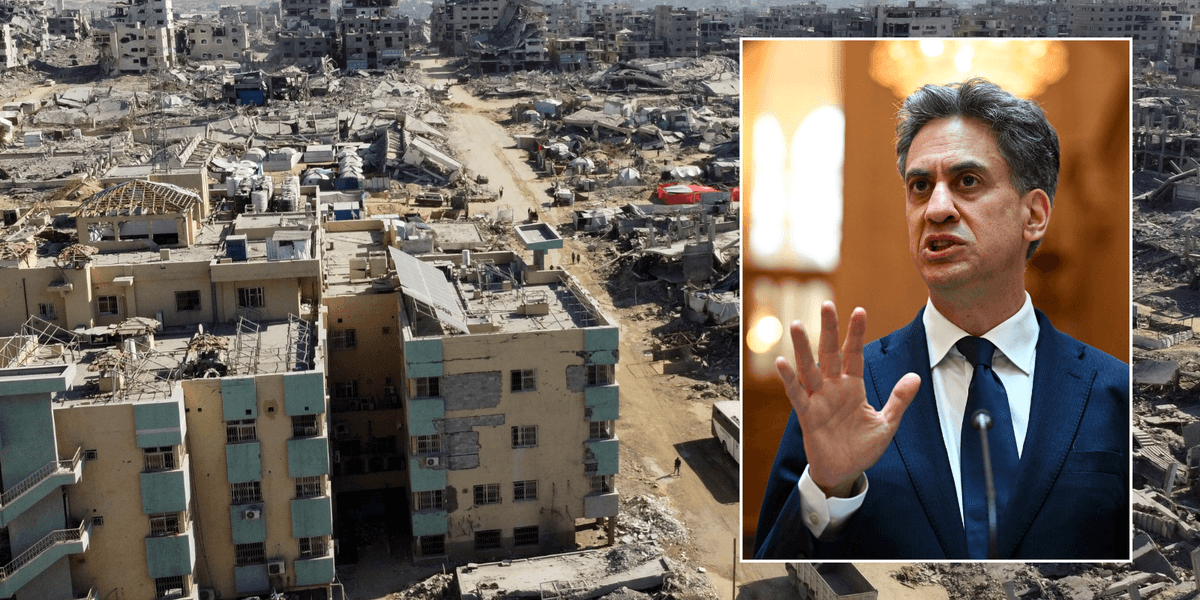
Israel has accused Ed Miliband of imposing sanctions on companies linked to illegal West Bank settlements partly to win back voters who have deserted Labour for the Greens.
The Foreign Secretary earlier announced Britain would introduce measures against businesses involved in settlement activity, a day before he was due to hold further talks with Gideon Sa’ar, Israel’s foreign minister, about the expansion of settlements.
The decision has since triggered one of the most serious diplomatic disputes between Britain and Israel in decades.
Israel responded by closing the British consulate in Jerusalem, a move that British officials say could significantly hamper the UK’s ability to operate in the West Bank and assist British personnel during regional crises.
Critics of the sanctions claim Mr Miliband acted partly to strengthen Labour’s position on the Israeli-Palestinian conflict, ahead of the party’s annual conference and a forthcoming by-election in Holborn and St Pancras.
The Green Party is contesting Sir Keir Starmer's former seat with leader Zack Polanski as its candidate.
Israeli and British diplomatic sources told The Telegraph that Mr Miliband had moved ahead with the sanction measures, despite private negotiations over settlement construction.
During a first conversation on August 11, Mr Sa’ar reportedly told the Foreign Office that Israel would not proceed with construction of the E1 development before the country’s elections on Oct 27.
The proposed project, which envisages about 3,400 homes, has attracted international concern because of its location and potential impact on the territorial continuity of the West Bank.
Israeli ministers have themselves described the development as a threat to the viability of a future Palestinian state.
Mr Miliband subsequently said he had raised concerns about rising settler violence and settlement expansion.
The ministers agreed to continue discussions in a further meeting nine days later.
That conversation was cancelled after Mr Miliband told MPs that Britain would proceed with sanctions, citing Israeli tenders for construction contracts in the E1 area.
Diplomatic sources argued that the move effectively ended an opportunity for Britain to negotiate directly with the Israeli government over settlement activity.
The sanctions have also faced criticism in Britain, with Jewish organisations and the Chief Rabbi warning that the measures could contribute to tensions and increase the risk of antisemitic incidents.
On the notion of sanctions being politically motivated to sway left leaning voters in Britain, a Foreign Office spokesman said: “These claims are completely false."
They continued: "The accelerating expansion of illegal settlements is putting future progress towards the two-state solution at significant risk, and that is why we brought forward our measures to respond to this moral emergency.
“In the past year alone, the UN have said that 16 Palestinians have been killed by settlers and recorded over 1,500 incidents of settler related violence - an average of over six incidents a day.
“Despite this, this Israeli government has approved 104 new settlements and permitted tenders for the construction of the E1 mega settlement to go ahead, which as planned would cut through the heart of the West Bank.”
Britain coordinated its sanctions with France and Canada, although Israeli officials are understood to point towards Mr Miliband as the principal force behind the policy.
British officials had previously warned that acting alone against Israel could expose the UK to retaliatory measures, as seen with the closure of the Jerusalem consulate.