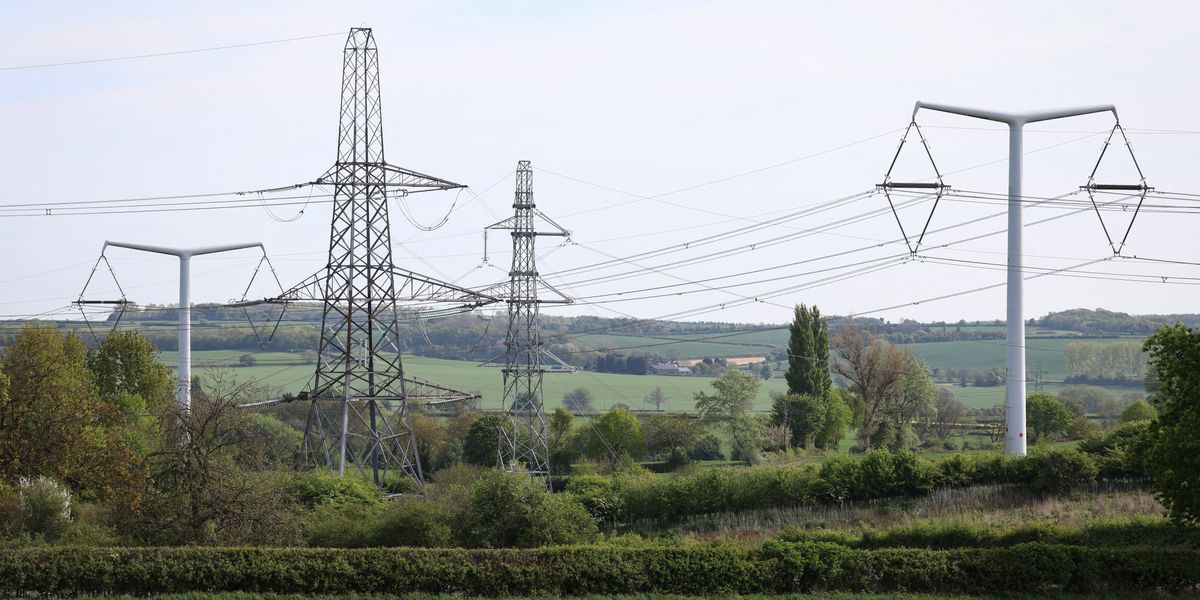
'We are risking total blackout,' a whistleblower warned after a confidential review exposed major flaws in Britain's electricity grid
Labour's Net Zero drive risks leaving Britons with blackouts and soaring energy bills after a leaked report warned Britain's electricity grid is effectively "flying blind".
The confidential assessment, produced by energy consultancy Cornwall Insight for the National Energy System Operator (Neso) and obtained by The Times, concluded the state-owned body is unable to accurately model Britain's increasingly complex electricity network.
It warned that flawed forecasting is already increasing consumer costs and raising the risk of blackouts as more renewable energy is connected to the grid.
One control room whistleblower delivered an even starker warning, claiming operators were "flying blind, every minute of every day".
The report was completed just weeks before last month's heatwave, during which experts believe Britain narrowly avoided widespread power cuts.
Internal Neso documents show the electricity grid breached five operational safety constraints on June 23, leaving system security compromised.
Both the report and whistleblower testimony suggest forecasting failures contributed to the incident, which is now under investigation by energy regulator Ofgem.
Cornwall Insight warned uncertainty in electricity supply forecasting could reach 7.7 gigawatts by the end of the decade - roughly equivalent to the output of two large nuclear power stations.
It said inaccurate modelling would force Neso to buy electricity at short notice through its balancing mechanism, driving up household energy bills.
The report also found the rapid expansion of wind farms, solar panels, battery storage and thousands of smaller renewable generators had left operators with "reduced visibility" over electricity flowing through the grid.
Britain's growing reliance on subsea interconnectors with Europe, which can rapidly switch between importing and exporting electricity, has added further complexity.
NET ZERO - READ THE LATEST:
The whistleblower claimed engineers had been raising concerns internally for two years.
"The execs are too scared politically to say renewables are making the system unsafe," they said.
"It will get worse week by week because we are connecting more things that we cannot model."
Former Government energy strategist Adam Bell said the findings showed Neso must urgently improve its ability to model Britain's electricity system.
Oxford economist Professor Dieter Helm argued intermittent wind and solar generation meant the grid was "bound to be much more unstable".
"The problem for Neso is it means admitting [renewables are] going to cost a lot more, and that doesn't fit with the story that it's all going to be cheaper because we're going to have renewables," he said.
Shadow Energy Secretary Claire Coutinho, who has been approached by whistleblowers, accused Neso of operating a "deeply problematic cover-up culture".
"Electricity grid operators have one of the most important jobs in the country. If they don't balance supply and demand, we will have blackouts, and in blackouts people die," she said.
A Neso spokesman insisted Britain has “one of the most reliable electricity systems in the world” and said the Cornwall Insight report was a “forward-looking” assessment of risks that could become more significant during the 2030s if they were not addressed.
He said work was already under way to implement the report's recommendations and confirmed its findings had been shared with the Department for Energy Security and Net Zero, Ofgem and a Neso board committee.
A Government spokesman said: “Neso is responsible for planning and delivering the energy system now, and into the future. As part of that, it plans for emerging challenges to ensure Britain continues to benefit from a secure energy system.
“We are very confident in our security of supply arrangements, and that Neso have the tools they need to manage the system.”