Thank you for subscribing!
Two significant archaeological breakthroughs in Israel have emerged this week
Two significant archaeological breakthroughs in Israel have emerged this week, shedding fresh light on locations mentioned in biblical scripture.
Researchers have identified an extensive industrial and commercial settlement dating back 1,300 years in Ramat Gan, situated close to Tel Aviv, positioned along a historic route connecting the ancient port of Joppa with other major cities.
The Israel Antiquities Authority disclosed the findings earlier this month following excavations undertaken in preparation for bus terminal construction works.
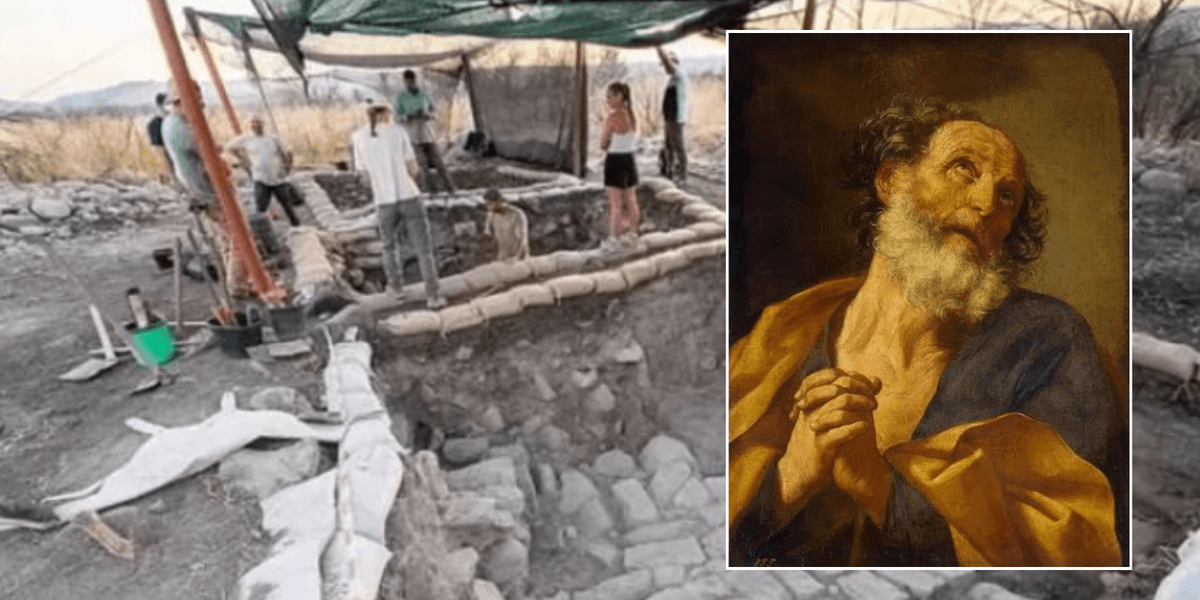
Separately, a team led by Dr Steven Notley has declared with confidence that they have located the lost biblical city of Bethsaida after a decade of excavation at the site known as el-Araj.
The settlement, positioned near the Sea of Galilee in northern Israel, is recorded in scripture as a place where Jesus conducted miracles.
The Ramat Gan site stands adjacent to the modern city of Jaffa, which during biblical times was referred to as Joppa and features prominently in both Old and New Testament narratives involving Jonah and St Peter.
The discovered settlement lay beside a principal thoroughfare linking Jaffa with Ramla and Jerusalem.
Dating to the seventh or eighth century during the Umayyad and Abbasid eras, the site represents a substantial commercial undertaking.
Directors Yoav Arbel and Lior Rauchberger stated the findings "exceeded all expectations".
"The excavation uncovered an organised, planned complex featuring straight, intersecting streets," the directors explained in a statement. "Lining these streets were a series of rooms that served as shops or warehouses, plastered industrial facilities, pottery kilns and more."
The pair suggested regional authorities likely commissioned or financed the development, exploiting the area's fertile farmland and water availability.
Recovered artefacts included substantial quantities of bronze items used for dining and cosmetics, alongside iron implements such as pickaxe heads, a sickle and numerous nails.
Archaeologists also unearthed dozens of coins and extensive fragments of both locally produced and imported pottery and glassware.
"Together, these finds provide a vivid reflection of the period's culture, trade and economy," the directors remarked.
The settlement remained active for approximately 150 years before its inhabitants departed under circumstances that archaeologists have yet to determine.
Following a period of abandonment, new residents established themselves at the location during the tenth century, constructing residential structures, production areas and clay baking ovens known as tabuns.
The site was deserted once more in the late eleventh century, shortly before Crusader forces arrived in the region, and has remained uninhabited since.
Whilst the area housed diverse Muslim, Christian, Jewish and Samaritan populations during that period, researchers cannot confirm which community occupied this particular complex.
At el-Araj, positioned along the shores of the Sea of Galilee, Dr Steven Notley and the Bethsaida-Julias excavation team have concluded their tenth season of work with growing certainty regarding the site's identity.
The academic director has overseen excavations at the location since 2016.
This summer's work yielded lamps, cosmetic implements, coins and other items.
Particularly significant were intact Herodian lamps and chalk stoneware vessels, both manufactured exclusively in Jerusalem prior to 70 CE, which constitute definitive evidence of a Jewish population during the first century when the settlement transitioned from Bethsaida to the Roman city of Julias.
"Everything we bring out of the ground affirms and strengthens that identification... Nothing that we have found would challenge it at all," Notley stated and refers to Bethsaida as "the last lost city of the Gospels".
According to biblical accounts, Bethsaida served as the location where Jesus restored vision to a blind individual and multiplied five loaves and two fish to feed thousands of people.
The settlement is also associated with three of Christ's apostles — Peter, Andrew and Philip — who are understood to have resided there.
Notley indicated he experiences "no difficulty" envisaging Jesus devoting "considerable time" to the location.
The artefacts recovered suggest a level of prosperity that contradicts conventional assumptions about Galilean communities.
Rather than the impoverished, uneducated peasantry often depicted in historical accounts, the evidence points towards settlements that flourished economically despite Roman rule.
The team has previously uncovered mosaic floors, ecclesiastical structures and dwelling walls at el-Araj during excavations conducted since 2016.