The collection has been labelled 'one of the most important collections of fossils ever made'
A private fossil collection of extraordinary scientific importance, gathered over decades from Dorset's world-famous Jurassic Coast, has been acquired by the Natural History Museum Abu Dhabi after Britain's leading institutions were unable to afford it.
Chris Moore, an experienced Dorset-based fossil hunter, assembled 318 specimens, among them ichthyosaurs, fish and crustaceans, some potentially representing new species, from the coastline around Lyme Regis and Charmouth.
The collection was first offered to the Natural History Museum in London and Amgueddfa Cymru (Museum Wales), but neither could secure the funds. An email seen by the Guardian indicated the NHM had "no money at all" for acquisitions.
British palaeontologists have called the sale a significant loss for the nation, prompting difficult questions about the UK's capacity to safeguard its own natural heritage.
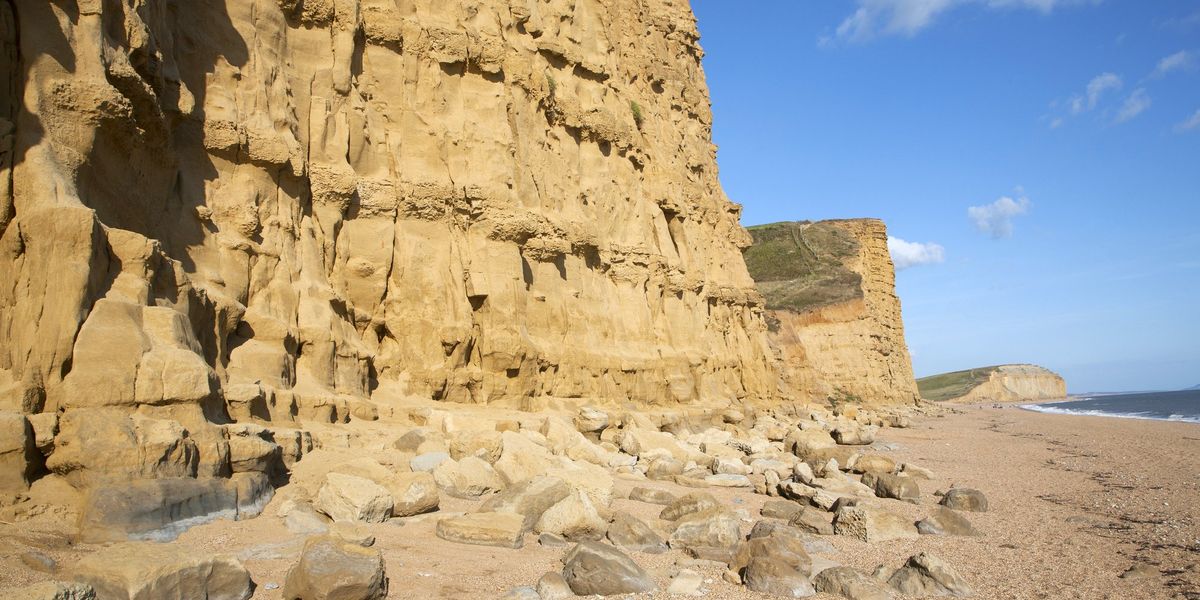
The fossils originate from a geological formation called the Lower Lias, part of a Unesco world heritage site where specimens date back between 145 million and 200 million years. The price tag was described by one source as an "eight-figure sum".
Richard Butler, professor of palaeobiology at the University of Birmingham, said the collection held national significance.
"This is one of the most important collections of fossils ever made on the world-famous Jurassic Coast of Dorset. It would have been wonderful to see these fossils on display and engaging the public in a UK museum," he said.
In correspondence seen by the Guardian, the assemblage was described as "stunning". Much of it has been on public display in Abu Dhabi's Mesozoic Gallery since November 2025.
Unlike archaeological discoveries made through metal detecting, which can be designated as treasure and must be reported to authorities within a fortnight, no equivalent legal obligation exists for fossils, even those classified as category 1, denoting the highest scientific importance.
The west Dorset fossil collecting code of conduct stipulates that collectors "who intend to sell or otherwise dispose of their category 1 specimens must first offer them to UK registered museums for a period of six months."
Under rules set by the Department for Digital, Culture, Media and Sport, only manufactured or produced objects older than 50 years require an individual cultural property export licence.
Dr Erin Maxwell, a specialist in Early Jurassic marine vertebrates at the State Museum of Natural History in Stuttgart, acknowledged the sale as a blow but noted a partial consolation.
"The loss is somewhat offset by the fact that these fossils are going to a museum rather than into the collection of a wealthy individual," she said.
Maxwell argued that the state should have the right of first refusal at cost price before any export, rather than facing "the currently grossly inflated market price".
Phil Davidson, a palaeontologist at Charmouth Heritage Coast Centre, emphasised that what mattered most was keeping specimens accessible to researchers in public institutions. "All the researchers I have talked to have said the same thing: the location of where the museum collection is housed is secondary," he said, adding that the collection comes from a world heritage site "and this heritage is for everyone and not limited to lines on a map".
The fossil market has reached staggering heights in recent years. Stan the T. rex sold for a then-record $31.8million in 2020 and is now also housed at the Natural History Museum Abu Dhabi, while another skeleton nicknamed Gus fetched $50.1m at Sotheby's in July this year.
Such prices put major specimens well beyond the reach of most public institutions, with Hollywood actors including Leonardo DiCaprio, Nicolas Cage and Russell Crowe among those known to have purchased dinosaur fossils.
One curator warned the problem would only intensify as private collectors age and seek permanent homes for their life's work. "Whose responsibility is it to fund our heritage and the preservation of our heritage? Because otherwise it could get lost," they said.