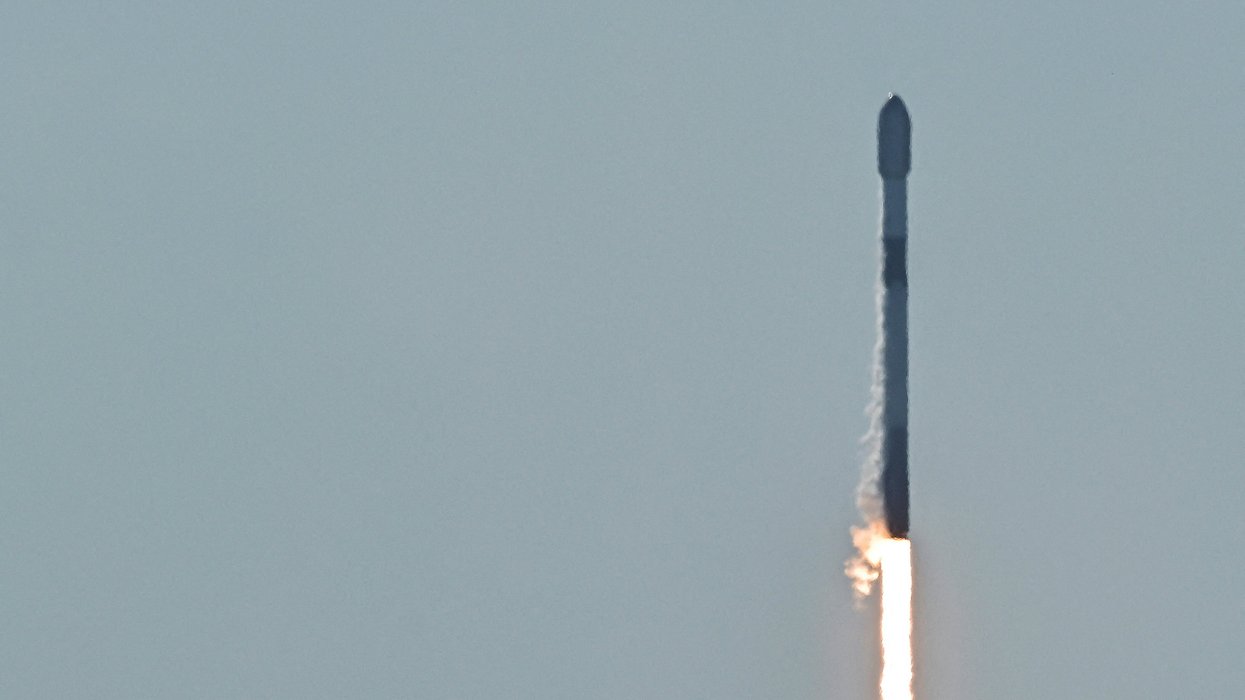
One of Elon Musk's four-tonne rockets came crashing down onto the Moon on Wednesday morning after drifting through space
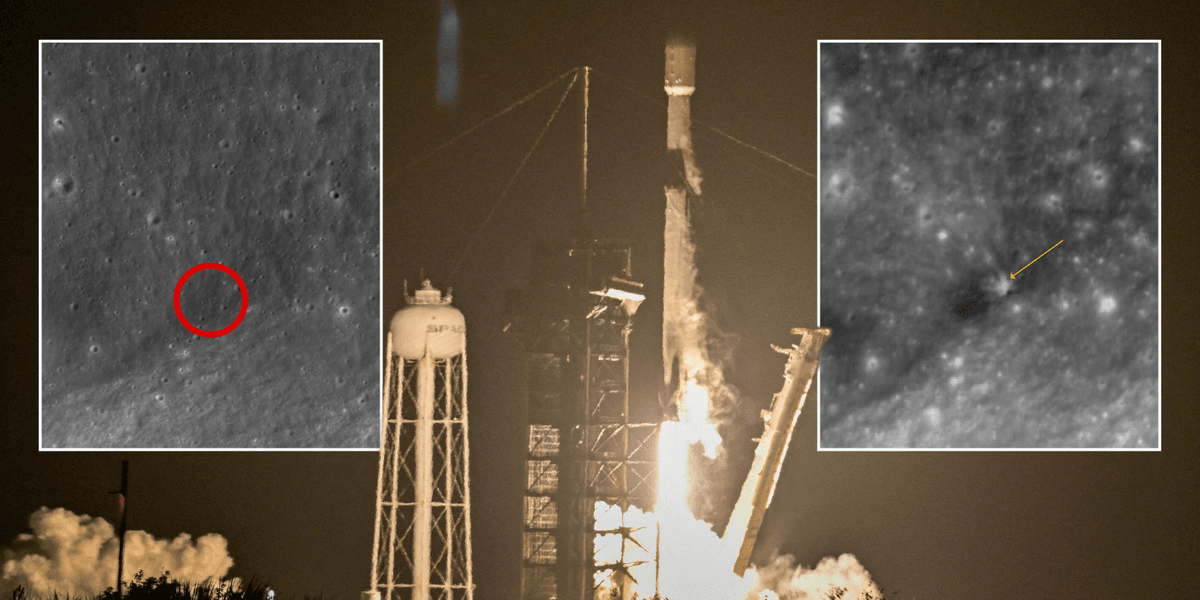
South Korea's space agency has shared before-and-after photographs of the lunar surface following a SpaceX rocket crash on Wednesday.
The Korean AeroSpace Administration (Kasa) confirmed its Danuri orbiter captured the images.
Debris from a Falcon Nine rocket hit the Moon at roughly 7.35am BST, according to Kasa.
The Falcon Nine is a reusable rocket designed so that certain sections return to Earth while others are discarded in space.
SpaceX has deployed this rocket type across numerous missions.
The brief, intense flash produced by the impact would have been nearly impossible for amateur astronomers to see, even with powerful telescopes.
The empty upper stage that struck the Moon was roughly the size of a five-storey building.
Scientists had predicted it would slam into the lunar surface at around 5,400mph.
The Falcon Nine launched from Florida in January 2025, carrying two lunar landers as its payload.
Its task was to propel the upper stage with enough force to send both landers beyond Earth's orbit and towards the Moon.
Once that job was complete, the spent stage was left to drift through space in a long, looping trajectory that carried it out towards the Moon and back.
Over the following 18 months, subtle gravitational pulls from the Earth, Moon and Sun slowly altered its path.
LATEST SPACE HEADLINES FROM GB NEWS:
Solar radiation also gave the drifting rocket stage a gentle push.
Astronomers who had been tracking the debris eventually calculated that these tiny forces had steered it directly towards the Moon.
The collision occurred during daytime hours across much of the globe.
However, the flash it generated was far too faint for anyone to detect, even with a telescope.
Larger observatories, including South Korea's space agency, are now studying the data gathered from the event.
Cambridge astronomer Dr Matt Bothwell raised concerns about the growing problem of orbital debris.
"Space is getting more and more crowded," he said, as each year "we launch more stuff into space".
"It could feasibly be within a few decades that it's actually quite hard to get past Earth's orbit because space is so crowded," Dr Bothwell warned.
Meanwhile, the booster section from the same January 2025 mission is preparing for its 18th flight on August 10.
SpaceX has said that launch aims to deliver 29 Starlink satellites into low-Earth orbit.