The boy was killed by a tsunami whose waves rose to as high as 85 feet
New clues have been uncovered in the mystery of the ancient disaster which inspired the legend of Atlantis.
A teenage boy's skeleton has been unearthed on the Turkish coast, more than 3,500 years after he was killed by a tsunami whose waves rose to as high as 85 feet.
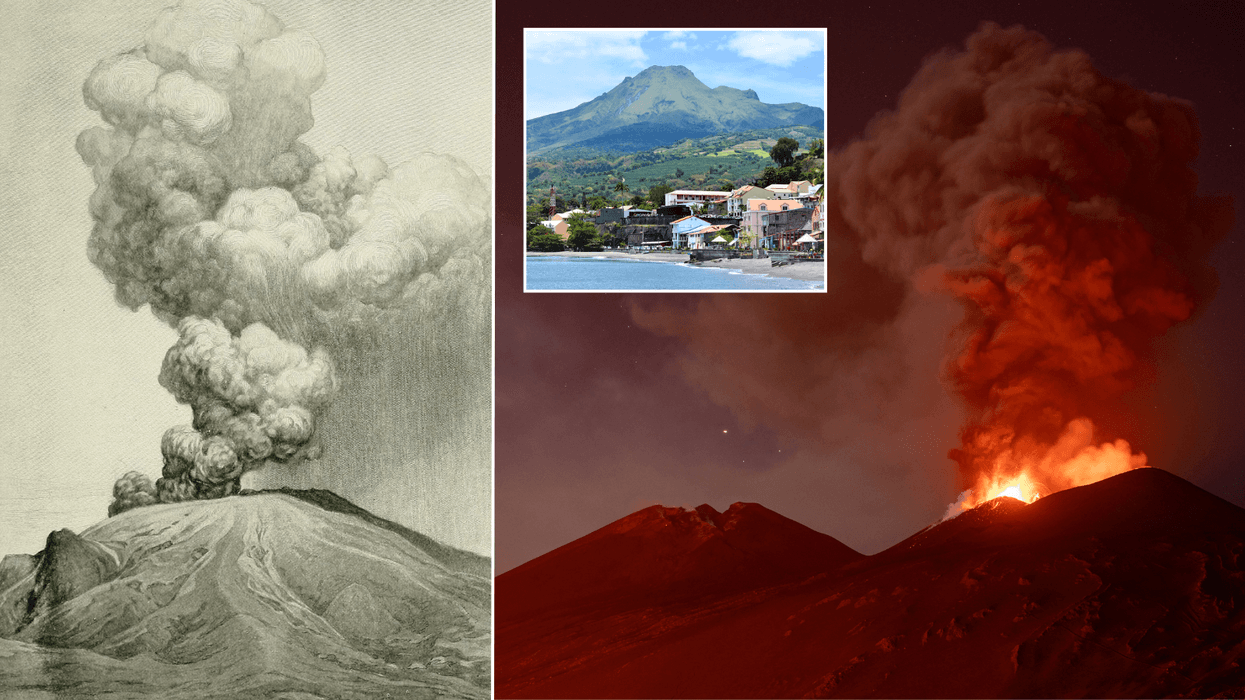
The wave was triggered by a huge volcanic eruption on Santorini, one of the ancient world's most devastating natural disasters.
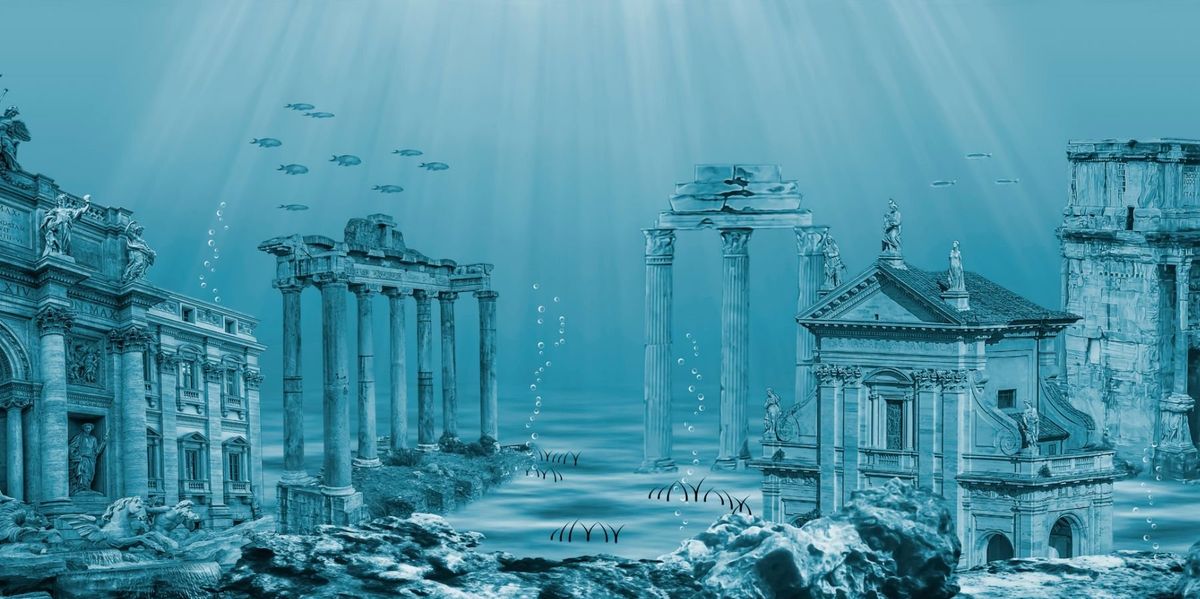
Plato's tale of Atlantis is widely believed to be inspired by the catastrophic eruption of Thera, as the island was once known.
The boy's body was found at a site called Cesme-Baglararasi in western Turkey, roughly 140 miles from Santorini across the Aegean Sea.
A pre-existing knee injury meant the boy, aged 15 or 16, could not flee the wave to safety.
Tests on his remains may finally resolve a long-standing dispute over when the eruption happened - and confirm its role in the Minoan civilisation's decline.
The Minoans were a major Bronze Age civilisation centred on Crete, with a flourishing outpost at Akrotiri on Santorini, then a busy maritime trading centre.
Professor Beverly Goodman, of the University of Haifa, said in a National Geographic documentary airing on Sunday: "The people of Akrotiri are characterised by some really amazing technological advances and sophistication that isn't seen in earlier periods we're talking about plumbing, about frescos."
The eruption that destroyed Akrotiri was 100 times more powerful than the one that buried Pompeii, reducing Santorini to a ring of islands around a flooded crater.
Ruins preserved under volcanic ash were found in the 19th century, earning Akrotiri the nickname "Pompeii of the Aegean" - but mysteriously, researchers never found human remains.
"Unlike Pompeii, we don't have the people," Prof Goodman said.
"The people that lived here are often referred to as Minoan but unfortunately we don't have the written records to be able to know how they saw their world."
The Minoan civilisation began its decline from the mid-15th century BC and had largely vanished by the 12th century BC.
ARCHAEOLOGY BREAKTHROUGHS - READ MORE:
Their undeciphered written language has left much about their world unknown.
The eruption is believed to have hurled 44 cubic kilometres of material into the air, sending tsunamis surging across the Mediterranean towards Crete.
But working out exactly when the eruption happened has long proved contentious.
Analysis of charred wood in volcanic deposits pointed to roughly 1600 BC.
An Egyptian record known as the Tempest Stele, describing a great storm, dates to around 1550 BC and has been linked by some scholars to the event.
Both dates fall at least a century before the Minoans' decline began in the 1450s BC.
Radiocarbon dating of the boy's bones places his death at approximately 1500 BC, and certainly "no earlier than the closing decades" of the 16th century BC.
The new date is nearly a century later than the widely accepted estimate of around 1600 BC.
It also contradicts the Egyptian Tempest Stele timeline, but critically aligns with the onset of Minoan decline over the following 50 years.
"After the Santorini eruption and the arrival of the tsunamis, life ended forever on the site," said Professor Vasif Sahoglu from Ankara University.