



A tiny object unearthed in a Kent field has reignited questions about the origins of a piece of iconic Saxon treasure.
For decades, experts believed the Sutton Hoo helmet was crafted in Sweden before being buried with a Suffolk king around 1,400 years ago.
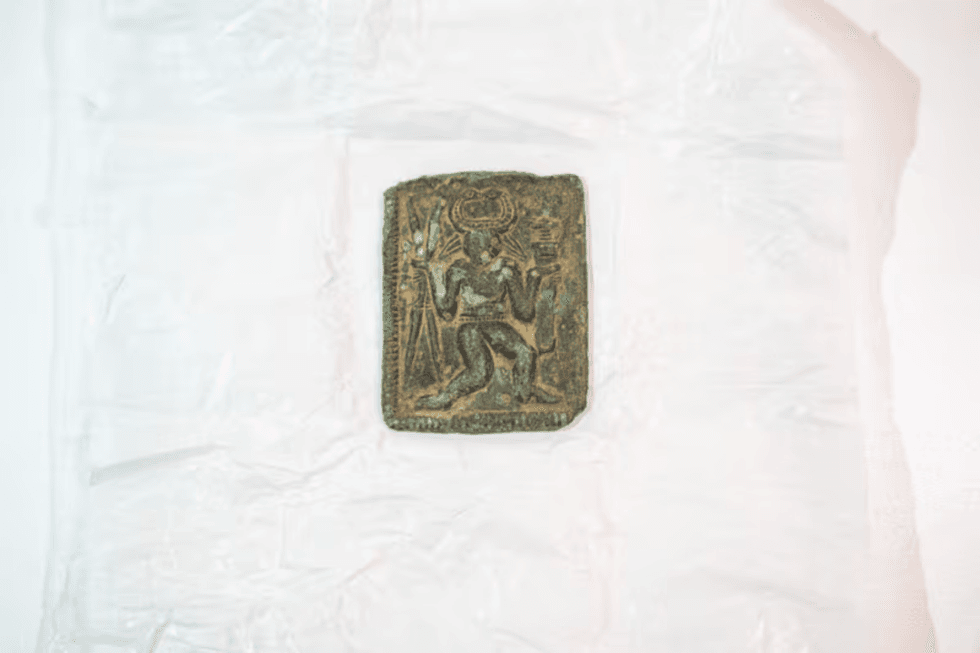
But a newly-discovered die stamp appears to have been used for pressing decorative panels onto helmets remarkably similar to the Sutton Hoo find.
Dr Andrew Richardson, Kent County Council's finds liaison officer, called the discovery "extraordinary".
"For the first time, there is really no reason for saying the Sutton Hoo helmet couldn't have been made in the British Isles," he said.
The Sutton Hoo helmet was uncovered in 1939 inside a ship burial site in Suffolk.
Often dubbed "Britain's Tutankhamun," the iron helmet features garnet inlays and embossed decorative panels.
It dates to the early seventh century and is thought to have belonged to Raedwald, king of the East Angles.
Scholars have long argued the helmet was likely Swedish in origin - similar helmets and the tools required to craft them have been found in Sweden.

For years, the Sutton Hoo helmet was thought to have been Swedish - but, perhaps, no longer
|GETTY
"It's very clear really that this die was used to make foils for a decorated helmet of a very similar type and date to that found at Sutton Hoo," Dr Richardson said.
Metal detectorist Stephen Newbury found the die near the village of Lynsted.
The tool dates from the late sixth or early seventh century and is believed to be the first confirmed British example of equipment used to press thin metal sheets for royal helmets.
Its design closely mirrors the Sutton Hoo helmet's decoration.
The imagery depicts a naked figure, possibly running or dancing, wearing a horned headdress topped with two birds' heads.
BRITISH TREASURES - READ MORE:
Metal detectorist Stephen Newbury found the die near the village of Lynsted
|KENT COUNTY COUNCIL
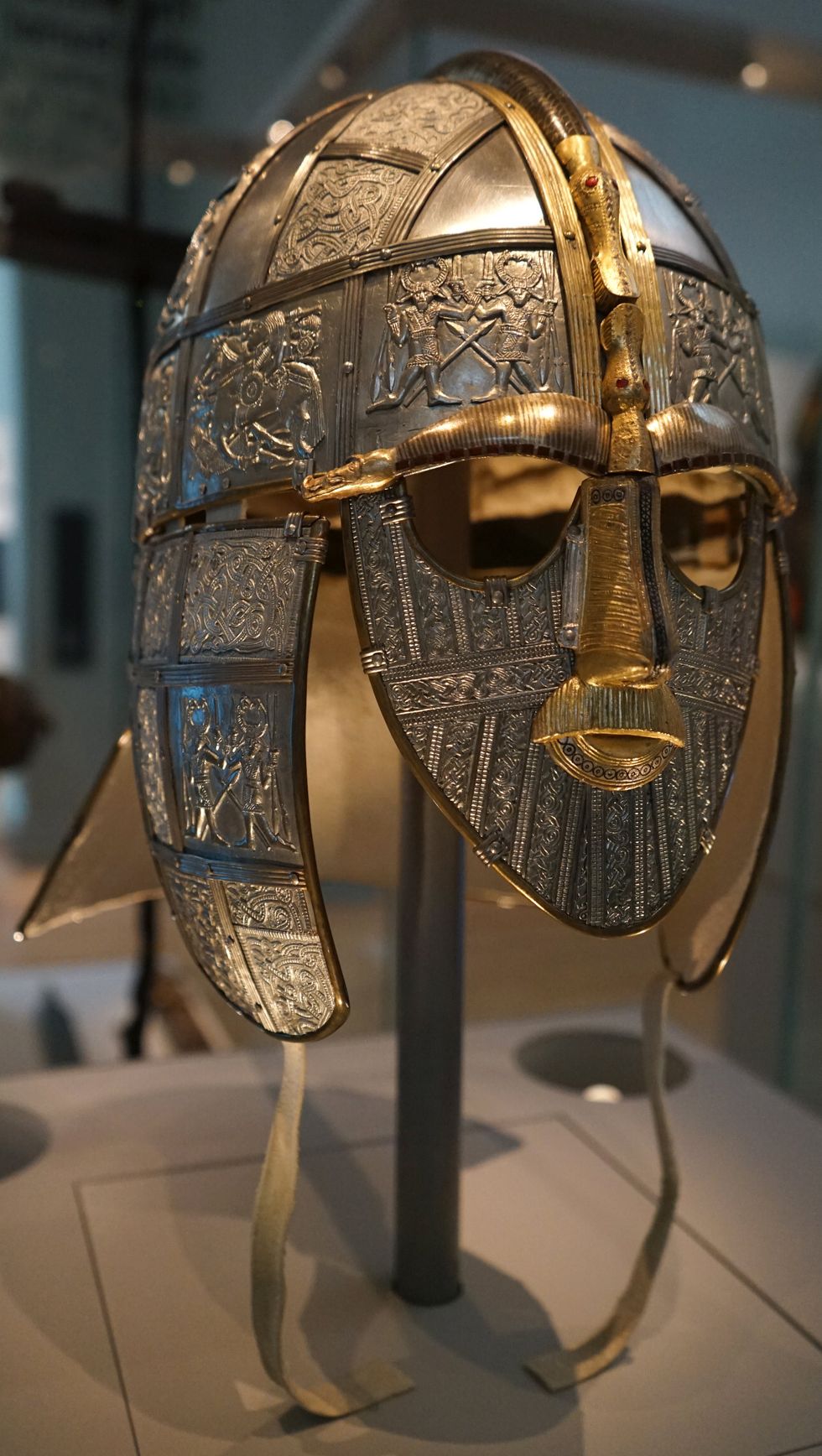
The die was likely used to cast panels like those which cover the helmet
|GETTY
The figure holds two spears in one hand and a sword in the other.
This motif stems from pagan tradition and has been linked to Woden, the Old English name for the Norse god Odin.
Raedwald is remembered as the first East Anglian king to embrace Christianity, though historian Venerable Bede recorded that he maintained altars to both Christ and pagan gods.
The helmet likely served both as battlefield armour and as a symbolic cult object.
"You put that on, you are an avatar of Woden," Dr Richardson said.
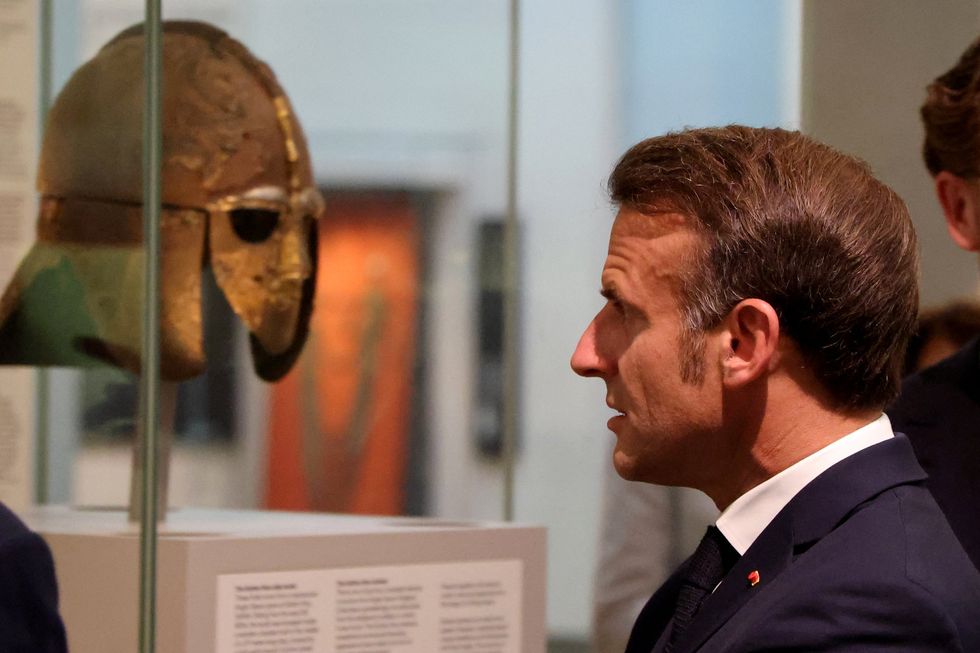
PICTURED: Emmanuel Macron and the Sutton Hoo helmet - which will be temporarily exchanged with France in return for the Bayeux Tapestry
|GETTY
The die was discovered just miles from Faversham, a renowned early medieval metalworking centre producing garnet-inlaid brooches, weapon fittings and luxury gold and silver items.
"Faversham is a centre that absolutely has all the technical expertise to produce things like the Sutton Hoo helmet," he said.
"And now we have a piece of equipment specifically for that sort of helmet."
A coroner has officially declared the find treasure due to its historical significance.
The object may be acquired for display at Canterbury's Beaney House of Art and Knowledge.