Sinkholes along the shoreline are bringing life back to one of the most inhospitable places on Earth
Freshwater pools teeming with plants and aquatic life have appeared next to the Dead Sea, sparking claims a Bible prophecy may be rearing its head.
The sea sits about 1,400 feet below sea level and is nearly 10 times saltier than the ocean, typically killing fish within minutes.
It has a salinity of around 34 per cent, containing a harsh mix of magnesium chloride, potassium and calcium.
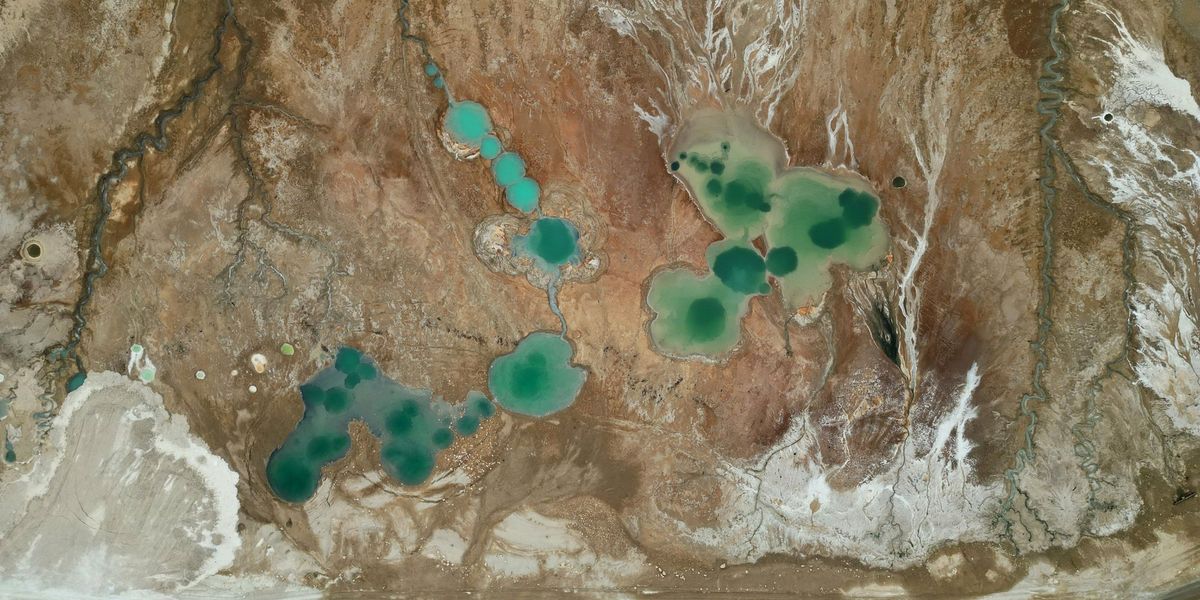
But now, freshwater is surfacing through sinkholes along parts of the shoreline a few miles east of Jerusalem.
The change has drawn comparisons to the visions of prophets Ezekiel and Zechariah more than 2,500 years ago, which described living waters flowing east from Jerusalem and bringing life to the Dead Sea.
Those ancient texts foretell the deadly waters being healed, fruit trees flourishing on the banks, and fishermen casting nets along the shore.
Some believers argue the pools could represent an early sign of a prophecy tied to catastrophic wars, the return of Christ and the final judgment of humanity.
The freshwater is travelling through porous limestone from higher ground near Jerusalem before gravity pulls it eastward to the lowest exposed point on Earth.
As the sea shrinks, underground springs once hidden beneath the brine are being revealed.
Clear pools have formed at the base of sinkholes, some circled by reeds, tamarisks and other plant life.
Algae, insects, birds and small aquatic creatures have established miniature ecosystems in an area long defined by salt and barrenness.
Israeli photographer Noam Bedein filmed small fish in one of these freshwater pools near the Dead Sea in 2016.
The fish were not in the hypersaline sea itself but in isolated freshwater beside it, separated from the lethal brine.
The sight prompted comparisons with Ezekiel 47, which describes water flowing east from beneath a temple in Jerusalem before entering the sea.
LATEST SCIENCE HEADLINES FROM GB NEWS:
"When these waters enter the sea, the waters will be healed, and everything that enters this river will live," the passage states.
Ezekiel also depicted fishermen spreading nets from En Gedi to En Eglaim along the Dead Sea's western shore, with fruit trees growing beside the water.
Supporters note the freshwater pools near En Gedi as a striking geographical match.
They also point to the revival of the ancient Judean date palm, after scientists germinated a roughly 2,000-year-old seed recovered from the Judean Desert in 2005, eventually producing fruit from the long-lost variety by 2020.
In the biblical sequence, Israel's restoration is followed by a massive coalition of nations invading during the "last days," the desecration of a holy place, and an unprecedented period of tribulation.
Zechariah describes the Mount of Olives splitting in two when the Lord returns, only then releasing living waters toward the Dead Sea.
Most of these events have not occurred - the Mount of Olives remains intact, no river flows from a new temple, and the sea itself remains lifeless.
Over 9,000 sinkholes have been documented on the Israeli side, damaging roads and forcing tourist areas to close.
For scientists, the transformation is simply hydrogeology unfolding along a shrinking shoreline.