In a chilling twist, scientists said the orcas may even have been blowing up their victim for fun
Killer whales have been caught on camera ramming their prey so hard it explodes.
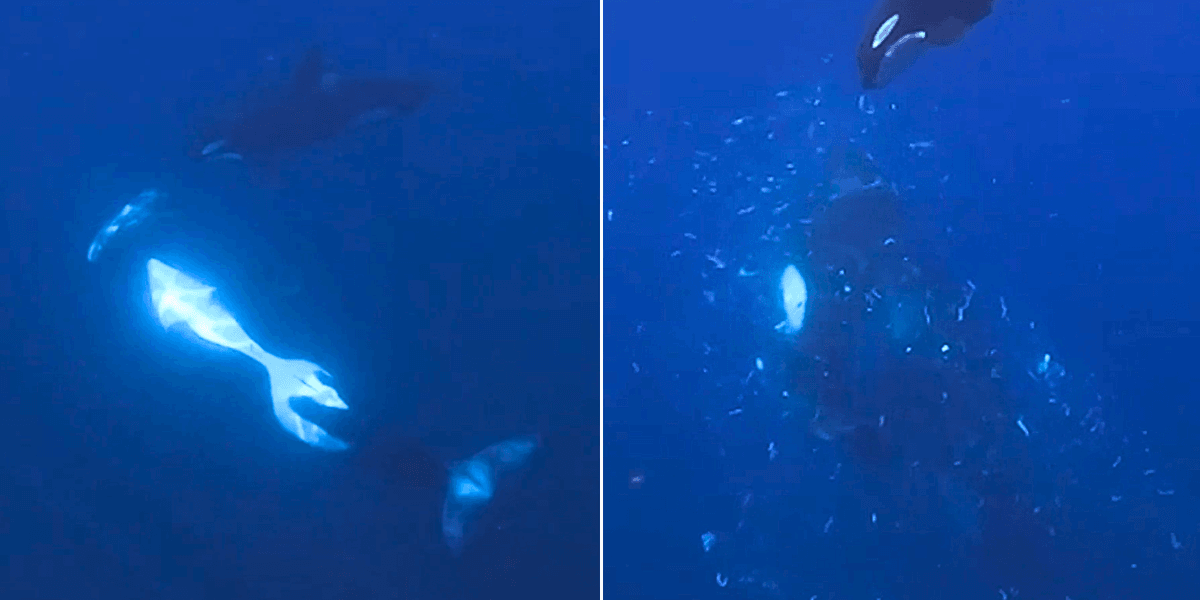
The orcas have been observed holding sunfish in their jaws while a second whale smashed into the target at high speed - instantly obliterating the fish into hundreds of pieces.
Researchers believe the behaviour may be a form of play - as the prey was already dead before being rammed.
Dr Kathryn Ayres, a scientist at non-profit organisation Beneath The Waves, said: "We think this may help younger orcas feed more easily or it could also just be for fun.
Dr Ayres first captured the bizarre behaviour in July 2024 on a GoPro camera - leaving her yelling in shock beneath the waves.
Scientists have now published their analysis of the orcas in scientific journal Frontiers in Ethology.
Sunfish are among the world's largest fish, growing up to three metres long, and are commonly hunted and eaten by killer whales.
Researchers think the orcas might be ramming their prey to break the tough, rubbery sunfish into smaller bite-size pieces for their young, whose jaws are smaller.
In Dr Ayres's footage, a female orca is seen gripping the tail of a sunfish carcass while an adult male rapidly smashes into it.
Moments before impact, the female orca releases the fish, leaving behind a plume of white fragments which are eaten by a young whale, while the adults consume the remains of the main carcass.
A second "explosion", filmed by a tourism operator last September, again showed an adult female holding the dead sunfish, while the second orca rammed the prey.
ANIMALS - READ MORE:
Both instances of the behaviour were filmed in the Gulf of California, but it is unclear if the same orcas were involved.
"When you see a multi-ton apex predator charge a massive fish at that speed right next to your boat, the sheer acoustic thud and the resulting explosion of tissue are overwhelming," said Erick Higuera, a marine biologist at Mexican non-profit Conexiones Terramar and co-author of the research.
Orcas are known to engage in "play" which does not have clear, obvious purposes.
In 1987, a pod of killer whales in the US state of Washington were observed placing dead salmon on their heads like hats - a trend which was recently revived by stylish orcas in the same area in 2024.
And in 2023, a group of Iberian orcas in Spain and Portugal rammed small sailing boats as a form of play.
"They throw kelp at each other, surf in boat wakes and engage in intricate tactical games," Mr Higuera said. "Play is a core pillar of orca society."
Although the purpose of the behaviour remains unclear, it demonstrates an impressive level of thinking, needing several steps of coordination between multiple whales, according to the study.
Eco-tour operators are using underwater drones and cameras more and more to capture new behaviours, with their findings used to document "mysteries of ocean life" which would otherwise remain hidden, Mr Higuera added.