Thank you for subscribing!
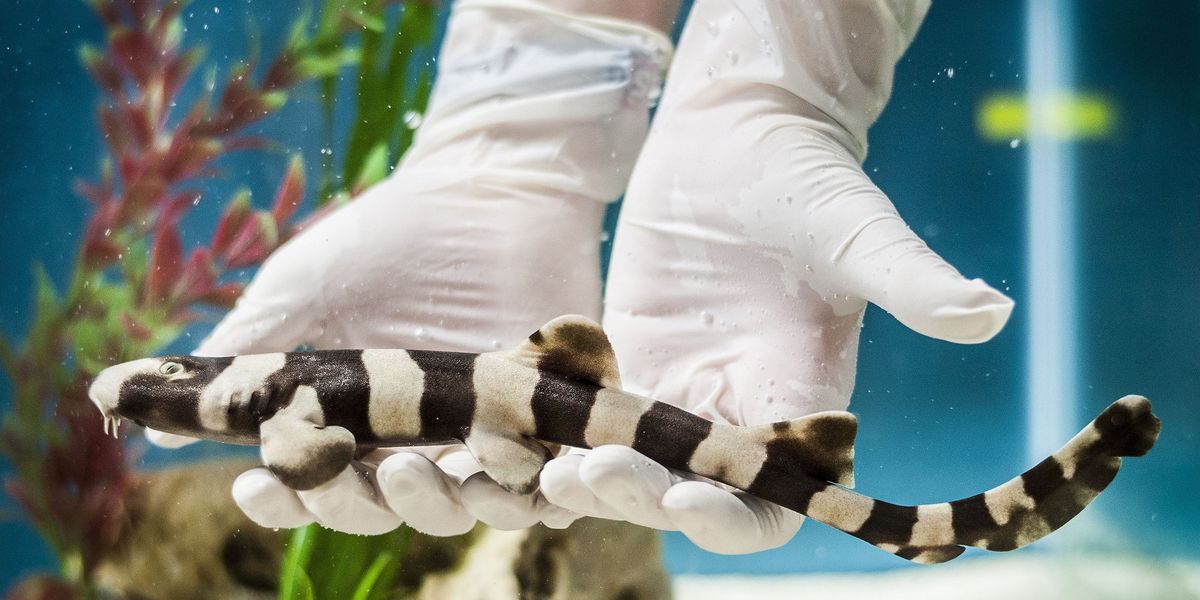
The small spotted catshark — also known as the lesser-spotted dogfish — is one of the most widespread shark species in British waters.
Yet this familiar, freckle-patterned fish, which reaches no more than a metre in length, is vanishing from the shallow seas around England's southern coast.
The species thrives at water temperatures of roughly 16-17C. This summer, however, marine heatwave conditions have driven coastal temperatures to approximately 20C on a near-daily basis, pushing the sharks to seek refuge in deeper, cooler waters.
The shift mirrors behaviour already observed in the Mediterranean, where the species similarly retreats from overheated shallows. It is one of the starkest examples of how successive marine heatwaves are reshaping life beneath British seas.
Gio Reale, a diver operating out of Falmouth in Cornwall, has not encountered the sharks for weeks. "Small water temperature changes have such big effects on marine life," he told the Guardian.
Mr Reale believes the catsharks have descended to deeper, cooler zones — echoing their Mediterranean habits. "This summer, like every day, the water has been about 20C," he says.
The prolonged warmth has transformed what Reale encounters on his dives. While his favourite freckled sharks have gone missing, common octopuses have surged into Cornish and Devon waters since January last year, thriving in conditions that would have been unusual just a few years ago.
The octopus boom has created friction with local fishers. "Everyone's complaining, 'oh, they're taking all our crabs'," says Mr Reale. "But obviously, for the octopus, that's just a really easy meal."
The disappearance of cold-water species extends well beyond catsharks. Kurt Lander, skipper of the Brighton-based charter boat Yellowfin, once landed a couple of hundred cod annually. "It's probably about one or two a year in the summer," he now says.
Dr Zoe Jacobs, a senior researcher at the National Oceanography Centre in Southampton, confirms that cold-water species have effectively abandoned England's southern coastline, relocating northward to Scottish waters.
In their place, warm-water fish are flourishing. Lander regularly catches bass, comber and triggerfish, while sardines and anchovies are also thriving, according to last year's State of the South-West Seas report.
The Met Office described 2025 as "exceptional," with certain stretches of British sea experiencing heatwave conditions for three-quarters of the year. Conditions in 2026 are following the same trajectory.
The octopuses have entered crab and lobster traps, devouring catches that cannot escape — prompting some fishing boats to pivot towards targeting the newly abundant cephalopods, with hauls rising sharply in 2026.
Beyond the fishing industry, the heatwaves threaten critical marine habitats.
Britain may have lost around 92 per cent of its seagrass meadows since the 1930s, and kelp losses in Sussex could exceed 96 per cent.
Chris Williams, who runs the volunteer Hastings Kelp Project, warns that this destruction is invisible from shore. "You don't see a degrading kelp forest from the land like you might see a woodland burning down," he says.
Whether cold-water fish that have shifted northward will return once heatwave conditions subside remains unknown. "It might be that our cod and mackerel fisheries are done," says Dr Jacobs.