Thank you for subscribing!
After almost a decade, the one-off activation fee has been revived across three popular brands
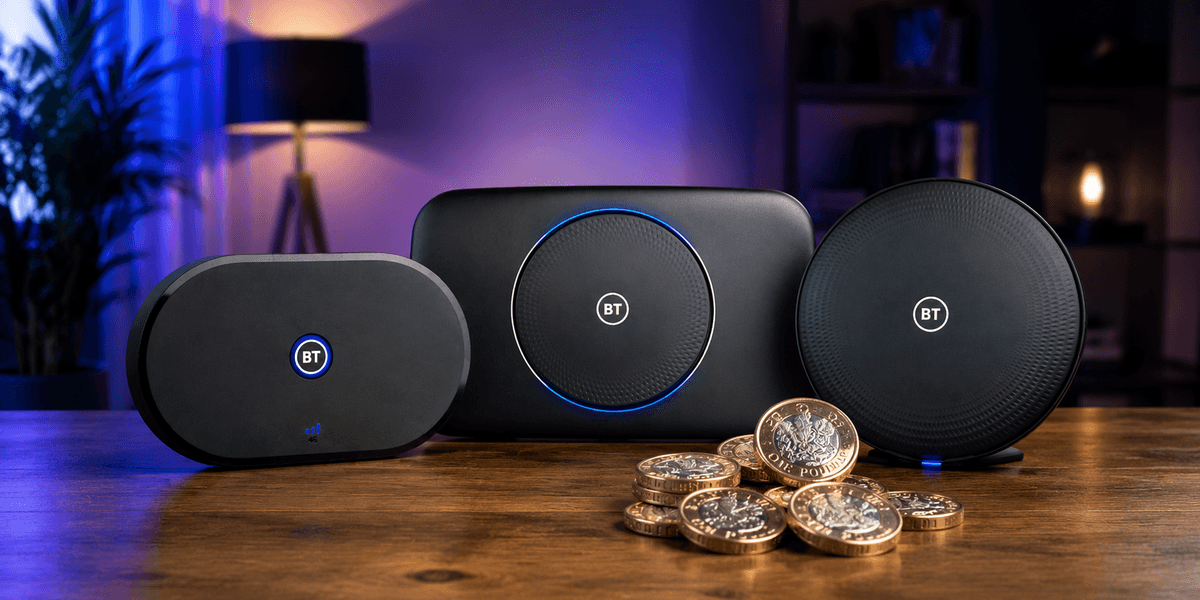
BT and EE have resurrected a £30 charge for new broadband subscribers that was dropped from most broadband-only deals over the last decade, marking an unpopular return to the past. Starting this month, anyone who signs up to a new broadband deal with BT or EE will be forced to pay a one-off £30 activation fee.
This one-off payment covers the cost of postage of the new Wi-Fi router to your home, installation and activation of the connection at your home address, as well as any callouts from engineers to troubleshoot your internet. The £30 charge doesn't impact current subscribers — even if you renegotiate a new contract, since they've already got the Wi-Fi router at home and an internet connection up-and-running. It only applies to those who sign up for the first time.
BT has rolled out this once-commonplace charge across all of its broadband brands. EE and BT will charge £30 for new subscribers, while new Plusnet subscribers will be slapped with a one-off £20 fee. If you're thinking about switching to any of these broadband suppliers, you'll need to factor in an extra cost that wasn't there before.
Ernest Doku, who covers all things broadband for comparison website Uswitch, described the decision to revive the activation fee as a "badly misjudged move". Mr Doku told GB News: "At a time when there is continued focus on the cost of living, there should not be a price of entry to saving money on your broadband. New customers joining BT, EE and Plusnet are locked in for two years, and two years of bills is more than enough time to recover any upfront costs.
"Worse still, there’s no way for new customers to avoid this new charge. If this is about rising costs of kit, customers who already have a router that works should be able to use their own and skip the fee. Charging £30 on the first bill will sting, and will especially put off those households watching every pound from taking what might otherwise be a cheaper deal. This is a stark reminder to consumers to compare broadband deals, so you don’t get caught out going to BT, EE or Plusnet without checking for other options first.
"A few minutes shopping around could save you from a £30 hit on your first bill."
It comes just a few weeks after BT rolled out a next-generation Smart Hub Wi-Fi router for all customers.
Alex Tofts from Broadband Genie warned: "Asking a customer to pay £30 before their connection is even switched on is a clear barrier for many bill payers and an easy way to push people elsewhere."
There's another worry too. Tofts pointed out: "It is also very troubling that this is a cost some customers might not get back should they legitimately have to cancel their contract, even upon returning the router."
Most broadband suppliers increase subscription prices each year, and BT and EE are no exception. Expect to spend between £36 – £48 extra over the next 12 months for the same connection. For its part, BT says it had to resurrect the one-off charge because of the spiralling cost of critical components used inside its Wi-Fi routers.
The telecom firm isn't alone, with ongoing shortages of vital components due to the rapid expansion of AI data centres gobbling up supply and forcing several high-profile consumer technology brands to hike price tags.
Google has increased the price tags of its latest Pixel smartphones, Samsung used the arrival of its new foldable Galaxy Z devices to hike prices; Apple adjusted prices across its Mac and iPad lineup due to those same chipset shortages, and Microsoft followed suit with its own XBOX consoles and Surface PCs.
Until now, BT says that it has absorbed the steadily rising costs for the electronic parts that power its Wi-Fi routers, but it can no longer manage to swallow the price hikes. DDR memory, a key component, has jumped 300% in price since last year alone.
DDR RAM — a common type of memory module used in Wi-Fi routers to handle active data packets, run firmware tasks, juggle firewall rules, and maintain stable connections for multiple smart devices — has jumped 300% in price since last year alone.
A BT spokesperson stressed the brand's ongoing commitment to market-leading broadband reliability, service and value, and will continue reviewing its costs. The spokesperson said: "We have a range of competitive deals and offers for our customers, and existing customers are unaffected."
The re-introduction of the long-forgotten £30 activation fee comes as BT and EE scored a record-breaking victory after more than 104 million tests were conducted across the two studies from Ookla and RootMetrics.
It comes as EE became the first nationwide broadband supplier to make Wi-Fi 7 standard across all of its wireless routers, beating the likes of Vodafone and Sky Broadband to debut Wi-Fi 7-equipped hardware.
It also launched lightning-fast 8Gbps download speeds in pockets of the UK last month, becoming the fastest broadband supplier in the UK. Despite this, Britons are increasingly turning their backs on household brands like BT and EE in favour of up-and-coming full-fibre startups.
If you're shopping around for a new broadband deal, you'll find plenty of providers still offering free connection without any upfront fees. Virgin Media, Sky, Community Fibre, and Vodafone all continue to waive activation charges for new subscribers, making them potentially more attractive options if you're watching your initial outlay.
Industry observers point out that, more often than not, when BT sets a precedent with its monthly subscriptions, rival broadband suppliers tend to follow with similar propositions before too long. As such, it's possible that we'll see the likes of Virgin Media, Sky, TalkTalk, and Vodafone begin to reintroduce activation fees for new subscribers.