Thank you for subscribing!
Lesser-known brands, like Hyperoptic, have seen a surge in new subscribers
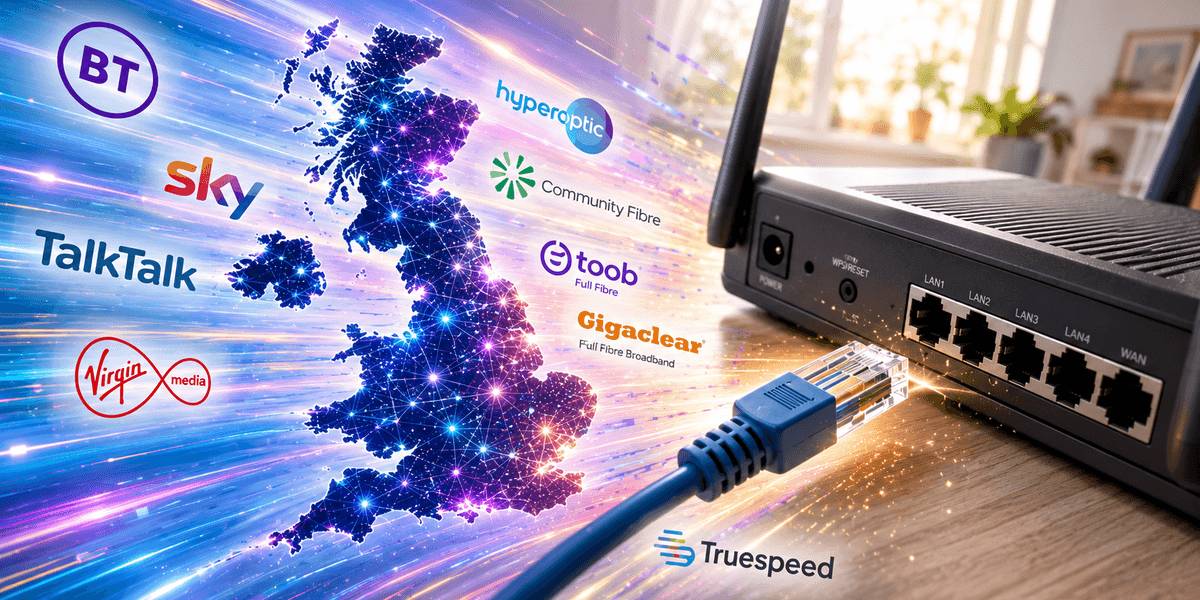
Thousands across the UK have turned their backs on the biggest broadband brands — such as BT and TalkTalk — in favour of full-fibre newcomers, often referred to as "altnets" or "alternative network providers", new research reveals.
Mobile analytics firm Opensignal has published its latest report on the state of broadband in the UK, and it shows a dramatic increase in Britons switching to lesser-known full-fibre suppliers — at the expense of household names.
These challenger brands are available in an estimated 20 million premises across the UK, Opensignal data shows.
In comparison, BT-owned Openreach — which builds and maintains the broadband infrastructure used by brands like BT, EE, Sky, TalkTalk, Plusnet, and dozens of others — connects to around 99% of all UK homes. BT is spending £15 billion to upgrade its network to faster, more reliable full-fibre connections. It's connecting some 62,000 premises per week, with the goal of bolstering broadband speeds to some 25 million premises by the end of this year.
The UK has approximately 29.5 million active broadband connections, so even a modest drop — like the 4.4 percentage points in the Opensignal data that moved from household names to smaller alternet — equates to vast numbers of people. Based on the latest data from Opensignal, some 1.18 million switched in the last 18 months.
Altnets already offer these future-proofed full-fibre connections, with many offering faster download speeds at a lower cost than the most established brands operating on the Openreach network.
For example, Hyperoptic charges £27 per month for 1Gbps download speeds — that's roughly 4.5x faster than the average household broadband speed in the UK, but upgrading to those same speeds with BT will cost you £33.99 per month.
That's around £168 cheaper when you switch to the altnet. And Britons are voting with their wallets.
Opensignal data shows a 4.4 percentage point increase in the last 18 months, bringing altnets to an overall market share to 11%. Every major challenger brand is growing, the data shows.
According to Opensignal, those gains came at the expense of well-established national brands.
BT dropped 3.4 percentage points, but its price-conscious sub-brand Plusnet gained 1.3 percentage points during that same period. BT owns EE and Plusnet, with each brand aimed at a different type of subscriber, a tactic that appears to be paying off for the telecom giant.
Virgin Media O2, which operates its own nationwide full-fibre network distinct from BT's Openreach, lost 1.5 percentage points — a significant loss driven by altnets, Opensignal reports.
TalkTalk and Sky lost market share — 2.8 and 0.7 percentage points, respectively — but Vodafone gained 1 percentage point, one of only two established national brands (alongside Plusnet) to grow. The growth of Vodafone seems to be driven by its partnership with CityFibre, a wholesale altnet heavyweight.
Looking to the future, the Opensignal report identifies two trends that'll define the next 18 months: regulation and consolidation. Regulator Ofcom will expand the areas across the UK where it believes network competition is strong enough to reduce the need for price regulation.
In practice, that means the regulatory body is betting that rival broadband networks and increased competition from altnets — rather than stricter regulation — will keep prices and services for UK households.
Nexfibre's £2 billion deal to buy Netomnia's network, while Virgin Media O2 acquires YouFibre, is under investigation by the Competition and Markets Authority over concerns it could reduce competition by combining networks that already overlap heavily.
Critics warn it could strengthen a duopoly, with BT and Virgin Media O2 at the top.
Financial pressure is also forcing smaller alternative network providers to merge or exit the market. While fewer brands are likely to survive, regional challengers including Fibrus, Community Fibre, and Hyperoptic should continue to outperform in their strongest markets, according to Opensignal.