Can a piece of jewellery replace all of the features in a smartwatch? We took delivery of an Oura Ring 4 to find out.
Unlike the latest wearables from Apple, Samsung, or Fitbit, which boast an expansive touchscreen to spotlight notifications from your smartphone and health metrics, Oura Ring 4 takes a more discreet approach. Designed to look like a piece of jewellery rather than a feature-packed gadget, the ring continuously monitors your health in the background, offering round-the-clock insights without the distraction of a screen or the beep! of a notification.
Packed with advanced sensors, Oura Ring 4 tracks a slew of metrics, including sleep quality, heart rate, body temperature, stress levels, and daily activity. Instead of displaying data on the ring, all of your metrics, trends, and personalised recommendations are available through the companion Oura app on your Android or iPhone.
There's something liberating about wearable tech that doesn't constantly buzz, vibrate, or light up to demand your attention. Once it's on, you forget about it until you open the Oura app to check on your progress or metrics.
However, with fierce competition from rival rings from the likes of Samsung, Ultrahuman, and RingConn, does the fourth-generation Oura Ring still justify its premium price — and its ongoing subscription?
GBN Tech spent time with the Oura Ring 4 to find out whether it lives up to the hype.
Oura Ring 4 review: 60 seconds
The Oura Ring 4 is one of the most comfortable wearables we've tested. After a couple of days, we genuinely forgot we were wearing it. Unlike a smartwatch, it looks like a normal — albeit chunky — piece of jewellery, so it fits effortlessly into everyday life.
Our favourite feature was the Readiness Score, which gave us a simple snapshot of how well we'd recovered based on our sleep, heart rate, and HRV. We also loved how the app highlighted long-term health trends, and with around five days of battery life on a single charge, we rarely had to think about charging it.
The biggest downside is the £5.99 monthly subscription. Without it, you're limited to basic data, while features like blood oxygen monitoring, temperature tracking, and detailed health insights are locked behind the paywall.
Tracking also wasn't always perfect. The ring occasionally mistook quiet evenings for sleep, missed some naps altogether, and our Apple Watch consistently recorded workouts more accurately.
Overall, if your priority is improving your sleep, recovery, and overall well-being, the Oura Ring 4 is one of the best smart rings available to coach you through these changes. But if detailed fitness tracking is your main focus, you'll probably still want to wear a smartwatch alongside it.
What We Loved
Don't be fooled by its simple exterior; this piece of jewellery packs some serious smarts.
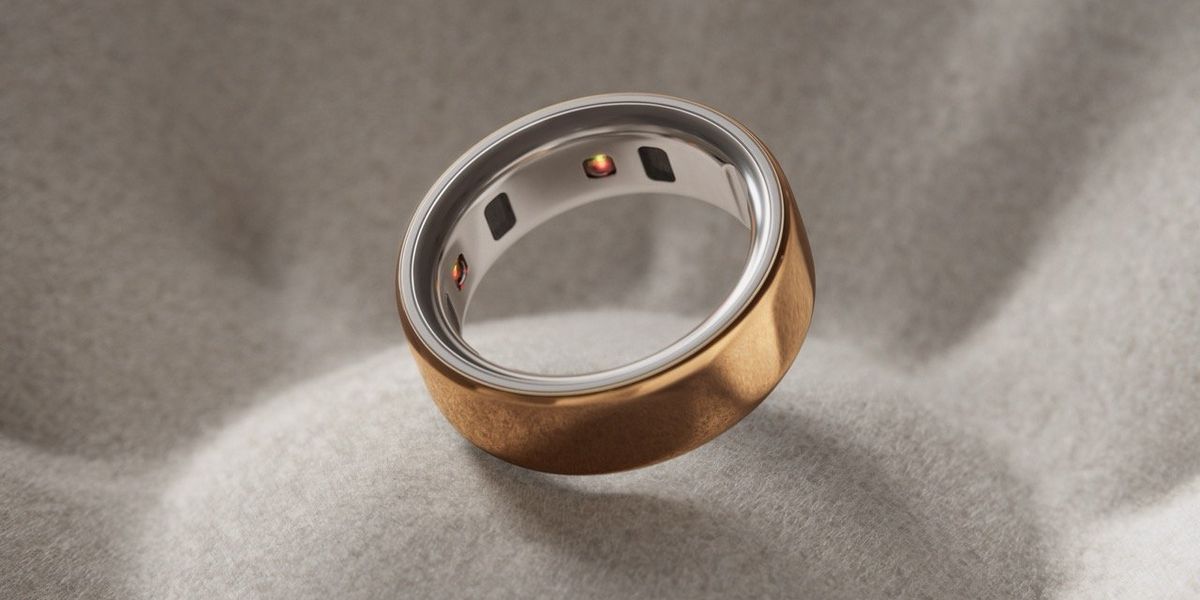
The ring is equipped with green, red, and infrared LEDs to continuously monitor heart rate, heart rate variability (HRV), respiration rate, and overnight blood oxygen saturation (SpO₂). There's also a digital temperature sensor to track changes in skin temperature against your personal baseline, and lastly, Oura has even found room for a 3-axis accelerometer to detect movement, steps, and physical activity all hours of the day.
Unlike a smartwatch or a band, like Whoop! or the latest from Garmin or Fitbit, the Oura Ring 4 effortlessly fits into our everyday life and delivers genuinely useful insights about our health, exercise, and sleep.
In the first few hours, Oura Ring 4 felt like the bulkiest ring we'd ever worn. Oura has done a good job of packing so many sensors into the design, but it's not indistinguishable from any other piece of jewellery. However, after a day or two, the slightly larger size of the Ring 4 faded into the background. We wore it while working, sleeping, and cooking, and there were plenty of moments where we'd forget it was there.
And that's probably the biggest compliment we could give the Oura Ring 4.
The only time we noticed it and felt the need to take it off was when we were lifting weights in the gym.
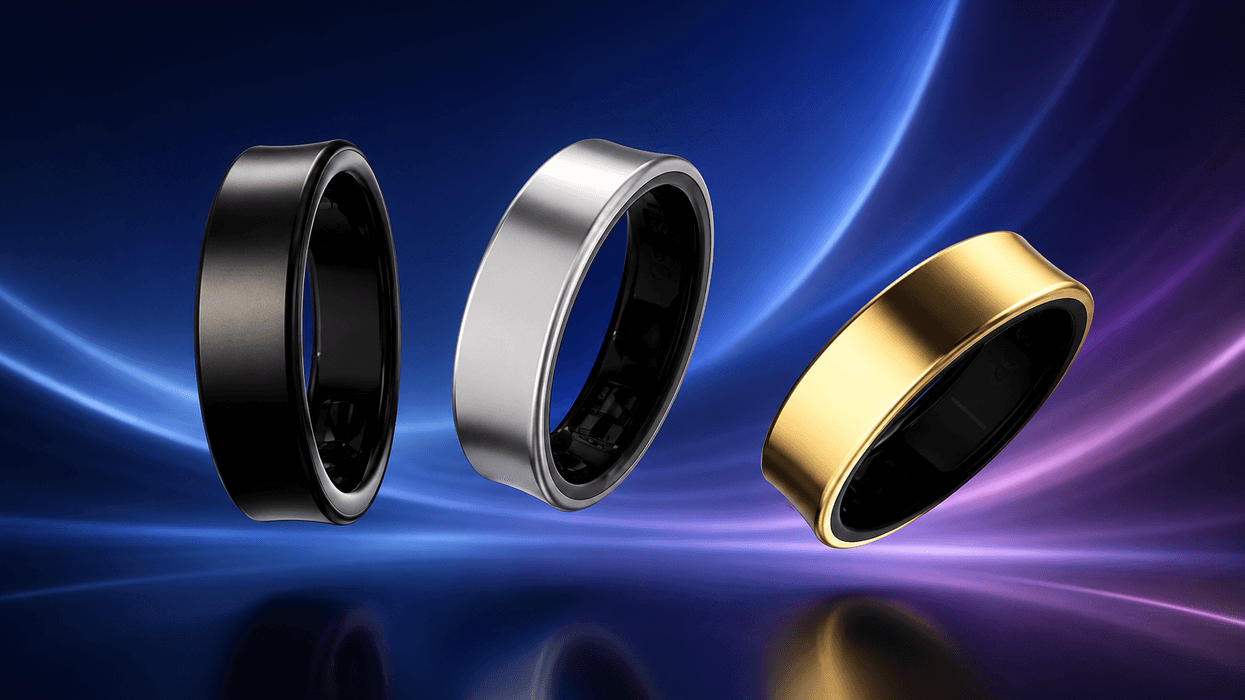
For our review, we picked up the Gold finish because, if we're wearing something 24/7, we wanted it to feel like jewellery first and a gadget second. It pairs well with other jewellery and doesn't immediately scream "I'm wearing wearable tech." One of our friends mentioned they didn't even notice we were wearing a fitness ring.
For anyone who's never liked the look — or feel — of a smartwatch, it's refreshing to have something that blends into everyday outfits instead of dominating your wrist. While it's not as thin as its successor — the Oura Ring 5 — it still blends in pretty well with the rest of our accessories.
We wore it to work, out for dinner, and to the gym without ever feeling like we had a fitness gadget strapped to us. We even went as far as styling it with an evening dress, which we'd never attempt with an Apple Watch.
The lightweight titanium design also makes it ideal for overnight wear.
Unlike sleeping with a chunky smartwatch, the Oura Ring never distracted us while sleeping. That's especially important because it's constantly tracking REM, deep, and light sleep, along with any nighttime disturbances, without a glowing screen lighting up the bedroom with notifications if we forgot to set it to night mode.
We'll admit it — we became a little obsessed with checking our Readiness Score every morning.
Instead of dumping endless graphs and medical-sounding metrics in front of you, the Oura app takes your sleep, heart rate variability (HRV), resting heart rate, and body temperature trends and turns them into a simple score that helps you see just how ready you are for the day.
There were mornings when we woke up feeling absolutely fine, only for the app to politely suggest our body hadn't recovered as well as we thought.
We were in denial of its reading at first. Although the alert did have us paying more attention. We noticed that every time we felt a midday energy slump, it correlated with a lower Readiness Score.
We also saw that if we got enough hours of sleep but low scores on REM and deep sleep, we thought it most likely had to do with higher caffeine intakes from the prior day. Given that we normally have the most caffeine in the middle of the week and that's when our sleep score was always the worst, we decided to test this theory.
We have since cut back on daily caffeine intake and noticed that we banked much more REM and deep sleep over the course of a week.
This coincided with the Sleep Debt scale. Over the course of a few days, this average would tick up or down — based on the amount of time you slept during the week. This included rest at night and naps during the day. Anything less than three hours contributed to low debt, and we noticed anything more than five hours gave us a high debt rating.
On the other hand, some days after a surprisingly good night's sleep, it encouraged us to push ourselves a little harder with more movement, especially if we kept meeting our daily step goal.
Testing this theory as well, we sometimes pushed harder on an evening run than we normally would have if it didn't alert us. We felt less winded afterwards, but we had a hard time telling if it was genuinely due to an extra hour or two of sleep, if it was the result of being consistent with our routine, or both.
Overall, we did become slightly more conscious of our efforts. The daily Readiness Score feels similar to having an accountability partner, which is ideal if you're working to change a lifestyle habit.
If the number of sensors and functions squeezed into the Oura Ring 4 is impressive, then the battery life is even better. Despite its diminutive size, Oura Ring 4 doesn't need to be charged very often.
Smartwatches, like the Apple Watch or Galaxy Watch, need to be topped up every 24-hours if you're tracking workouts, heart rate, and sleep, on top of the incoming notifications, calls, and text messages.
Thankfully, that isn't the case here. We consistently got at least five days from a single charge, and topping it up to full battery only took around an hour. That meant we could wear it overnight every night without worrying it would run out halfway through tracking our sleep.
It's one of those features you don't really appreciate until you stop thinking about charging altogether.
Plus, if you're aiming to track certain functions, like your daytime stress, it needs at least five days of consistent wear before it could start drawing any conclusions from the data.
And you really will want to use those capabilities, since Oura Ring 4 really shines when it spots patterns that you otherwise wouldn't notice yourself. Rather than focusing on a single day's numbers, the app gradually builds a picture of how your body is changing over time. It tracks heart rate, blood oxygen, body temperature, and stress, making it surprisingly easy to notice when something is slightly "off".
In the beginning, the app alerted us to a concerning heart rate variability (HRV), but consistent wear helped Oura determine that it was gradually improving over time.
What We Didn't Love
No product is perfect, and after spending time with the Ring 4, we found a few areas where there's definitely room for improvement. One thing that surprised us was just how much of the ring's value is tied to a monthly membership.
While the hardware already comes with a premium price tag, you'll also need an active subscription to access many of its standout features, including daily Readiness Scores, detailed sleep staging, stress insights, and more in-depth health analysis.
You can select from both the metallic shades and ceramic designs. The metallics start at £349, but could go as high as £499 for colours like the Gold we wore. It's also available in a wider range of sizes — now extending from size 4 to size 15. If you're not sure about your size, Oura will send you a complimentary sizing kit.
If you're hoping to buy the Ring 4 once and have access to everything it offers, the ongoing subscription can make the overall cost feel considerably higher over time.
There are two different versions — free or paid (£5.99). To see your data and take full advantage of what your Oura Ring 4 can do, it may be worth the additional monthly cost.
The free version of the app will only give you access to basic sleep activity and minimal data on daily activity, so you won't be able to access the new features without the paid subscription, as mentioned above.
A paid membership will also give you access to the following:
For identifying long-term health trends, we found Oura Ring 4 genuinely useful. But when it came to day-to-day tracking, the accuracy wasn't always as reliable as we'd hoped.
There were times when quiet evenings – such as relaxing on the sofa or watching television – were logged as sleep, while short periods of wakefulness occasionally went unnoticed.
On the other hand, we found ourselves taking naps between one and two hours long that went unrecorded altogether. When we asked the in-app Oura advisor — the chatty AI assistant — it responded that sometimes naps with light sleep won’t be recognised. However, we know we were in REM sleep because we experienced dreams during that time span, and they still weren't recorded. None of these issues completely spoiled the experience, but they're worth bearing in mind if you're expecting every metric to be spot on.
The Oura Ring 4 does an excellent job of monitoring overall health, recovery, and sleep, but we wouldn't choose it as a dedicated fitness tracker. While it tracks daily movement, it doesn't capture every workout with the same level of detail as a smartwatch.
We found activities such as strength training, yoga, Pilates, and indoor cycling weren't always recorded as accurately, particularly when compared with our Apple Watch. For instance, if we were running a 5km, our ring would sometimes capture only 2km, whereas our watch could record the full 5km.
Where the ring really shines is helping us understand how well we're recovering rather than providing in-depth workout analysis. If your priority is improving sleep, managing stress, and tracking your overall wellbeing, it's an excellent companion. However, if detailed fitness metrics are high on your list, you'll probably still want to wear a smartwatch alongside it.