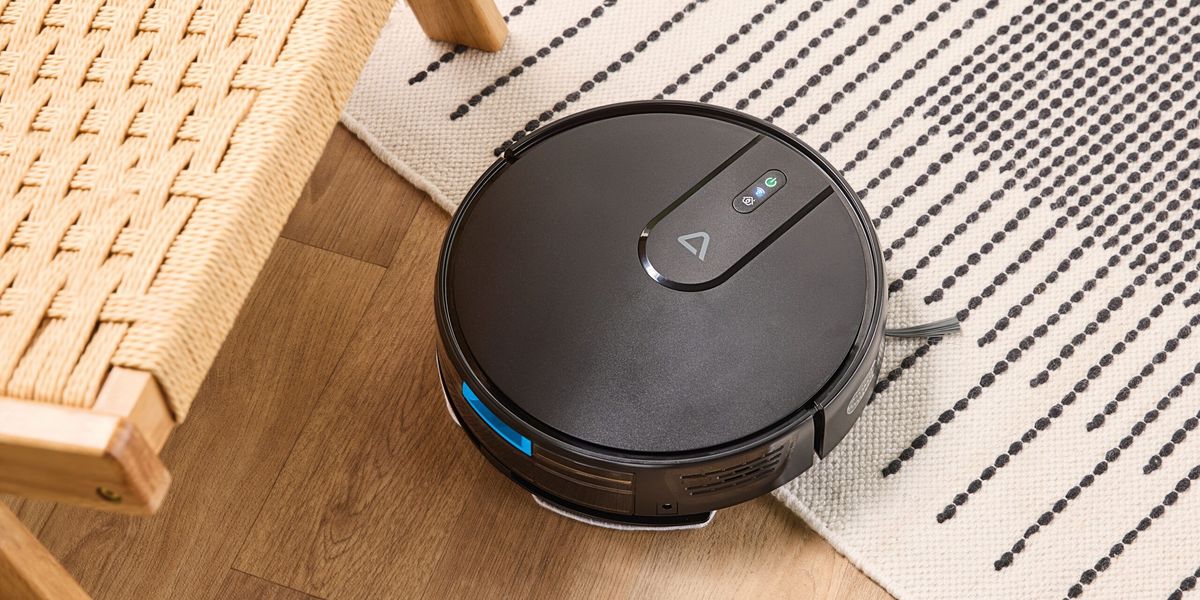
The US Federal Communications Commission (FCC), which regulates and grants licences for interstate and international wireless communications, has unveiled a ban on foreign-manufactured "advanced robotic devices."
The sweeping ban even extends to everyday smart home gadgets, including autonomous vacuum cleaners, like the bestselling Roomba brand from iRobot. It also affects devices from Dyson, Shark, and Roborock.
The FCC says it's taken action to safeguard national security and cybersecurity.
According to the FCC, foreign-produced robotic devices present supply chain vulnerabilities that could harm the American economy and pose an unacceptable risk to the safety and security of the US. Brendan Carr, Chairman of the FCC, said in a statement: "I welcome these Executive Branch national security determinations, and I am pleased that the FCC has now added foreign-produced advanced robotics and power inverters to the FCC’s Covered List.
"Following President Trump’s leadership, the FCC will continue to do our part to secure America’s critical supply chains and, with today’s action, the FCC is acting in lockstep with our national security agencies to do just that."
For those living in the UK who want to keep their feet up while the robot vacuum does the cleaning, Downing Street has no plans to introduce a similar ban in the UK. A UK Government spokesperson told GB News: "We have no plans to introduce a ban on foreign-made robotics at this time. We will continue to monitor security risks."
So what exactly qualifies as a banned device? The FCC's definition covers any "mechanical mobile device" capable of ground-based movement, obstacle avoidance, or navigation that operates independently from a human controller.
The device must also weigh more than 1.9kg. Beyond that, it needs to meet at least one of three additional criteria — possessing environmental sensors, offering wireless connectivity via Bluetooth, WiFi or mobile networks, or running software.
Crucially, the restriction applies solely to newly manufactured products. Any robot vacuum already sitting in an American home or currently available for purchase in the US remains perfectly legal to own and operate.
However, the overwhelming majority of robotic vacuum manufacturers are based overseas, predominantly in China. Roborock operates from Beijing, Ecovacs is headquartered in Suzhou, and Shark's products are made in China and Vietnam. Dyson, meanwhile, is based in Singapore.
Even the iconic Roomba is no longer American-owned. iRobot, which originally launched the device in the US back in 2002, was taken over by Chinese firm Shenzhen Picea Robotics in January, with production facilities situated in China and Vietnam.
Dr Maor Farid, Co-Founder and CEO of Leo AI told GB News that this could mean: "less choice, higher prices, and slower feature cycles in categories where nearly all supply comes from abroad. My practical advice to a buyer today is boring but useful — check whether the robot still works with the internet off, whether you can delete the house map, and whether the company publishes what leaves the device."
Certain categories of robotics have been carved out from the ban. Self-driving cars and trains, unmanned aircraft, underwater vehicles, surgical robots, wheelchairs, and fixed industrial or medical robotic arms are all exempt.
When asked if other countries like the UK should follow similar restrictions, Dr Farid said: "Only if it pairs the restriction with a serious push on domestic design and engineering capacity, and my honest expectation is that most governments will do the first half and skip the second. Restrictions without capacity just mean fewer products at higher prices and a home robotics sector that never gets built.
"The UK's real constraint is people, not policy. Mechanical, controls and manufacturing engineers are the hardest roles to fill across advanced manufacturing right now, and those searches routinely run past 60 days."
Companies behind the robot vacuums could be eligible to apply for a waiver, but the new devices must be designed and assembled domestically and must source at least 65% of their components within the US.