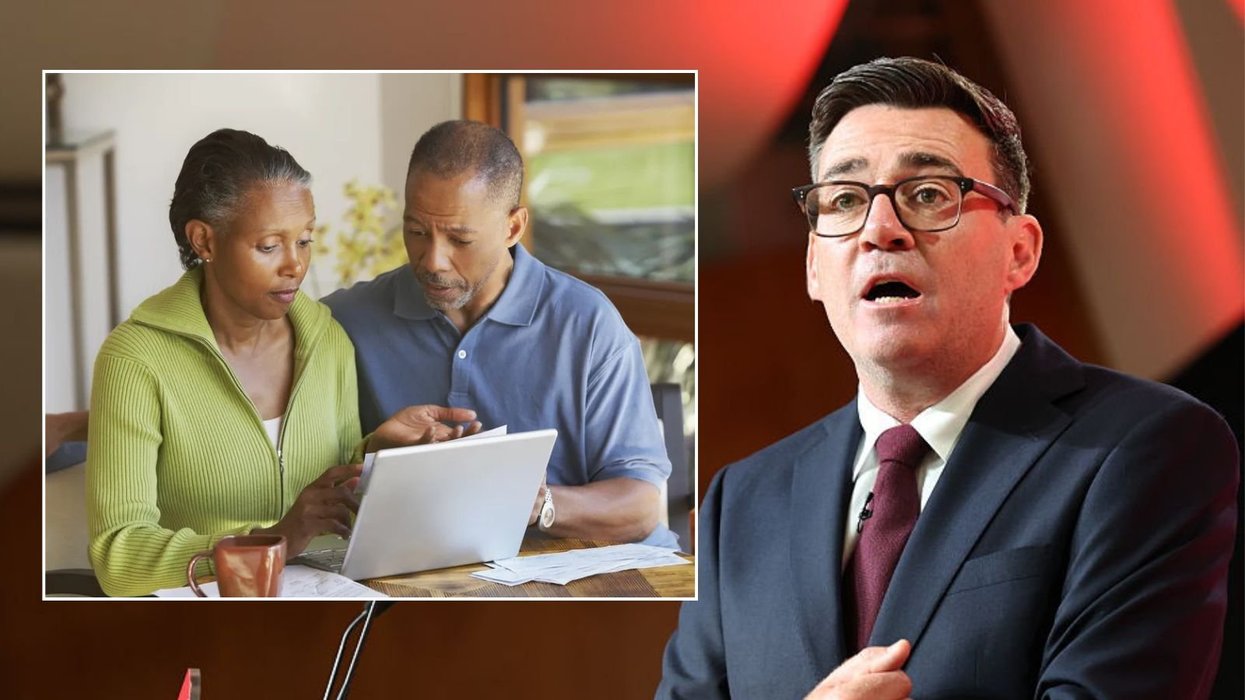
Prime Minister Andy Burnham is considering a 10 per cent levy on all estates after death to help fund an overhaul of social care.
The controversial proposal could replace inheritance tax and raise money towards a new National Care Service, which is estimated to cost up to £18.7billion a year.
Downing Street refused to rule out the policy on Monday when asked whether the Prime Minister still supported it.
Mr Burnham's official spokesman said: "I'm just not going to get ahead of his update on this issue, which will come later in the week."
He added: "He's also been clear about the consequences of not doing it, which is that the NHS would collapse under the weight of having to care for people not really needed in the NHS system."
Unlike the current inheritance tax system, a flat 10 per cent charge could apply to every estate, potentially requiring millions more families to pay tax when someone dies.
Mr Burnham first proposed abolishing inheritance tax and replacing it with a 10 per cent levy on all estates in 2009, when he was health secretary under Gordon Brown.
The plan was dropped after the Conservatives branded it a "death tax", a description that proved politically damaging.
However, Mr Burnham has continued to raise the idea of using inherited wealth to pay for social care.
During the Makerfield by-election campaign in June, he told The Guardian that he would "look at all of the kind of implications" surrounding inheritance tax and care funding.
At a New Statesman conference two years earlier, he argued that inheritance tax should be changed so that people with greater wealth and more valuable assets contributed more towards the cost of care.
The Prime Minister is expected to provide an update on his plans later this week.
In his first major interview since entering Downing Street, he warned that the NHS could collapse unless the social care system was urgently reformed.
Speaking to the BBC's Laura Kuenssberg, Mr Burnham said: "If we don't do it, the NHS will collapse under the weight of trying to care for people who've really not needed to end up in the NHS system."
He promised to use "whatever political capital I have" to secure meaningful change and said he would not want to leave office without delivering "substantial" social care reform.
Although he declined to set a firm timetable, he said "major changes" could be introduced during the three years remaining before the next general election.
Mr Burnham has previously called for a "conversation with the public" about how care should be funded as Britain's population ages.
The proposal has already drawn strong criticism from opposition parties.
Shadow chancellor Sir Mel Stride said: "Britain cannot afford another Labour tax rise. If Andy Burnham wants to find money, he should cut the welfare bill."
He accused the Prime Minister of "taking aim at people who have worked, saved and invested to leave a legacy for their children."
Sir Mel added: "Whoever leads the Labour Party, they are always looking for more ways to tax hardworking people. Only the Conservatives will deliver an economic revolution, cutting taxes and spending and getting Britain working again."
Reform UK leader Nigel Farage also attacked the idea, arguing that the Government had no electoral mandate to introduce it and that it would "disproportionately hit those who earned modestly but saved hard."
He described the proposal as "a tax on the lower-middle classes who have already spent a lifetime paying into the system" and pledged that Reform UK would "fight a death tax every step of the way."
Under the current system, married couples and civil partners can potentially pass on as much as £1million to their children without paying inheritance tax. Tax is generally charged only on the portion of an estate above the available tax-free allowances.
Inheritance tax currently raises almost £9billion a year for the Treasury, while government spending on social care is forecast to reach £39billion by the end of the decade.
Mr Burnham inherited an independent review of social care established by his predecessor, Sir Keir Starmer, in January 2025.
The commission, led by Baroness Casey, is carrying out its work in two stages. Recommendations for short-term improvements are expected later this year, while wider proposals for funding reform are due in 2028.
Sir Keir's government also extended inheritance tax to agricultural assets for the first time. Agricultural holdings worth more than £2.5million are now subject to the tax after the original £1million threshold was raised following opposition from rural MPs and farming groups.
Industry bodies warned that the policy could force families to divide or sell farms, while closures of rural businesses reached record levels last year.