Thank you for subscribing!
Most City analysts had expected the Government to record no borrowing at all during the month
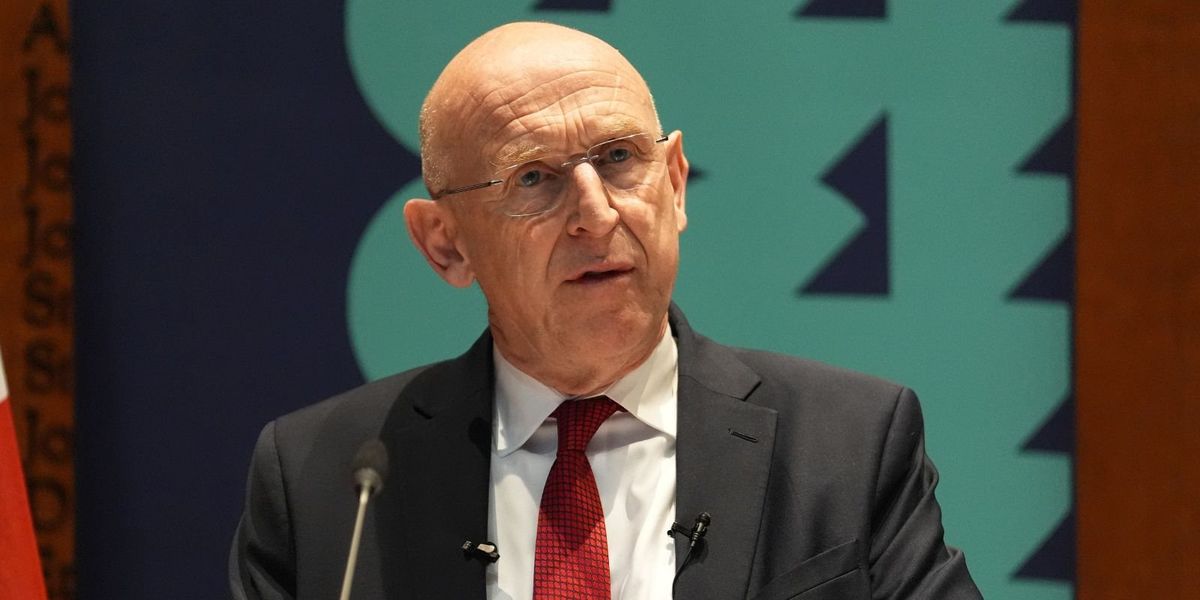
Chancellor John Healey has been warned that "difficult decisions" lie ahead after the Government borrowed £1.8billion in a month when forecasters expected the public finances to balance or record a surplus.
The unexpected July shortfall has exposed the pressure facing the Chancellor before his first Budget on October 28.
Britain's national debt moved within touching distance of £3trillion in July as rising benefit payments placed further pressure on the public finances.
Figures from the Office for National Statistics show total debt reached £2.985trillion, while the Government borrowed £1.8billion during the month.
Borrowing was £700million higher than in July last year, representing an increase of 68.7 per cent.
Most City analysts had expected the public finances to balance, while the Office for Budget Responsibility had forecast a £500million surplus.
Benefit payments rose by £2billion, or 7.2 per cent, to £30billion. Strong self-assessed income tax receipts offered the Treasury some relief, but were not enough to prevent the unexpected deficit.
The figures leave Mr Healey facing renewed pressure to raise revenue or control spending when he delivers his first Budget in October.
Professor Joe Nellis, head of economic research at accountancy firm MHA, said: "One encouraging month will not be enough to prevent difficult decisions that must be made in the upcoming October Budget."
Across the first four months of the financial year, the Government borrowed £56.7billion. This was higher than the OBR had forecast, although it was £6billion lower than during the same period last year, a reduction of 9.6 per cent.
July is normally a strong month for the public finances because the Treasury receives large self-assessed income tax payments. Mr Nellis therefore warned that "this improvement must be treated with caution".
He described July’s figure as "a dramatic improvement on the £16billion borrowed in June", but warned that the wider financial position remained difficult.
Government debt continues to stand above 94 per cent of GDP, while debt interest costs are forecast to exceed £115billion during the current financial year.
Mr Nellis said high debt costs, combined with growing pressure on public services, "further restrict the Government’s room for manoeuvre".
Mr Healey defended his approach, saying: "Fiscal discipline is the bedrock of our UK economic stability and national security, which is why we are committed to meeting our fiscal rules, with a buffer against global uncertainties."
The Chancellor added: "We are cutting the deficit faster than any other G7 economy while giving people a bit of breathing space with cost-of-living pressures and focusing support to get young people into work."
However, Mr Nellis warned that "the bigger fiscal picture remains uncomfortable", with borrowing during the opening months of the financial year running above OBR forecasts.
He said July’s stronger performance was unlikely to last through August and September, meaning the Government could be forced to deliver a substantial squeeze at its first Budget.
Mr Nellis said: "July's improvement in the public finances will not continue throughout August and September, meaning the new Government will be forced to engineer a significant fiscal squeeze in their first Budget."
He described the Autumn Budget as "increasingly important", with Mr Healey facing difficult choices over how to restore the public finances.
The Chancellor "will have to find some combination of additional tax revenue, tighter control over public sector spending and changes elsewhere in the Government's economic plans to balance the books", Mr Nellis explained.
The Government must also comply with the fiscal rules originally introduced by Rachel Reeves. Mr Nellis warned that "failure to do so will unsettle the financial markets and potentially push up the cost of government borrowing still further".
However, substantial tax increases could create another problem by discouraging households from spending and businesses from investing.
Mr Nellis cautioned that "pushing taxes significantly higher would weaken consumer and business confidence at precisely the point when the economy needs stronger investment and growth".
He described the challenge as "a difficult balancing act: maintaining financial credibility with financial markets while avoiding policies that unnecessarily weaken the economy".
Mr Nellis concluded that July’s lower borrowing offered some relief, "but does not make the difficult choices awaiting the government in October disappear".