Thank you for subscribing!
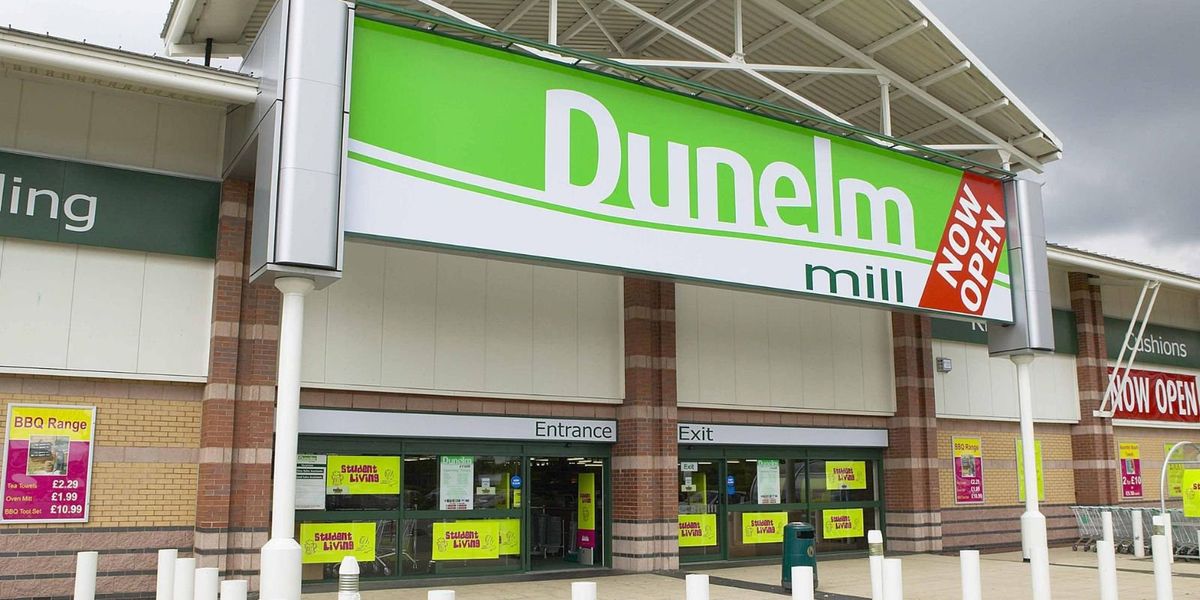
Despite the job cuts, Dunelm said it was targeting around 100 potential locations for new stores
One of Britain's biggest homeware retailers is making major changes to its business as it looks to save £100million.
Jobs have already been cut, with further savings planned over the next three years.
Dunelm has removed around 95 central roles across its support and distribution teams in the past three months, equivalent to roughly eight per cent of its central workforce.
The retailer plans to cut what it describes as "unproductive" costs as part of a new strategy aimed at growing the business while making it more efficient.
Dunelm wants to achieve the full £100million of savings by its 2029 financial year through restructuring and changes to the way the company operates.
Shares in the retailer fell 10 per cent following the announcement, which came alongside a warning that trading had weakened during July and August.
Despite the cost-cutting programme, Dunelm is also planning a major expansion of its store network.
The company has identified around 100 possible locations for new shops and plans to open as many as 10 stores a year over the next three years.
This could result in up to 30 new stores opening by 2029, with each location expected to create around 50 jobs.
The expansion could therefore create around 1,500 jobs if all 30 stores open as planned, partly offsetting the central roles already lost.
Dunelm also plans to improve its existing stores over the next three years and simplify its product ranges in an effort to better serve customers.
Ms Moriarty, the company's chief executive, said the business had taken "a deep and honest look" at its operations and concluded that "the opportunity in front of Dunelm is larger than we previously understood".
The retailer is also betting on technology to drive efficiency gains. Dunelm plans to deploy artificial intelligence and automation across its operations, while rolling out radio-frequency identification chips embedded in products to boost stock accuracy and availability.
These measures, combined with further targeted restructuring over the coming three years, are expected to deliver around £40million of the annual cost savings.
The company did not confirm whether additional job losses would follow, stating only that "further targeted cost removal" from restructuring would contribute to the savings target.
Ms Moriarty added: "The strength of our business and balance sheet means we are well placed to invest for the future and accelerate our growth trajectory."
The cost-cutting plans were unveiled against a backdrop of difficult trading conditions. Dunelm said unusually hot weather since the start of its new financial year at the end of June had dampened demand by disrupting shopping patterns.
Beyond the summer heat, the retailer pointed to "challenging" conditions continuing to weigh on consumer confidence. Elevated interest rates, persistent inflation and a shifting political landscape were all cited as factors pushing shoppers to be more selective with their spending.
Consumers were increasingly seeking out promotions and hunting for value, particularly when it came to non-essential purchases such as homeware.
Despite these headwinds, Dunelm posted total sales of £1.83billion for the year to June 27, a rise of 3.1 per cent on the previous year. Pre-tax profit held steady at £211million.
Dan Coatsworth, head of markets at AJ Bell, said the summer heatwave had clearly kept shoppers "in the cool of their home rather than sweating it out in retail parks or the high street".
Mr Coatsworth described the growth plan as having "common sense at the core" but noted it was far from an ideal moment to launch such a strategy, given the warning about weaker trading had "knocked Dunelm's shares for six".
He cautioned that the retailer would "clearly have to spend money to make money" through store upgrades and new openings.
While such investment could generate benefits over time, Mr Coatsworth warned that investors "are increasingly short-term in focus and might simply see these efforts as gobbling up cash that might have otherwise been used for greater share buybacks and/or dividends".