Thank you for subscribing!
Plans to house 1,250 asylum seekers next to a village of 350 people show what happens when Westminster ignores small communities, writes the chair of Piddington Parish Council
A song can sometimes express what speeches, meetings and official correspondence cannot.
"The Battle for Britain", a new anthem inspired by Piddington's campaign, was not commissioned by the parish council or written by a political organisation. It was gifted to us by one of the ordinary people who discovered our story through TikTok and felt compelled to support our village.
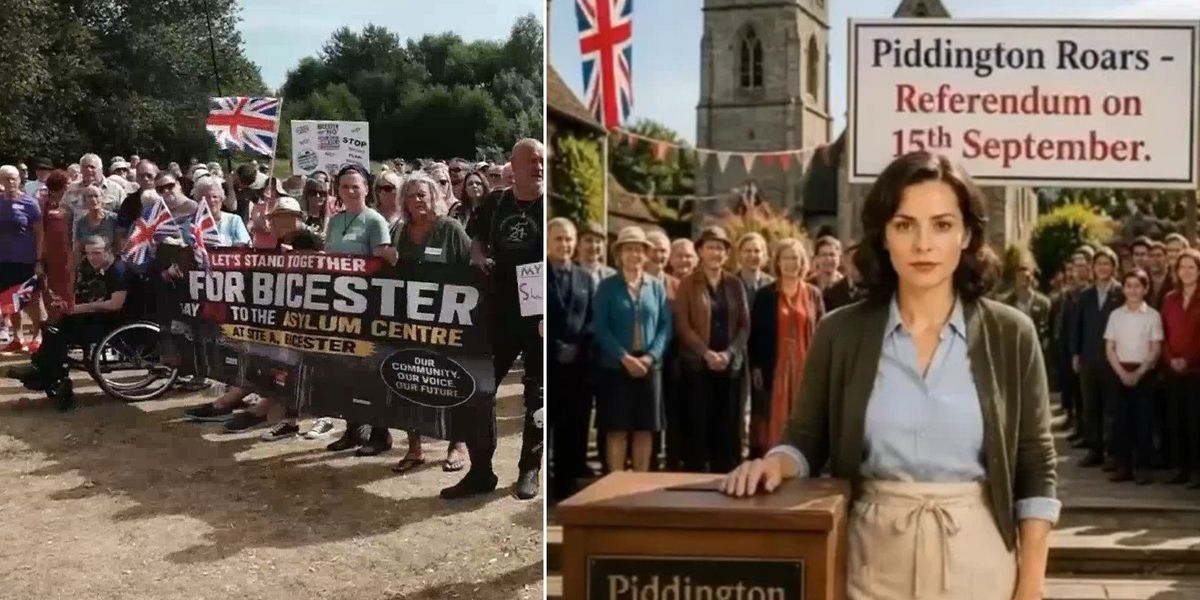
That matters because Piddington's campaign is no longer only about one Oxfordshire community. It has become a symbol of what happens when decisions are made in Westminster but their consequences are imposed on small communities without meaningful consultation.
Piddington has around 350 residents. The Government's proposal could see up to 1,250 single adult male asylum seekers accommodated at the nearby former military site. This is not a minor development. It would introduce a population several times larger than our village into an area with no shop, no pub and limited public transport or local services.
The nearest substantial amenities are approximately six miles away, reached along fast rural roads that in places have no pavements. Residents have raised serious questions about policing, healthcare, transport, sewage, electricity, safeguarding and the effect upon 46 local children.
Those concerns should not be dismissed as hostility towards individuals seeking asylum. They are legitimate questions about scale, suitability and democratic accountability.
If the Government asked a large town or city to accept a sudden population increase of several hundred per cent, it would require extensive planning, infrastructure and public engagement. Piddington deserves the same consideration. A small rural village should not count for less simply because it has fewer voters and a quieter voice.
That is why the anthem has resonated so deeply. It captures the frustration of people who feel unheard, but it also captures their determination not to surrender their right to question those in power.
When we speak of a "Battle for Britain", we are not equating our campaign with the sacrifice of those who defended this country during the Second World War. We are drawing upon the democratic inheritance they protected: freedom of speech, accountable Government and the principle that the state serves its citizens—not the other way around.
Our village has written letters, asked questions, spoken to the media and invited political leaders to meet us. We have not hidden our concerns, and we will not be shamed into silence for expressing them.
The Government may regard Piddington as a convenient location on a map. To us, it is our home. It is where children play, families have built their lives and neighbours look after one another.
The anthem is therefore more than a song. It is a message from one small village to the country: decisions of national importance must not be forced upon communities without proper scrutiny, honest answers and meaningful consent.
Piddington did not choose this battle. But through the generosity of a supporter who turned our story into music, we now have an anthem—and Britain can hear us roar.