A visit by the new Prime Minister 'could mark a crucial turning point' in Government attitudes towards oil and gas, a trade body suggests
New Prime Minister Andy Burnham must make an urgent trip to meet North Sea operators to prove he is serious about domestic energy, industry leaders say.
A visit by the new Prime Minister “could mark a crucial turning point” in Government attitudes towards offshore oil and gas, the trade body suggests.
Offshore Energies UK says it has requested an urgent prime ministerial visit to operators in Scotland and the Northeast of England.
“For too long, offshore workers, engineers, technicians and those across the energy supply chain have been talked about rather than listened to,” said chief executive, David Whitehouse. “A visit to meet the North Sea workforce would demonstrate that the new Government intends to build a different relationship with the people and communities at the heart of Britain’s energy system.”
The North Sea has become a key energy issue for the Government. Under Labour, new exploration licences have been banned – a pledge the party made in its manifesto.
Operators face a windfall tax that means 78 per cent of their profits are paid in levies.
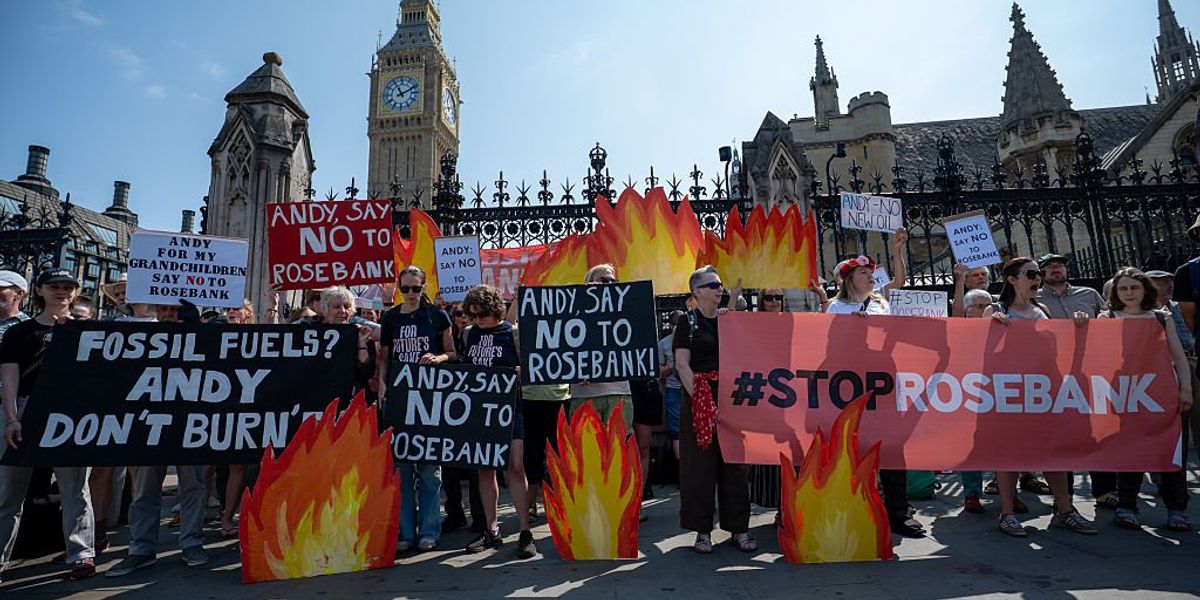
Work at both Rosebank, Britain’s largest uptapped oil field, and Jackdaw, a gas field, has stopped, pending legal challenges on climate grounds.
The decision on whether it can restart rests with the Energy Secretary.
Ed Miliband once described Rosebank as “climate vandalism”. It has been widely reported Mr Burnham is set to relax the rules on the North Sea, although few details have been given.
Labour's deputy leader Lucy Powell said Mr Burnham would stick to the party's manifesto commitments on new licences, but there would be a "change of emphasis" on North Sea oil and gas.
But Mr Whitehouse said: “Words of support for projects such as Jackdaw and Rosebank cannot be a substitute for the policy reset our country needs.”
OEUK says the Government has an opportunity “to reset the relationship with the North Sea industry and the communities that depend on it”.
“The choice is not between oil and gas or clean energy,” it argues. “It is whether we produce the energy we need here in the UK, with our own workers and supply chains, or import more from overseas at higher cost and with higher emissions.”
It says reform of the regulatory and tax framework for the North Sea industry, including changes to the windfall tax, could unlock an additional £50billion in investment.
This could boost tax receipts by £13 billion and support tens of thousands of jobs, it argues.
Mr Whitehouse said: “The UK will still need oil and gas for decades to come. The question is whether we produce as much of that energy as possible here — supporting our own jobs, communities and economy — or rely increasingly on imports while exporting investment and economic value overseas. Government policy should back North Sea production as part of a secure and managed energy transition. Energy policy cannot be made in Westminster alone without listening to the people and communities who have powered this country for the last 50 years.”
Mr Whitehouse continued: “The new Prime Minister must now turn listening into action. Words of support for projects such as Jackdaw and Rosebank cannot be a substitute for the policy reset our country needs. The new Government must back North Sea oil and gas over increased reliance on imports — delivering the fiscal and regulatory reforms required to unlock investment, protect domestic jobs, strengthen energy security and support the energy transition.”
Scottish Conservative leader Russell Findlay said a change of Prime Minster made no difference.
He called for the ban on drilling needed to be overturned in its entirety.
He said: “Labour’s decision to boot Sir Keir Starmer out of 10 Downing Street changes absolutely nothing. Unless Burnham rejects net zero zealots Ed Miliband’s idiotic ban on new North Sea drilling, 1,000 jobs every month will continue to be lost and the industry will be destroyed.”
But climate campaigners have scrambled to urge the Government to hold firm on its North Sea approach.
Jess Ralston, Head of Energy at the Energy and Climate Intelligence Unit (ECIU), said the Iran War showed the danger of being reliant on fossil fuel.
She said: "Gas prices rising to near the peaks of the start of the US-Iran war is a reminder that whatever we do in the UK, it has no significant impact on the price we pay for gas. The reality is that we are tied to international markets and the volatility that has come twice in the past few years from war thousands of miles away. North Sea gas output will continue to decline whatever happens as it’s a mature basin, so unless we speed the switch to electric heat pumps powered by British renewables, more and more of us will be at the whim of Putin and Trump for the prices we pay to heat our homes with a gas boiler.”