An archaeologist was observing the stonework at the end of a dark, dingy corridor beneath the court
Archaeologists looking beneath Chester Crown Court have found an 800-year-old section of a medieval castle using little more than the light from a smartphones.
An archaeologist was observing the stonework at the end of a dark, dingy corridor beneath the court when he raised his phone to illuminate his surroundings.
What came next left him stunned as he noticed a sharp change in masonry.
“By the light of my phone I could immediately tell that a large section of wall in the gloom ahead was totally different”, Dr Ainsworth from the University of Chester explained.
“It turned a right angle and disappeared out of sight, leaving a very dark, narrow gap that I couldn’t squeeze into.”
Researchers compared the stones and the building technique with the surviving sections of the Norman castle, discovering parts of the underground wall dated to the medieval period as opposed to the 18th century.
During the latter period, Thomas Harrison built much of the existing prison and court complex.
Hidden inside the newer construction was the Chester Castle’s medieval defences, which had survived for centuries.
“The wall I discovered is massive - almost three metres high - so we know that he left a lot of the medieval stonework untouched”, Dr Ainsworth said, referring to later builders.
“And I’m guessing much more may survive under the car park and castle complex.”
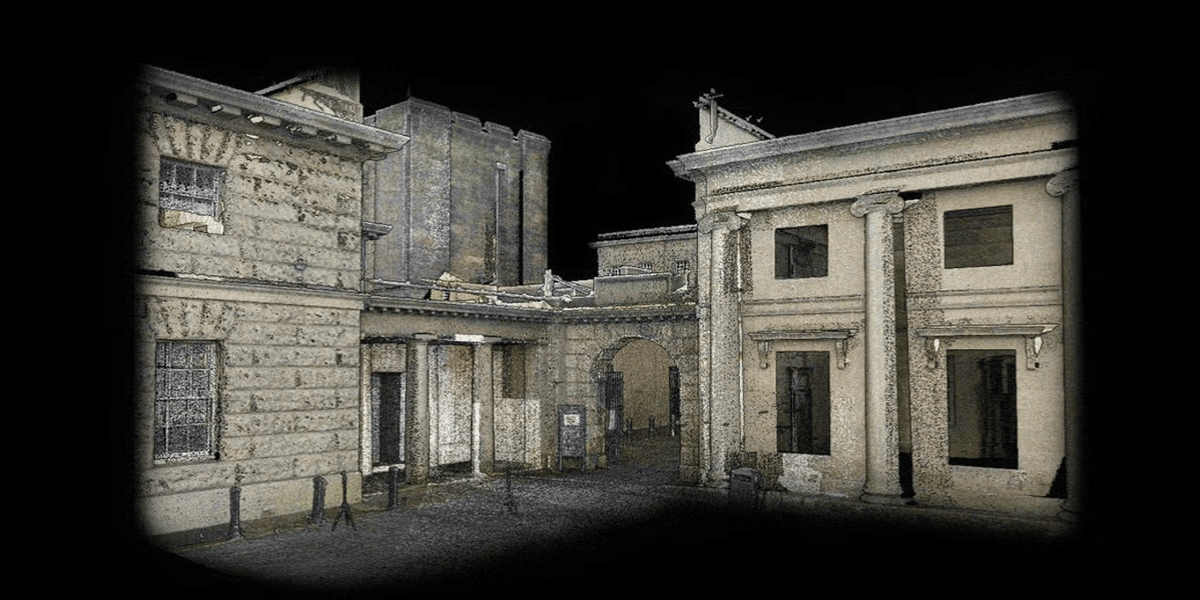
Digital scanners were used to pinpoint the location of the underground wall.
Using old maps and plans, archaeologists found it was once part of a bridge built 800 years ago.
Researchers say the bridge cut across a deep ditch surrounding the castle’s inner ward, but the 13th-century gateway was eventually demolished.
Visitors at Beeston Castle might notice the medieval bridge spanning the deep ditch has a striking resemblance to the one at Chester Crown Court.
The Beeston Castle drawbridge was raised to prevent attackers reaching the gatehouse, and archaeologists believe this was similarly the case at Chester Castle.
“I think it is amazing that by doing proactive surveys and recording of historic buildings, we are able to discover unknown archaeology,” Jonathan Lightfoot, Cheshire Constabulary’s PC, said.
“This just shows we can now safeguard this bit of history so we can learn from it for future generations.”