The giant orange primates enjoy playdates as youngsters, a groundbreaking new study has found
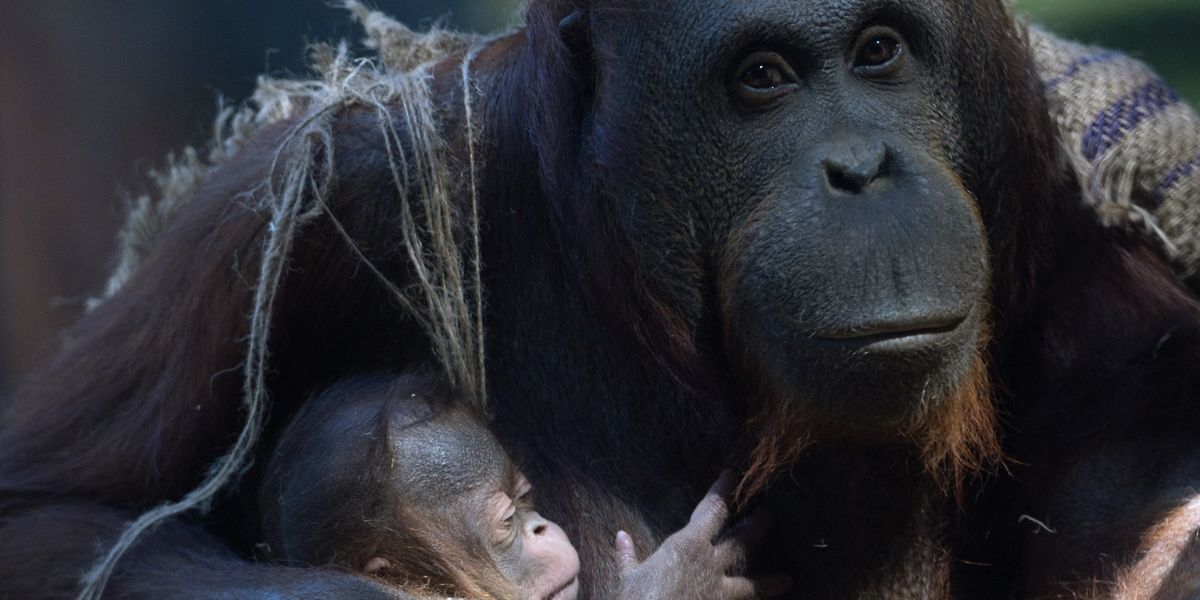
Orangutan mothers organise "playdates" between their children, similar to humans, a new study has revealed.
Wild Bornean orangutans are traditionally the most solitary of great apes.
But new research has found that mother orangutans plan ahead and arrange meetings so their young can play with other infant apes.
Researchers analysed around 30,000 hours of observations, collected over 15 years, of 31 mother-and-young pairs in Central Kalimantan, Indonesia.
They discovered mothers with offspring close in age would more frequently use the same areas of the areas.
Their young apes were increasingly likely to play together as a result.
Mothers and their young would travel towards an area days before a meetup.
After the play session was finished, the orangutans would head their separate ways to their usual "core" feeding grounds.
The researchers, led by Odd T Jacobson of the Max Planck Institute of Animal Behaviour in Konstanz, Germany, wrote in the study: "Mothers plan and actively structure social opportunities for their offspring.
"These encounters are planned and actively pursued over multiple days rather than arising by chance."
This stands in contrast to the apes' usual reclusive natures, spending the vast majority of their time travelling and foraging alone.
Female orangutans usually give birth one at a time and may wait more than seven years before having another.
MORE MONKEY BUSINESS:
This means the young apes do not usually have the opportunity to socialise and wrestle with other youth.
The apes do have overlapping home ranges - with playdates concentrated in places where ranges intersected with those of neighbours and where children were of a suitable age.
Orangutan mothers were less likely to eat on days when playdates occurred.
"Orangutan mothers incorporate offspring social needs into daily ranging decisions at a cost to their own energy budgets," researchers said.
Previous research on a number of species has suggested playing as a youngster is crucial to success as an adult.
In wild brown bears, cubs which spent more time wrestling and tumbling with others were more likely to survive and become independent.
And young male dolphins in Australia were found to practice adult life, such as chasing and co-ordinating with one another, through play.
Males that played more when they were young also went on to father more calves.