Thank you for subscribing!
The mystery of how the Devil's Arrows came to be looks to have been solved at long last
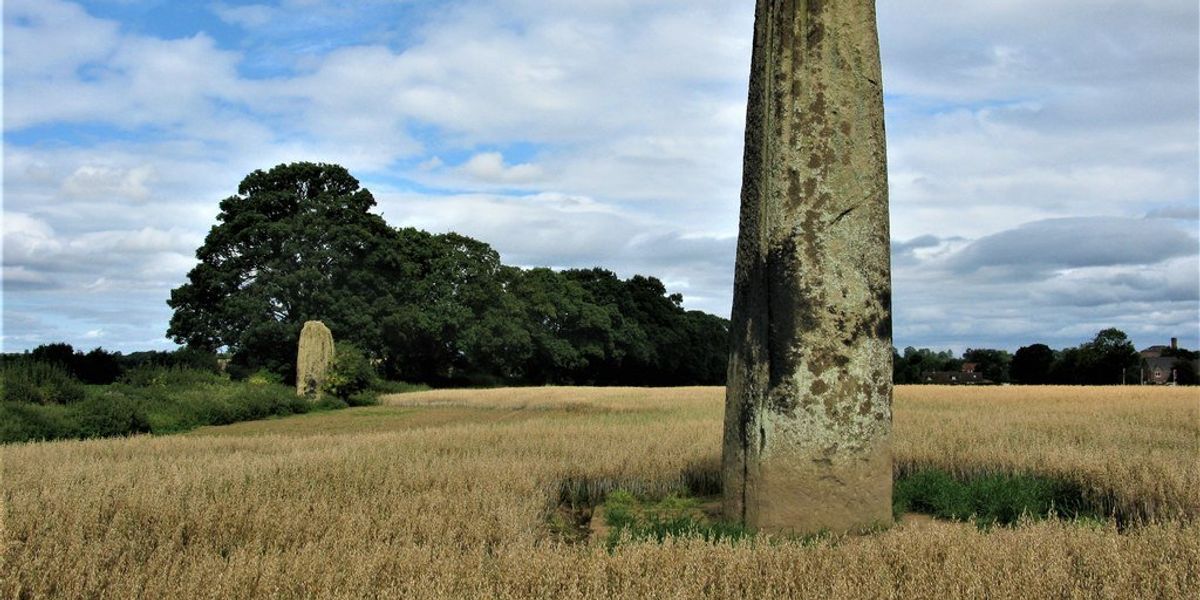
A new study appears to have revealed how three enormous standing stones in Yorkshire were erected thousands of years ago.
Known as the Devil's Arrows, the prehistoric monument dates back roughly 4,500 to 5,000 years.
Each stone towers nearly 23 feet tall and weighs around 25 tonnes.
Though they are slightly younger than Stonehenge, the Devil's Arrows are taller than the world-famous Wiltshire monument.
And while they sit on Triassic Sherwood Sandstone, they are made of Pennine Basin Millstone Grit.
This geological mismatch has long fuelled debate over exactly how they arrived at their current location.
Some researchers believed humans dragged them into place, while others argued ice-age glaciers carried them there.
Researchers from the University of York and Curtin University in Perth, Australia, now believe they have cracked the case.
Their mineral analysis indicates the stones were sourced and moved from Brimham Rocks, around 11 miles away.
"Sites in southern England and Scotland receive considerable attention, but monuments like the Devil's Arrows have remained comparatively understudied despite their significance," said Dr Jim Leary, from the University of York.
"We have now proved that Neolithic communities moved several 25-tonne stones 18 kilometres across Yorkshire, transforming a familiar site into an epic quest to create a sacred landscape."
The findings overturn previous assumptions about where the stones came from.
Dr Anthony Clarke, a geochemist at Curtin University, explained that the stones were not taken from the nearest available source.
ARCHAEOLOGY BREAKTHROUGHS ON BRITISH SOIL - READ MORE:
Instead, he said they were "deliberately chosen from a challenging landscape 18 kilometres away".
"Plumpton Rocks, which is closer to the Devil's Arrows, had previously been identified as the probable source of the stones," Dr Clarke continued.
"Our findings instead point to Brimham Rocks, showing that prehistoric builders transported these enormous stones significantly further than thought.
"Each stone weighs more than 25 tonnes, so moving them would have required incredible planning, coordination and engineering skill."
"This tells us prehistoric people placed real importance on the landscape itself. It wasn't just about convenience - the location the stones came from likely held meaning for them."
The monument's pillars are spread across 174 metres on the western edge of Boroughbridge, a town home to just shy of 4,000 people.
Although three stones stand at the site today, historical records suggest there were once at least five.
Tudor antiquarian John Leland documented a fourth upright stone during the mid-16th century.
By the decades that followed, however, this additional stone appears to have vanished.
The stones date to approximately 2500-2000 BC, placing them among the oldest such structures in Britain.