



A mystery behind Botticelli's Birth of Venus may finally have been solved after hundreds of years.
For centuries, art enthusiasts have puzzled over the distinctive squint visible in the Renaissance masterpiece.
Theorists had long proposed Venus's misaligned eye was a symbol representing piety and beauty.
But now, researchers from Queen Mary University of London have offered a different explanation.
Their analysis suggests Simonetta Vespucci, who posed for the celebrated masterpiece, suffered from a brain tumour responsible for her unusual gaze.
"It's possible that the irregular eye positioning in the Birth of Venus – the 'strabismus' or squint later considered a trait of piety and beauty – may be caused by the pituitary tumor," said senior author Paolo Pozzilli.
The type of tumour they found is a pituitary adenoma, a benign growth affecting the gland at the base of the brain.
Researchers used facial recognition algorithms on five separate portraits featuring Simonetta to reach their conclusions.
A deep learning model analysed the paintings and detected multiple indicators of the condition.
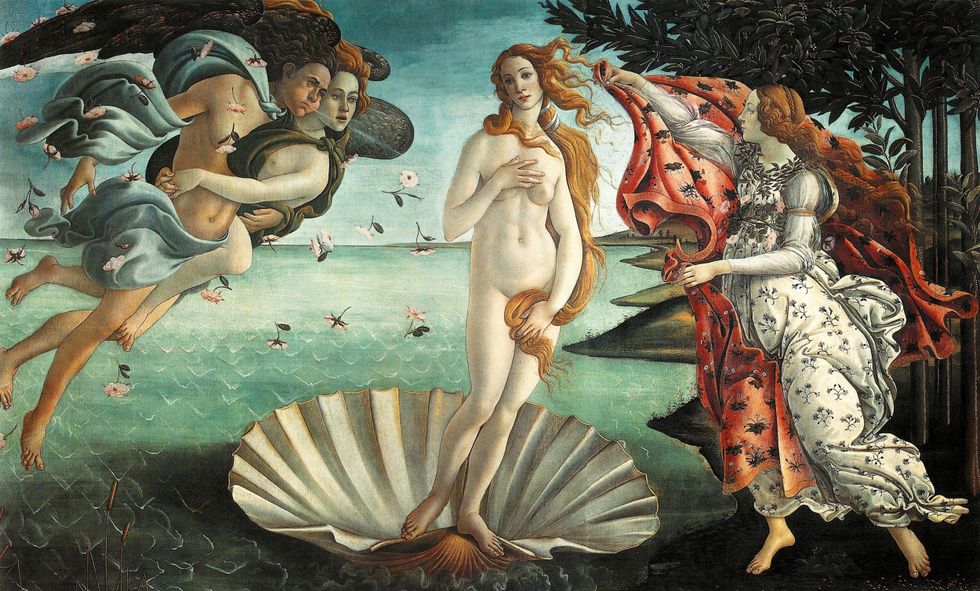
QMUL research suggests Simonetta Vespucci, who posed for the celebrated masterpiece the Birth of Venus, suffered from a brain tumour
|GETTY
Beyond the squint, the technology revealed another telling symptom: lactation.
"Botticelli's Allegorical portrait of a Woman shows a woman – the model is Simonetta Vespucci – lactating, and yet we know she had no children," said first author Dr Domiziana Nardelli.
"This is a surprising way to portray her, and we believe that this – along with changes in facial traits – could show the real physical symptoms of a prolactin–growth hormone secreting adenoma."
Simonetta Vespucci was a prominent figure in Florentine society before her death at just 23.
The researchers examined historical correspondence to understand her final moments.
MYSTERIES OF THE ART WORLD - READ MORE:
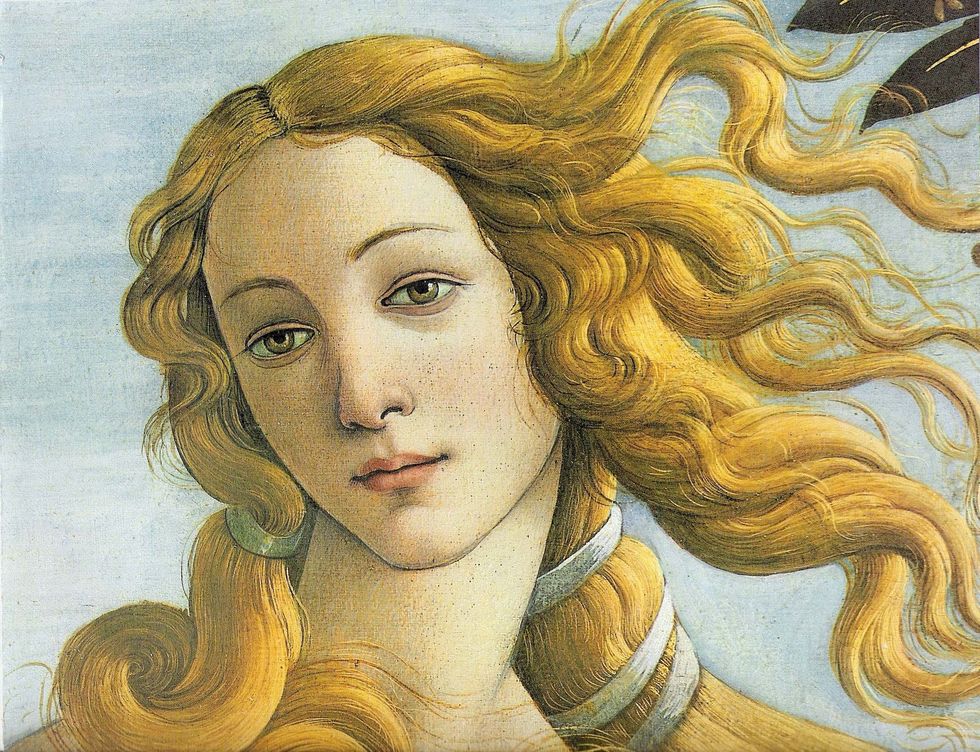
Close-ups of the model's face as depicted in the artwork reveal how her eyes are irregularly positioned
|WIKIMEDIA COMMONS
"Letters between Piero Vespucci and Lorenzo de' Medici about Simonetta's final days discuss how she collapsed during a ball and was then resting in a darkened room where she suffered from terrible headaches, hallucinations, vomiting and high fever," said Dr Nardelli.
"These are all symptoms of a rapidly expanding pituitary tumor."
The study concludes that tumour apoplexy, a sudden medical emergency caused by the adenoma's expansion, likely killed her.
Dancing or a suspected assault may have triggered the fatal episode.
This study joins a growing body of research uncovering medical conditions hidden within Renaissance masterpieces.

Another Botticelli work, Allegorical Portrait of a Woman, shows Vespucci with the same eye issues
|WIKIMEDIA COMMONS
University of Paris-Saclay researchers identified potential breast cancer signs in Michelangelo's Sistine Chapel fresco "The Flood" in 2024.
The painting depicts a woman with a deformed nipple and slight breast bulge consistent with a lump.
"Michelangelo's depiction in 'The Flood' suggests characteristics of breast cancer," the researchers wrote.
"The evidence of the pathology is fully corroborated by the symbolism and the theological meaning underlying this representation of life and death."
They believe the artist may have included this detail as a meditation on mortality.