



Divers have discovered a remarkable hoard below the Mediterranean Sea which could offer a crucial glimpse into the past.
Three shipwrecks have been found lying between 400 and 418 metres below the surface off the coast of Turkey - and are now helping archeaologists piece together the history of Byzantine trade.
Named after the ancient port city they were found near, the vessels have been dubbed Knidos F, Knidos L, and Knidos N.
The three vessels mostly contain amphorae - large clay jars used to transport goods such as wine, oil and food products.
Knidos F may be one of the most well-preserved Byzantine shipwrecks found in the area - containing a pile of largely intact jars.
The arrangement of the jars - scientifically named as Gunsenin Type I - suggests the ship settled upright on the seabed.
The jars date back to the 10th and 12th centuries and traditionally have short necks, rounded bodies, and ribbed surfaces.
Knidos L, meanwhile, contains at least 116 examples of amphorae.

Ancient jars which are remarkably well-preserved have expanded our view of the maritime trade
|OCEAN EXPLORATION TRUST
Most of that vessel's jars have also been classified as Gunsenin Type Is - though divers also came across rarer variants typically seen at only a few Byzantine sites.
Neither of the two ships show evidence of interference by modern fishing vessels.
The third shipwreck, Knidos N, contains 95 amphorae and includes two distinct type of jars unlike others which have been recorded before.
Researchers believe this type of jar dates to the 13th century.
MORE ARCHAEOLOGICAL BREAKTHROUGHS:
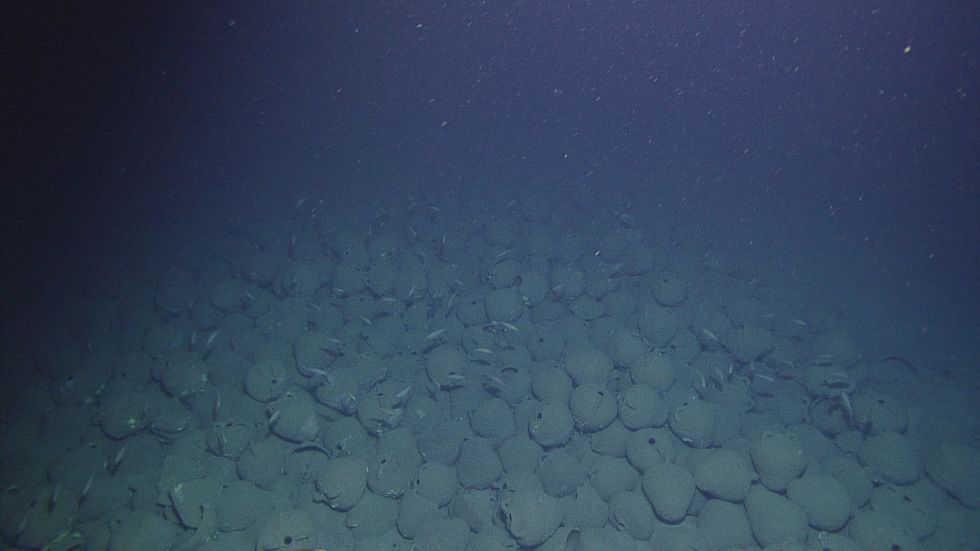
The large pile of jars suggests the shipwreck settled upright on the seabed
|OCEAN EXPLORATION TRUST
Knidos F and L come from the 10th century, when Byzantine trade was still growing.
It was then when the empire regained control of important sea routes after years of conflict in the eastern Mediterranean.
Trade expanded between Constantinople, the Aegean, southern Anatolia, the Levant, and Egypt.
The Gunsenin Type I amphorae has appeared throughout Egypt, the eastern Mediterranean, the Black Sea and northern Europe, being recorded at around 100 hundred sites.
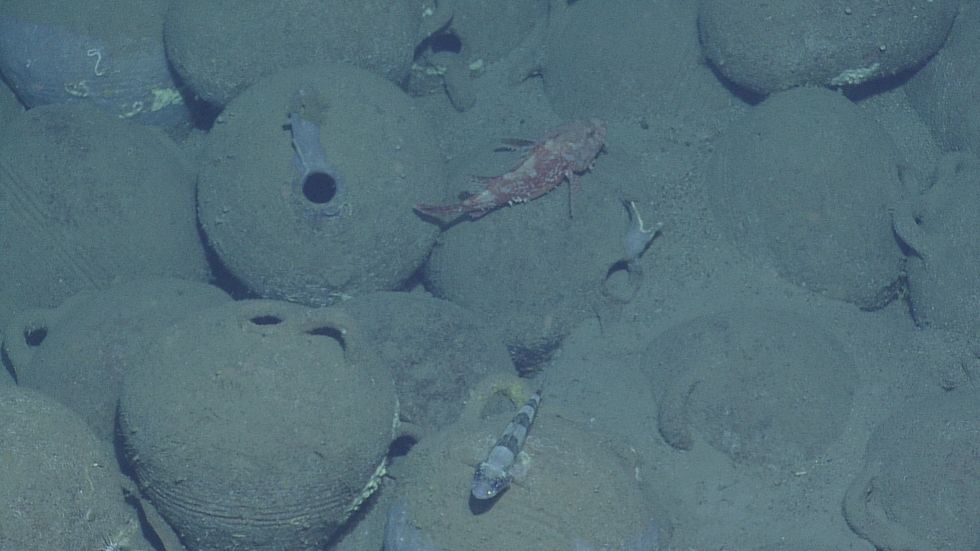
The Gunsenin Type I amphorae has appeared across the globe's maritime trading routes
|OCEAN EXPLORATION TRUST
The spread of the jar indicates strong commercial links across Byzantine shipping networks, with merchants moving good between ports large and small.
But regular maritime traffic decreased by the time Knidos N was making its way over the waves in the 13th century.
Byzantine influence over Mediterranean trade had by this time weakened, with the likes of Venice, Genoa and Pisa growing into a larger role.
Knidos N shows that ships continued to travel the Carian coast route, which linked the Aegean Sea, southern Anatolia, and ports further east along the Levantine coast.