

You are about to be charged £0.00






One billion users worldwide now rely on passkeys in WhatsApp.
For those who don't know, passkeys rely on biometric authentication — fingerprint scan, facial recognition — on your device to check your identity. Unlike traditional passwords, passkeys are resistant to online attacks like phishing since passkeys are based on your likeness.
Passkeys are more secure than one-time codes sent via SMS, leading Google executives to refer to passkeys as "the beginning of the end of the password", while National Cyber Security Centre – part of GCHQ — to caution millions of British citizens to switch to them.
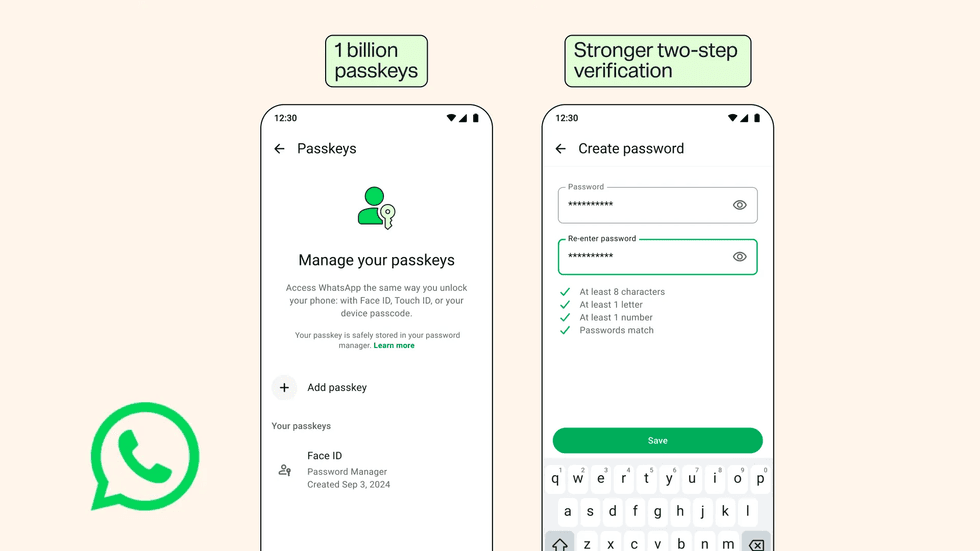
Passkeys now support multiple platforms, letting you bounce between an iPhone and Android device, while still keeping your chats secure — without the need for a password
|META PRESS OFFICE
WhatsApp claims passkeys are "the fastest and most secure way to verify it's really you, with no codes or PINs". With adoption picking up nicely, WhatsApp has added the ability to set-up more than one passkey to your account. For those who move between Android and iOS — for a work and home phone, for example — this update means you can secure messages on both devices with a biotmetric check, elimiating the need for an alpha-numeric password.
The update is rolling out now, just head to Settings > Account > Passkeys on each of the devices with WhatsApp installed to set-up the secure login method.
What if you're one of the roughly two billion WhatsApp users who don't (yet) rely on passkeys to secure the chat app? WhatsApp, which is owned by parent company Meta — the same Californian brand behind Instagram and Facebook, has increased protections for two-step verification.
Sometimes referred to as two-factor authentication, this is designed as an extra protection layer that helps prevent someone from taking over your account, even if they get hold of your one-time passcode.
Until now, it was only possible to use a six-digit PIN as the secondary password to unlock WhatsApp, but the world's most popular messaging service has now upgraded it to a full password: longer, alphanumeric, and even with special ch@racters to make it harder to guess. If you've been using "123456," this is your sign to upgrade.
Even if hackers get their hands on the one-time passcode sent to your mobile number, they won't be able to access all of your text messages, call history, photos and videos sent to individuals and group chats, and more, without the full alphanumeric password you've set as the two-step verification.
LATEST DEVELOPMENTS
In a blog post about the security upgrades, WhatsApp explains why it's so important to focus on these security upgrades.
It claims: "On WhatsApp, your conversations belong only to you and the people you're talking to. It's why we built end-to-end encryption by default, and it's why we continue adding new ways to keep your account secure and in your hands."
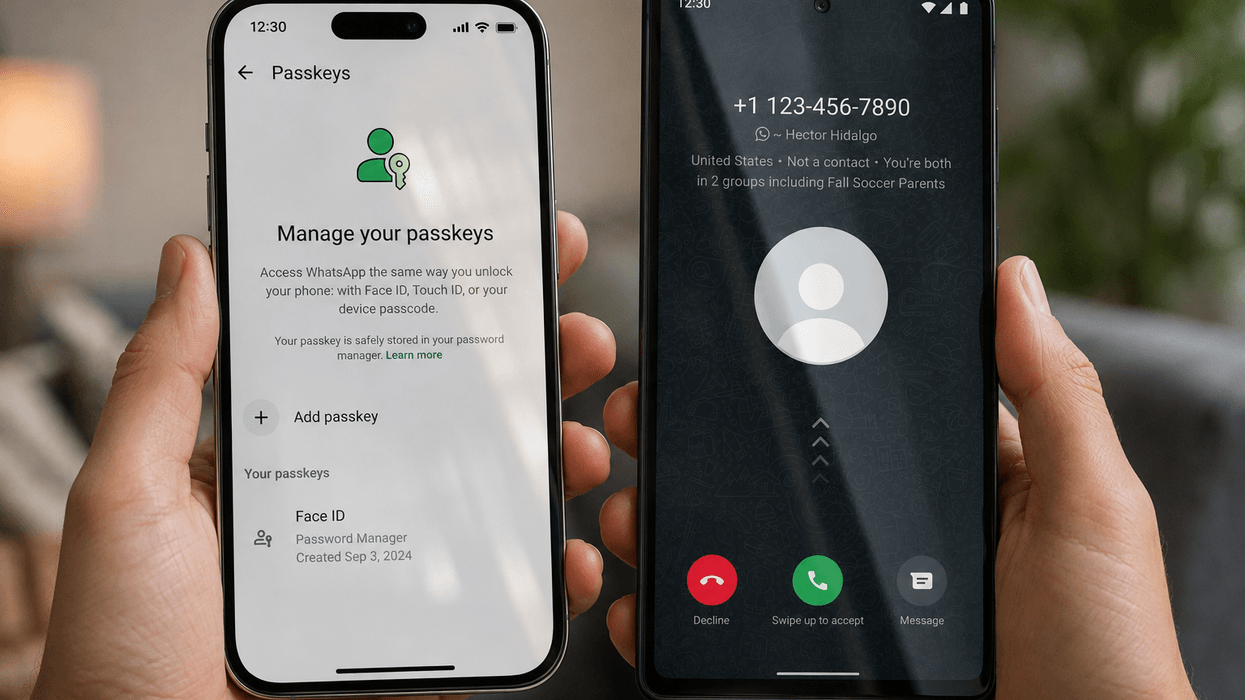
Lastly, WhatsApp is adding more context when you get a call from someone not saved in your contacts to help you decide whether it's someone that you want to speak to.
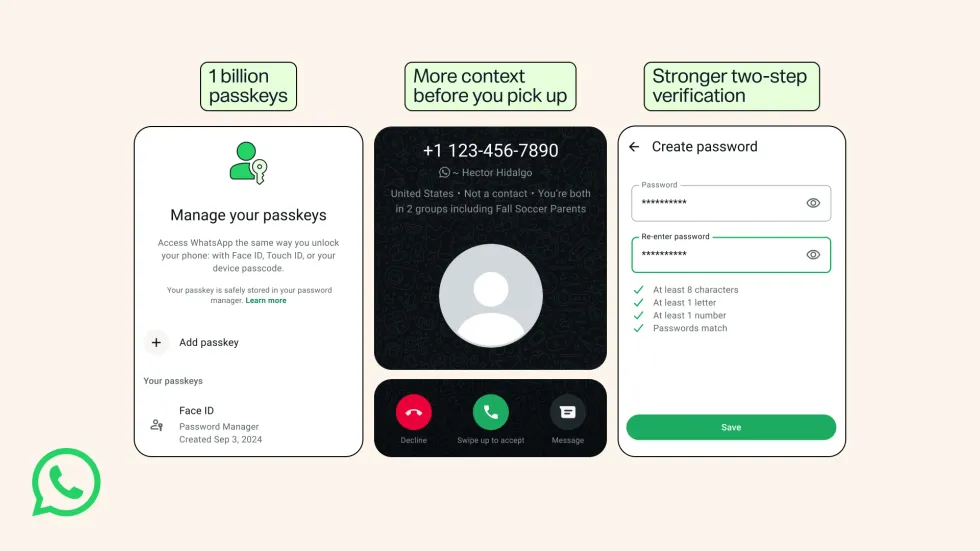
Starting on Android, WhatsApp will provide more context about an incoming call from an unknown number to help you decide whether you need to pick-up or not
|META PRESS OFFICE
On Android, you'll now see more information about a non-contact caller, like whether the number is from a different country and if you have any groups in common.
"Scammers rely on urgency – now you can take a beat with some more info before answering," WhatsApp warns.