Yesterday’s call showed he is still willing to give the new Prime Minister the benefit of the doubt, writes the US columnist
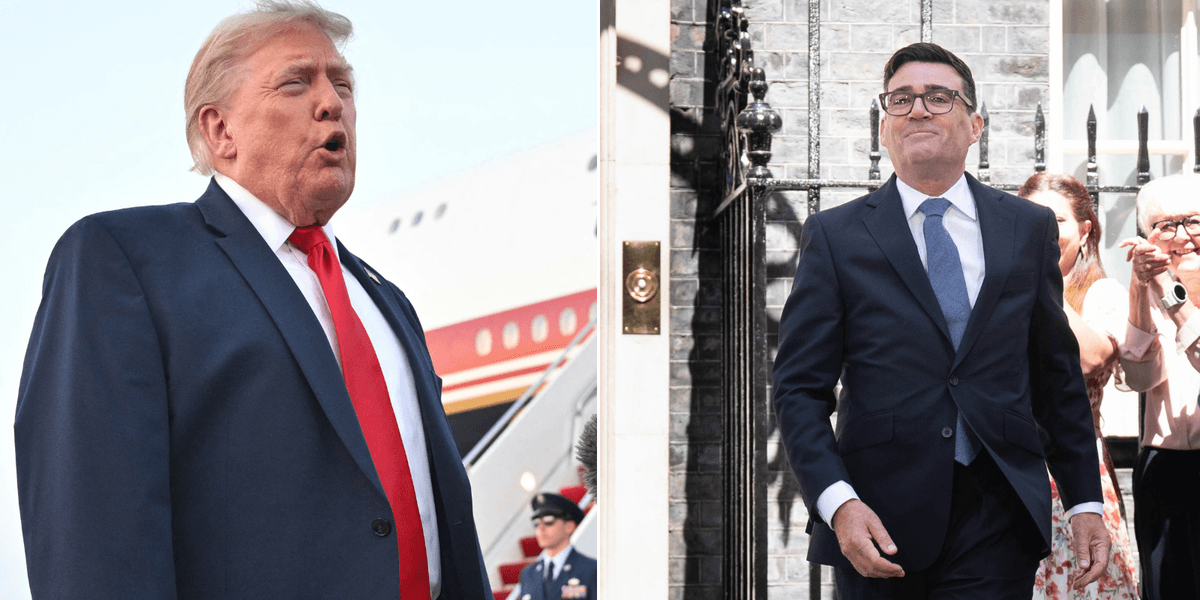
Donald Trump sounded optimistic after speaking with Andy Burnham yesterday.
The new Prime Minister reached out fast, extended an invitation to Manchester, gave clear assurances on defence and the Strait of Hormuz, and the President came away describing the call as “interesting” and going “very well”.
He wished Burnham good luck and godspeed and said America would be there to help. That is not the tone of a man who has written Britain off.
GB News was among the first to bring Mr Trump’s earlier assessment to wider attention.
Back in June he had called Mr Burnham “the mayor of a town” and “extremely liberal”, adding that this probably meant no new drilling in the North Sea. The contrast with yesterday’s warmth is sharp.
We have seen this before. Keir Starmer also began with a decent enough footing when Mr Trump returned to office.
There were early contacts and some measured language from both sides. Then the choices piled up — the reluctance on North Sea energy despite clear American advice, the handling of Middle East flashpoints, the immigration pressures that kept mounting without real resolution.
Mr Trump’s later comments grew sharper because the substance never matched the initial diplomacy.
The same instinct drove the Lord Mandelson appointment as ambassador: send a seasoned operator to smooth things over and buy time. It bought some access. It did not change the underlying drift.
My instincts tell me history is repeating itself in the Labour approach to Washington.
An early charm offensive buys breathing room. Then the ideological pull reasserts itself and the relationship settles back into friction.
Mr Burnham has the advantage of timing. He is starting fresh after Sir Keir's tenure left the Special Relationship more frayed than it has been in recent memory.
Free speech concerns had grown around policing and online rules.
Border control remained visibly inadequate in the eyes of many who still remember what sovereignty once looked like.
Two-tier outcomes in justice and public order had become hard to ignore.
These were not side issues. They signalled a country that had grown uncertain about its own inheritance and therefore less reliable as an ally.
Mr Trump has never hidden his belief that Britain can restore its former exceptionalism.
He has pointed repeatedly to the North Sea as an obvious source of strength and prosperity that was being left on the table.
He wants partners who project credible deterrence within Nato and who treat the Western alliance as something worth investing in rather than managing around.
Yesterday’s call showed he is still willing to give the new Prime Minister the benefit of the doubt on that front.
There is nothing wrong with reviving places that have felt left behind.
Britain’s constitutional story has always included layers of identity and initiative that sit alongside national purpose.
But at this moment the country also needs a clear centre that can speak with authority on borders, on energy realism, on the impartial rule of law, and on the institutions that once commanded respect at home and abroad.
If the charm offensive is followed by concrete steps in those directions, the optimism Mr Trump expressed yesterday could turn into something more durable.
As an American who has studied this relationship closely and advised on it to the US Congress, I still believe Britain can return to the role it played when the Special Relationship meant something tangible in Washington.
The foundations are there in its history, its people, and its constitutional inheritance. What has been missing in recent years is the confidence to act on them.
Mr Burnham has the opening. He benefits from the lesson of his catastrophic predecessor. He has shown he understands the value of getting in early.
The test will be whether he treats yesterday’s goodwill as the start of a real alignment or simply as cover while the old patterns continue underneath.
Mr Trump has given him space. The President sees potential where others see only decline.
If—and it's a big “if,” Mr Burnham uses that space to restore secure borders, pursue sound energy policy, and empower institutions that serve the nation rather than narrower causes, the Special Relationship can regain its natural force.
If he does not, we will be back to the same cycle of initial overtures followed by disappointment.
Britain still has time to choose the first path. Mr Trump’s tone after yesterday’s call suggests he is waiting to see which one it takes.