At risk of stating the bleeding obvious, you can’t bank savings from money that never existed, writes the former Chief of Staff to the Chancellor
Charles Dickens once gave us an enduring lesson in fiscal policy. “Annual income twenty pounds, annual expenditure nineteen pounds nineteen and six, result happiness,” declares Wilkins Micawber in David Copperfield. “Annual income twenty pounds, annual expenditure twenty pounds ought and six, result misery.”
Micawber, of course, never took his own advice. He preferred his other great maxim: something will turn up.
Forget Manchesterism; two days into his premiership, Andy Burnham is already governing as a fully paid-up Micawberite. On Tuesday he scrapped VAT on household electricity bills for six months from October, at a cost of £850million (about £45 off the price cap). That’s worth something like 80p a week.
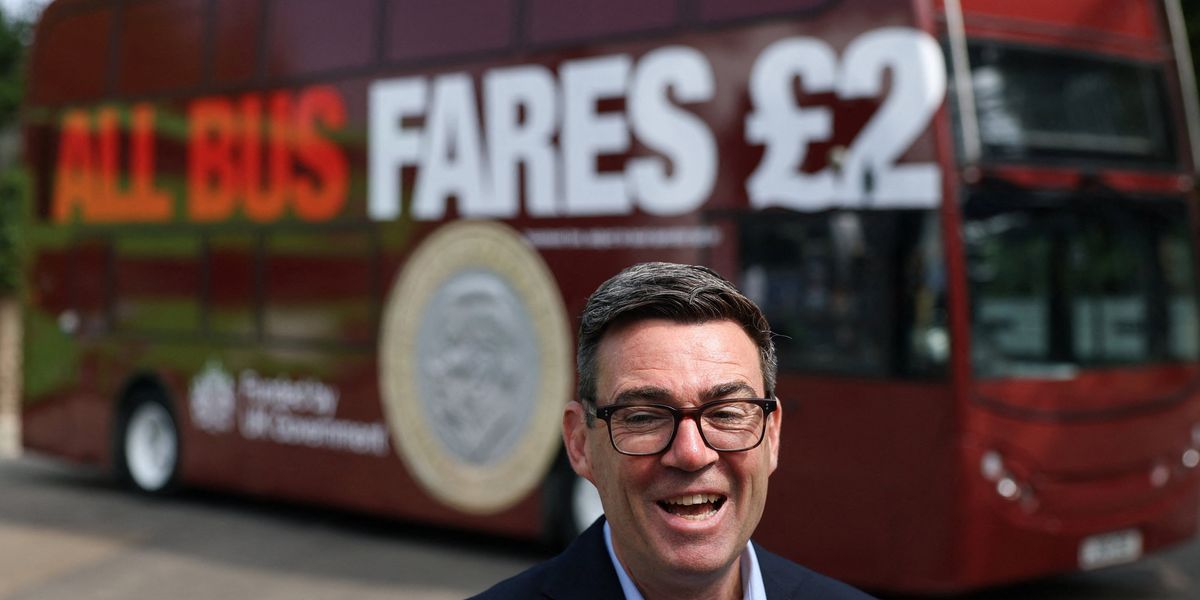
And today came a £2 bus fare cap across England from January, costing more than £500million. A cut to business rates for pubs and music venues is promised too.
No10 considers it bad vibes to ask how any of this is to be paid for. The VAT cut is apparently “funded” by scrapping digital ID.
But as Darren Jones MP pointed out (and he should know, having run the scheme until Burnham sacked him in the great Starmerite purge), digital ID was never funded in the first place!
The Office for Budget Responsibility had already flagged it as an unfunded pressure of £1.8billion over three years, with no offsetting savings identified.
At risk of stating the bleeding obvious, you can’t bank savings from money that never existed.
Kemi Badenoch put it neatly: “You can’t use the funding from an unfunded programme to pay for cheaper bills.”
Even on the Government’s own creative accounting, the £600million of claimed savings still leaves the pledge £250million short. On day two.
The buses are hardly any better. Some £400million is conjured up by switching some international climate finance grants to loans, with the rest scraped from “savings” at the energy department and money the Department for Transport had already earmarked for buses.
But this is still money that will be sent in the first place. Sending cash to developing countries for ‘international climate finance’ (read, Net Zero that probably goes to corrupt Government officials abroad, instead) is risky.
This is because it is unlikely they will ever pay it back. This is why grants are given instead of loans, to look generous.
Even if it is eventually recouped as a loan payment, the Government is still trying to pretend it can spend that money twice.
The truth is that all these policies are totally unfunded. And ‘unfunded’ is one of the deadliest words in politics. John Healey, the new Chancellor, insists there is “no burden to British taxpayers” in any of this. But Mel Stride is surely right about where it actually ends: tax rises in the autumn.
The deeper problem is one of habit. Burnham spent nine years as Mayor of Greater Manchester, a job whose currency is the announceable and whose money is largely raised by somebody else. Mayors lobby, spend, cut ribbons; the Treasury picks up the bill.
There is no higher authority for a Prime Minister to invoice. There is only the bond market. The same group that Andy Burnham showed himself up as ignorant of just a few weeks ago.
Broadly though, watching a country already spending more than £100billion a year just servicing its debts, more than the entire defence budget, and concluding more spending is the priority is, for want of a better word, plain mental. But gilt markets, unlike the Labour selectorate, cannot be won over with a bit of fake bonhomie.
They call Burnham the King of the North. He, of all people then, should remember that winter is coming.
It is called the Budget. And something will certainly turn up there, just as Micawber promised. It will be the bill. Dickens already told us the result: misery.