The new international project has secured a prestigious European Research Council grant worth 2.5 million
A major new international research initiative aims to shed fresh light on the origins of the Dead Sea Scrolls, using innovative AI tools to uncover secrets hidden for nearly 2,000 years.
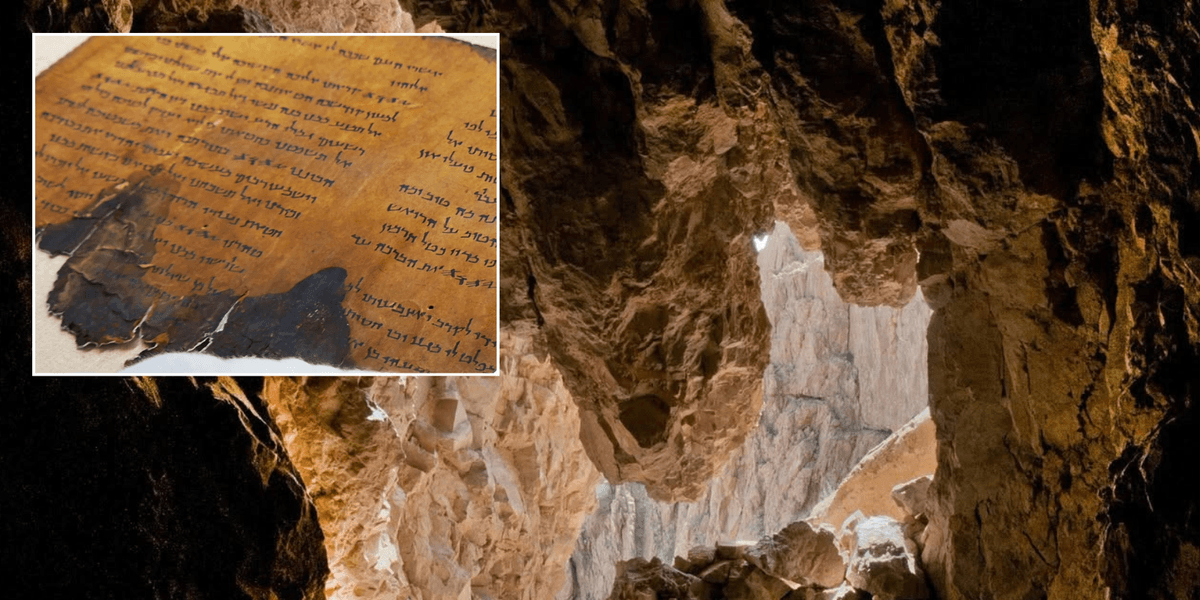
The ancient manuscripts include biblical texts and ancient documents dating from the third century BC to the first century CE.
Discovered in caves near Qumran by the Dead Sea between 1946 and 1956, they have served as vital historical artifacts for understanding early Judaism and the origins of Christianity.
The new project, led by Prof Mladen Popović from the University of Groningen and undertaken jointly with the Israel Antiquities Authority, has secured a prestigious European Research Council grant worth 2.5 million.
More than seven decades after the scrolls were first found, a central question about them remains unanswered.
For the first time, the team will bring together cutting-edge AI with chemical analysis and traditional manuscript scholarship in an effort to trace where exactly the ancient texts were originally produced.
Some 250 parchment and papyrus samples from the Dead Sea Scrolls collection, alongside Egyptian papyrus specimens, will undergo detailed examination.
Scholars have long debated whether an isolated Jewish community at Qumran authored at least a portion of the texts, or whether they may have been transported from scribal centres elsewhere in Judea, possibly even Jerusalem, and concealed in the caves during periods of threat.
A third possibility is that the caves functioned as a library or ancient genizah - a sacred store used to preserve Jewish manuscripts.
This new project hopes to bring researchers closer to resolving this longstanding puzzle, intending to uncover the material "fingerprints" of each manuscript.
The team hope to determine what the parchment and papyrus consist of, detecting compositional variations, and establishing to prove one theory or another.
Prof Popović said: "The study we are about to conduct is the largest study to date using AI to understand the cultural background of the Dead Sea Scrolls.
"The combination of advanced laboratory tests, manuscript research and artificial intelligence allows us to ask questions that could not be answered before."
The Dead Sea Scrolls contain, among other works, the earliest surviving copies of biblical texts.
They are currently preserved in the Israel Antiquities Authority's laboratories in Jerusalem.
Dr Illit Cohen-Ofri of the Israel Antiquities Authority said: "Each small fragment may contain important information about the raw materials, production methods, and history of the scrolls.
"The new scientific tools will allow us to study them from a broader and more precise perspective than ever before."
Beyond moving a step closer to pinpointing where the manuscripts were created, the project may shed light on the identities of those who wrote, copied, and studied them roughly two millennia ago.