Scholars at Florence University who previously identified arsenic in the duke's tissue remain firmly unconvinced
Scientists have uncovered the shock cause behind the death of an infamous Renaissance ruler.
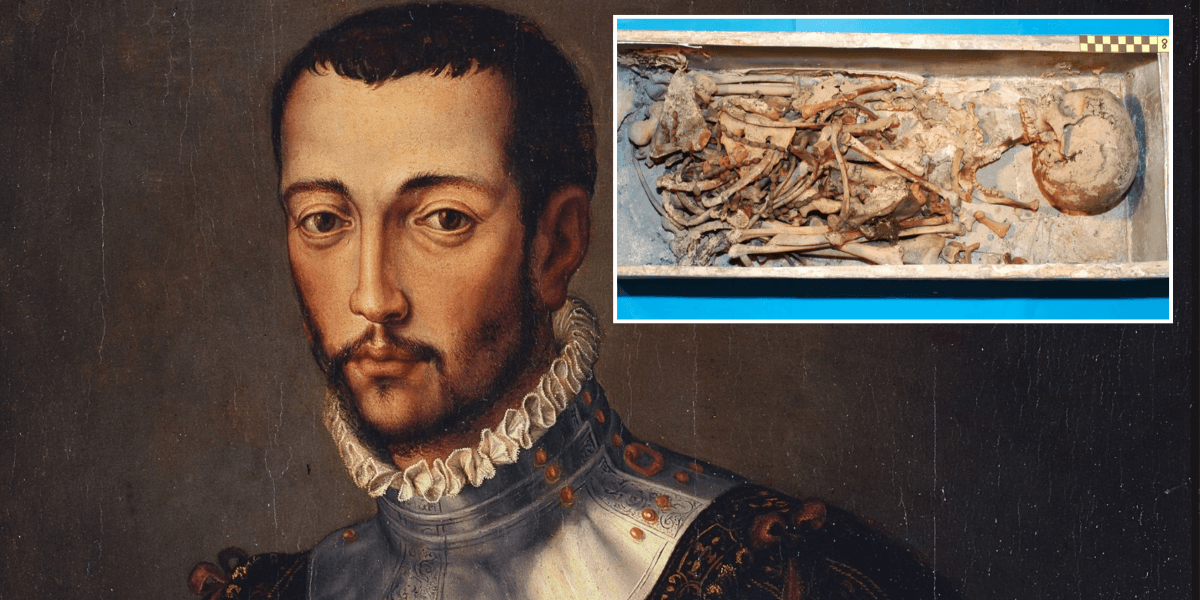
A fresh study conducted by scientists at Yale and Pisa universities has concluded that malaria — rather than arsenic poisoning — was likely responsible for the deaths of Francesco I de' Medici and his wife Bianca Cappello in 1587.
The Grand Duke of Tuscany and his Venetian spouse perished within hours of each other following 11 days of suffering, an episode that has fuelled speculation about foul play for nearly five centuries.
DNA analysis of bone samples has now revealed genetic traces of the plasmodium parasite, the organism responsible for malaria, in Francesco's remains.
Yet far from settling the matter, the research has sparked a renewed clash between rival groups of Italian academics over whether the couple died of natural causes or were murdered.
Scholars at Florence University who previously identified arsenic in the duke's tissue remain firmly unconvinced by the malaria explanation.
Contemporaries quickly suspected Francesco's younger brother Ferdinando, who stood to gain the most from the couple's deaths — and indeed succeeded his sibling as ruler.
The allegation that he orchestrated a double poisoning has persisted through the centuries, dividing historians ever since.
The bone samples analysed in the study were collected in 2004, when researchers opened the tombs at Florence's Medici chapels and temporarily exhumed 49 members of the dynasty.
Remains belonging to Francesco and his brother Giovanni both contained genetic markers of plasmodium, the mosquito-borne parasite that causes malaria.
The findings corroborated an earlier 2010 investigation that had detected signs of the disease using antigen and protein analysis, before modern ancient DNA techniques were widely available.
Crucially, the Poggio a Caiano estate was at the time encircled by marshland and rice paddies — ideal conditions for mosquitoes carrying the parasite to thrive.
"As scientists we need to look at the facts — we have malaria right in front of our eyes," said Serena Tucci, an evolutionary genomics specialist at Yale who led the research.
"The poisoning hypothesis sounds quite speculative to me — it lacks a lot of supporting evidence."
Valentina Giuffra, a medical history professor at Pisa who contributed to the study, added: "Doctors at the time had already diagnosed malaria: the symptoms were clear, but until now we had no conclusive evidence. With the DNA evidence, it's now quite certain."
The opposing camp at Florence University, however, points to physical evidence of its own.
Their 2006 study drew on historical records indicating that the couple's internal organs had been extracted during autopsy and stored in four terracotta jars at the Church of Santa Maria a Bonistallo, roughly two kilometres from the villa.
Researchers located fragments coated in dried biological material within the church's crypt and subsequent testing revealed arsenic in liver tissue that DNA analysis linked to Francesco.
Additional female remains discovered separately are thought to belong to Cappello, whose body has otherwise never been found.
Donatella Lippi, a medical historian at Florence University who co-authored the study, cited correspondence unearthed from the Vatican Secret Archive describing symptoms — a swollen neck, fever and tumefactions — consistent with arsenic poisoning, and seemingly implicating Ferdinando.
"There's an author who writes to him: 'Congratulations on those beautiful deaths'," she said.
Ms Lippi did not dismiss the possibility that the couple had contracted malaria, but rejected the notion that it was what killed them. "I have always maintained that malaria was endemic," she said. "But arsenic sent them on their way."
The acknowledgement that the disease was widespread in the region during the 16th century underscores the complexity of the dispute — both sides accept that Francesco may well have carried the parasite, yet they draw starkly different conclusions about its role in his demise.
Ms Giuffra, for her part, conceded that the argument was unlikely to be resolved imminently.
She said: "For us it ends here, this is the conclusive evidence. Some may not agree, but they will have to show evidence."