Thank you for subscribing!
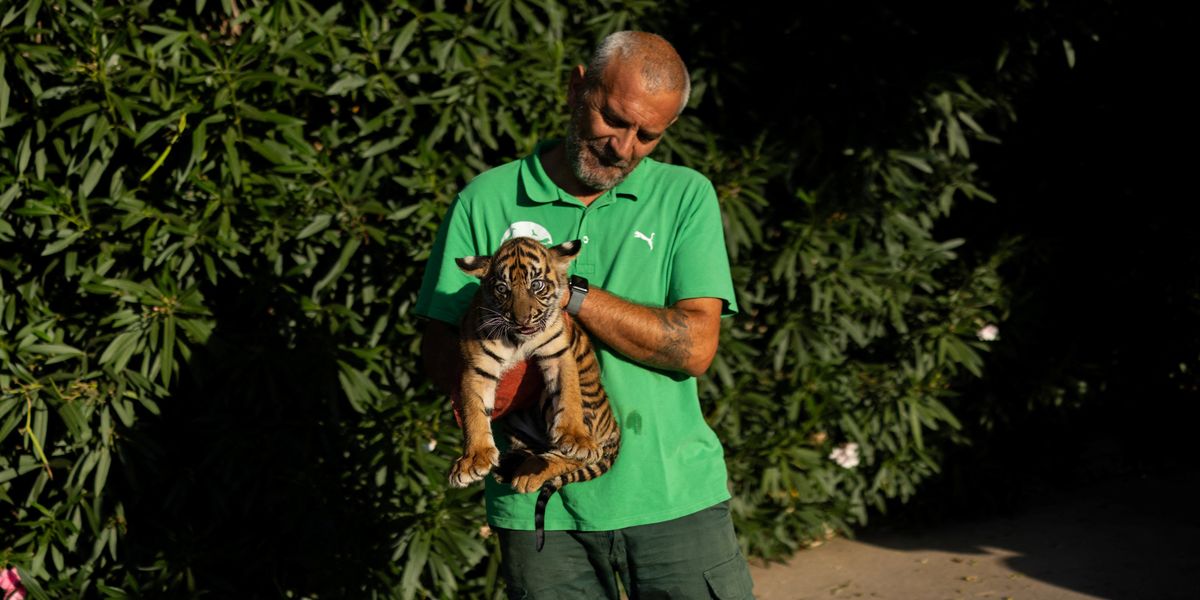
The cubs were born at Attica Zoological Park near Athens, Greece
Three two-month-old Sumatran tiger cubs have received identification microchips and their first vaccinations as part of a global effort to build a reserve population of the critically endangered species.
The cubs were born at Attica Zoological Park near Athens, Greece, in early July and were microchipped and vaccinated on September 8.
The zoo's Theodoros Babilis said zoos across Europe and elsewhere are maintaining a "safety population" to ensure there could be potential reintroductions of the species into the wild in the future.
Even at just two months old, Babilis said the cubs have already developed sharp claws and teeth, making them challenging to handle.
Zoo staff said the surviving cubs are expected to be named after characters from Homer's The Odyssey.
Fewer than 600 Sumatran tigers are believed to remain in the wild, with habitat loss caused by extensive forest clearing among the biggest threats to the species.
Found only on the Indonesian island of Sumatra, the Sumatran tiger is the smallest of the world's tiger subspecies and is classified as critically endangered by conservation organisations.
Tigers are successful in only around one in ten hunts, while a large deer can provide enough food for a tiger for up to a week.
Sumatran tigers have no natural predators other than humans, with poaching another major threat to their survival.
Hunters use snares or shoot the animals for their skins, bones and canine teeth, which are highly sought after overseas as status symbols and for use in traditional Asian medicine.
A report by TRAFFIC, Nowhere to Hide: The Trade in Sumatran Tigers, found that at least 50 Sumatran tigers were being poached each year between 1998 and 2002.
The illegal wildlife trade is worth billions of dollars annually and is widely regarded as one of the world's most lucrative forms of organised crime.
The international trade in live tigers and tiger body parts is banned under the Convention on International Trade in Endangered Species of Wild Fauna and Flora (CITES).
Despite the ban, Sumatran tigers continue to be targeted for their body parts.