Thank you for subscribing!
You'll need to spend more to upgrade to the newest Android phone from Google.
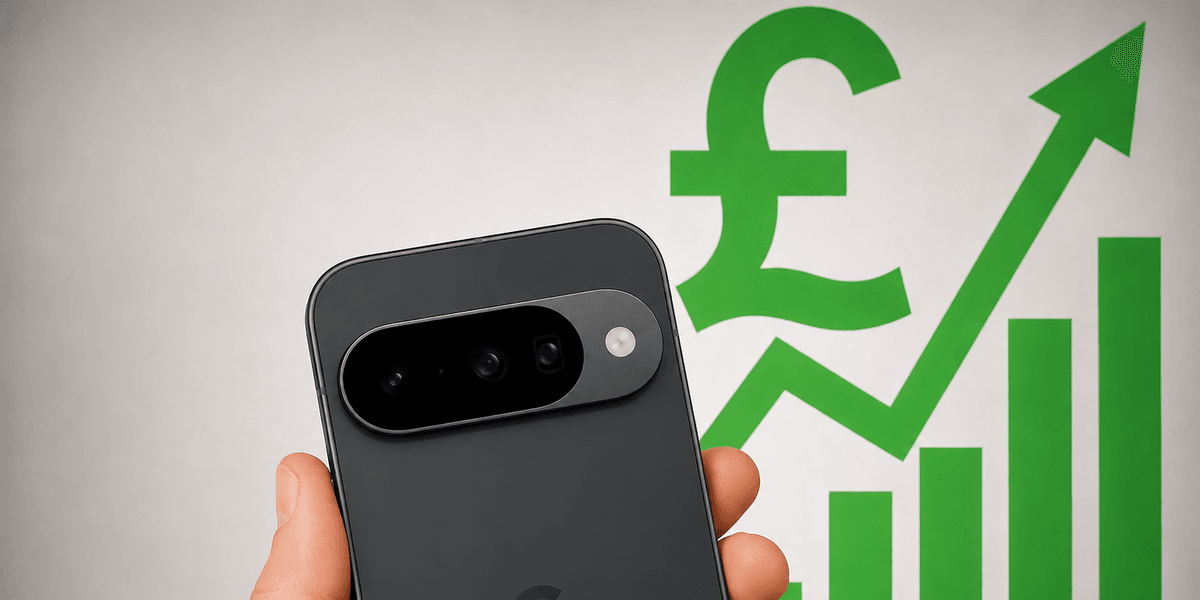
The Californian company has confirmed that its incoming Pixel 11 smartphone lineup will be more expensive than its predecessor. The next entry into the Pixel series will launch on August 12, so there's not long left to start saving.
Shakil Barkat, Google Vice President of Devices and Services, told 9to5Google the company had "shielded our consumers from supply fluctuations for as long as possible," but admitted that "economics have fundamentally shifted and we're not immune to that."
So what's behind this? It all comes down to a global shortage of RAM – the memory chips that power pretty much every modern tech gadget. The culprit is the massive boom in Artificial Intelligence (AI), with data centres gobbling up memory supplies faster than manufacturers can make them.
And several popular products have already been affected this year. Apple's entry-level MacBook Neo has undergone a higher price only a couple of months after its release. Sony's PlayStation 5 consoles experienced a second price hike within a year. The founder of British start-up Nothing also confirms that smartphone prices will rise this year.
According to Morgan Stanley data cited by Mr Barkat, the price of a single gigabyte of RAM has jumped from $2.80 (£2) in 2025 to a staggering $12 (£9) in 2026, that's a 5x increase.
Leaked retail pricing suggests the standard Pixel 11 could start at around £899 — £100 more than the Pixel 10's £799 launch price. The Pixel 11 Pro XL and Pixel 11 Pro Fold are both tipped to see a straight £100 bump as well.
There's a small silver lining for the base Pixel 11 and Pixel 11 Pro, though — while their starting prices go up by £100, the entry-level storage is expected to double from 128GB to 256GB.
One eyebrow-raising detail is that the Pixel 11 Pro may ship with just 12GB of RAM, down from 16GB in its predecessor, which appears to be a clear cost-cutting move. And it's not just new phones at risk. Mr Barkat hinted that existing devices like the Pixel 10a, currently priced at £499, could also face upward price revisions.
Google is trying to take the edge off these increases in a few ways. Mr Barkat confirmed to 9to5Google that trade-in offers, promotional deals, and bundled perks like Google One subscriptions will remain "a central part of how we make the Pixel lineup accessible."
Behind the scenes, the company is also working to make Android itself less hungry for memory. Mr Barkat mentioned a "dedicated effort" to cut RAM requirements across the operating system and app ecosystem, so future devices could potentially get by with less memory without sacrificing performance.
Google also pointed to its integrated approach — combining its own AI, software, and Tensor silicon — as a way to run on-device models more efficiently.