Thank you for subscribing!
The decision to switch off PlayStation consoles in protest did not get the desired results.
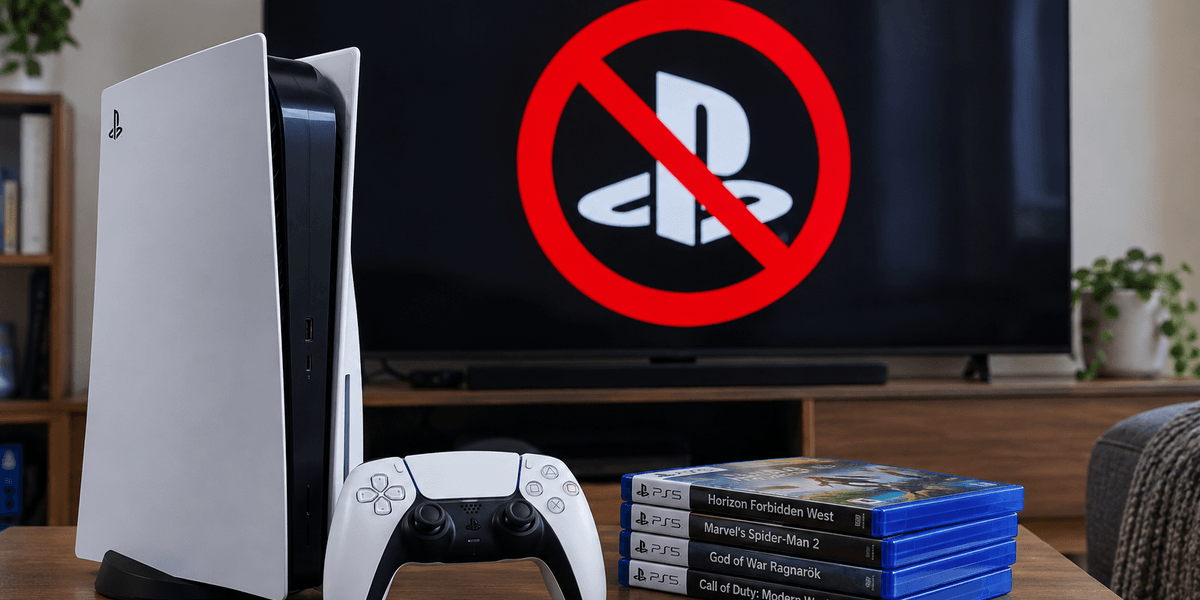
PlayStation gamers organised a week-long boycott from August 23-30, urging users to switch off their PS5 consoles entirely. The protest was a response to Sony's decision to stop making physical game discs from 2028 onwards — a move that left a lot of players fuming.
The campaign picked up plenty of noise on social media. Does It Play, an X, formerly Twitter, account, wrote: "Sony wants to abandon fans? Let's give them a small taste of their own medicine!
"Together with other creators, we call for a 1-week #PSBlackout in August. No logins, no play sessions, no purchases on any of Sony's platforms."
But according to Circana video game industry analyst Mat Piscatella, it didn't make much of a difference in the US. "There was no significant change at all in player count or engagement in our tracking," he wrote on Bluesky.
No. There was no significant change at all in player count or engagement in our tracking.
— Mat Piscatella (@matpiscatella.bsky.social) 14 September 2026 at 15:28
No. There was no significant change at all in player count or engagement in our tracking.
The reason? Sony has shifted over 93 million PS5 consoles globally, and the boycott appears to have only made up a tiny slice of that enormous player base.
A reader poll run by Push Square also found that 69% of respondents simply carried on using their PS5 as normal throughout the whole thing.
It also may not have helped that a blackout landed during a quiet spell with no major game launches, meaning there was less reason to play anyway and less impact when people didn't.
Sony has already been pushing through on its decision, addressing the controversy during its most recent earnings call, making clear it has no intention of reversing course.
Chief Financial Officer Lin Tao said: "When we think about the future, and we put in a lot of thought and time, and we cautiously considered this, and we came to this conclusion. And we’re going to cautiously move this forward."
She continued: "Games are loved by many people. It’s a form of entertainment that’s loved by people. It’s connected to people’s fond memories in many cases. We understand those emotions. We want to consider that, and in the future digital ecosystem, how… we engage the gamers is something that we would like to continue to explore.”
When asked whether the backlash was hurting the company, Ms Tao said. "At this point in time, we are not seeing any impact on our business."
For those still clinging to hope, there may be a lifeline. XBOX could be doubling down on physical media, with rumours suggesting its next console will still support discs. If that proves true, it could put pressure on Sony to rethink its stance, particularly if players start voting with their wallets.
There's also a growing row over what buying a digital game actually means. Sony recently argued in a class-action case that PlayStation Store purchases are revocable licences rather than permanent ownership.
The company issued the troubling warning in an email, which reminded players that digital purchases amount to little more than temporary software licences. The email, shared on Reddit's PlayStation Solutions forum, informed PlayStation console owners that they'd "recently accepted" various agreements with Sony, including an updated terms of service, code of conduct, end-user licence agreement, and privacy policy.
The email reads: "The Software is licensed to you, not sold.
"You are granted a limited, non-exclusive, non-transferable, and personal license to play or use the Software for your private, non-commercial use on the system or device it was intended for."
This means if your PlayStation Network account is banned, or a service is discontinued, your entire digital library could vanish without compensation.