Thank you for subscribing!
iPhone 18 Pro and iPhone 18 Pro Max are iterative updates to a winning formula Apple introduced last year.
That's not to denigrate these impressive new smartphones. Longtime iPhone owners will know Apple used to alternate between debuting a brand-new design and releasing an S-branded handset that would bring a serious tune-up to the same hardware — faster internals, better camera, longer battery life, and more.
While the iPhone XS and iPhone XS Max were the last to launch with the S moniker back in 2018, if the practice had continued, it's easy to imagine these new smartphones branded as iPhone 17S Pro and iPhone 17S Pro Max.
Introducing these new handsets, Apple Senior Vice President of Worldwide Marketing, Greg Joswiak, almost describes the core purpose of those S refreshes: "With iPhone 18 Pro, we’ve made advancements to the areas our users care about most: camera, performance, battery, and intelligence. And we didn’t just make incremental improvements in these areas — we took huge leaps forward to create the best Pro iPhone we’ve ever made."
In other words, if you didn't upgrade to the iPhone 17 Pro or iPhone 17 Pro Max, these new handsets pack everything that made those devices such a hit — but with new camera features, better battery life, and faster internals.
Resisted the upgrade last year? With the iPhone 18 Pro and iPhone 18 Pro Max, Apple has returned with a very persuasive counter-argument. And it's probably time to give in, especially if you've sat out the last few years.
iPhone 18 Pro & iPhone 18 Pro Max: 60-Second Review
Longer battery life, a camera with variable aperture for better low-light shots, and faster performance. Not to mention a clever new vapour chamber that keeps everything cool.
While the stunning iPhone Duo might steal the headlines, the new iPhone 18 Pro lineup is Apple’s most well-equipped smartphones yet. With superb cameras, a gorgeous display, endless power from the A20 Pro, and marathon battery life, these new handsets should finally convince you to upgrade.
And if the endless list of features doesn't, that burgundy finish definitely will.
What We Love
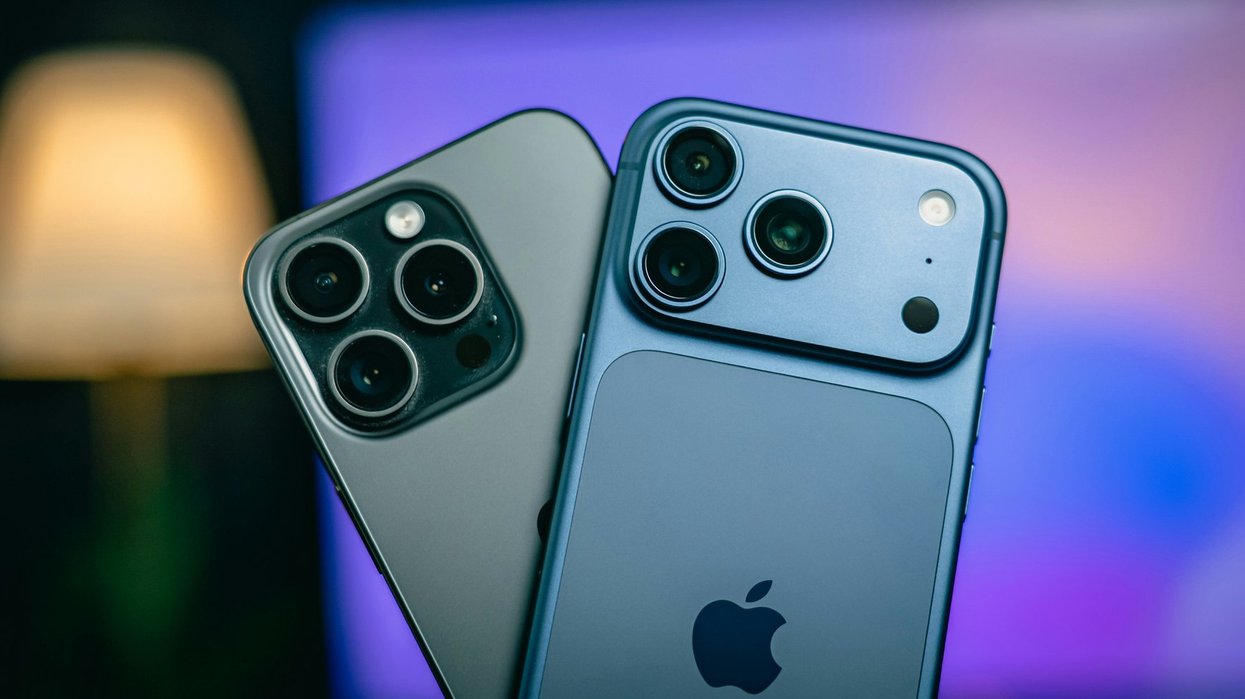
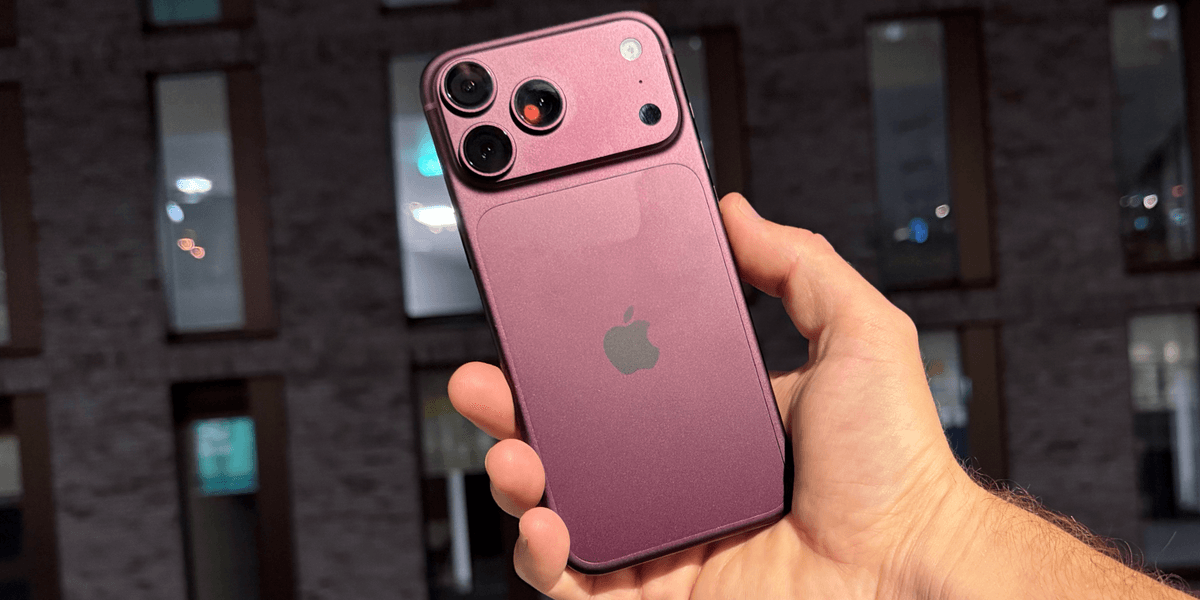
Apple introduced a brand-new design with its Pro models last September. We were big fans of the new look, which ditched the square camera module that had been a staple since the iPhone 11 Pro back in 2019 and replaced it with what Apple called the "plateau" — a raised rectangle that stretches across the top third of the rear case.
This (almost) entirely eliminates wobble when using your iPhone face-up on a flat surface. As someone who spends most of the week with an iPhone on the desk beside me, this was a big upgrade.
If you weren't a fan of the look of the iPhone 17 Pro and iPhone 17 Pro Max (some people really took against it), unfortunately there's nothing about the look of its successors to change your mind.
The iPhone 18 Pro lineup is available in either Black, Silver, Glacier, or Burgundy. The latter is a serious head-turner, and easily the standout colour this time around.
It's the first time Apple has ever used burgundy for any of its devices, and we really hope it's not the last.
If you bemoaned the lack of a black colourway last time around — the closest you'll find on the iPhone 17 Pro is a dark navy called Deep Blue — Apple has answered your call with the darkest black ever on a Pro iPhone.
Whatever colour you choose, the teams at Apple have better matched the glass panel, which occupies the lower half of the rear case and enables faster wireless charging — up to 50% in 30 minutes, with the unibody aluminium case than on its predecessor. It's most noticeable on the Silver, which looks closest to an unbroken case.
Apple ditched the titanium chassis found on earlier Pro models in favour of aluminium because the latter does a much better job at dissipating heat from the components that generate it, notably the supercharged new A20 Pro system-on-a-chip. While previous Pro models were known to get pretty toasty after prolonged periods playing games or editing 4K Dolby Vision footage, that isn't the case with the iPhone 18 Pro or iPhone 18 Pro Max.
That's largely due to the new vapour chamber, which uses thermally conductive materials and covers 3x the surface area as the first-generation design found inside the iPhone 17 Pro and iPhone 17 Pro Max. Despite the unprecedented power of A20 Pro, the iPhone 18 Pro's new thermal management system keeps everything cool.
In practice, that means you won't notice the device getting warm in your hand and won't see the screen dim or intensive tasks — like exporting high-resolution video or playing console-quality games — take a dip.
And it's worth taking a second to focus on just how powerful the A20 Pro really is.
There's an old cliché about modern smartphones being equipped with significantly more computing power than NASA had at its disposal when it landed humans on the Moon in 1969. To put the A20 Pro into perspective, the computer that helped Apollo 11 land on another planet ticked about 43,000 times a second.
However, a single performance core inside the A20 Pro ticks nearly 5 billion times every second, and there are five other CPU cores working simultaneously, plus dedicated graphics and neural processors specifically for AI tasks. In other words, there's a lot of oomph built into this two-nanometre chipset.
It's not only more powerful than anything at NASA during the Apollo 11 mission, but it's also more capable than the computers used for the Space Shuttle missions 11 years later. In fact, A20 Pro is more powerful than the custom-designed M1 system-on-a-chip that Apple created for the MacBook Air released in late 2020.
It's true. Your iPhone 18 Pro is significantly more powerful than a MacBook released just a few years earlier.
During our time with the iPhone 18 Pro and 18 Pro Max, nothing caused the A20 Pro to break into a sweat. We could edit 4K video filmed in 120-frames-per-second slow-motion, apply edits to multiple high-resolution photos at the same time, play Resident Evil Village – a game released on PlayStation 5 just a few years ago, and ask the all-new Siri AI to trawl through hundreds of thousands of photos and text messages to find a specific memory.
While this ludicrous performance is impressive — it's the sheer amount of headroom provided by the A20 Pro that really excites us. This laptop-lapping performance should ensure your iPhone continues to run smoothly for years to come. It should also mean you'll benefit from the latest software features for some time too.
With the launch of iOS 27, Apple will support iPhone models first released over 7 years ago — top-of-the-line Android handsets released around the same time typically only enjoyed three years of major operating system updates — and we'd hope the brawn of the brains inside the iPhone 18 Pro means this trend only extends in future.
The A20 Pro powers the brand-new Siri AI experience, which combines the smarts of ChatGPT with the ability to trawl through the text messages, emails, photos, notes, calendars, and reminders stored on your iPhone. Where possible, this takes place on-device in a few seconds, thanks to the processing power of the A20 Pro.
Tim Cook first introduced the idea of a truly personal assistant built inside your iPhone with the launch of Siri back in 2011. More than 15 years later, Siri AI delivers on that vision — you can read more about our experience with it here.
Battery life enjoys a dramtic boost with these new Pro models. According to Apple's internal tests, iPhone 18 Pro should endure 24 hours of use before you'll need to reach for the charger, while iPhone 18 Pro Max lasts 30 hours.
We unplugged the iPhone 18 Pro Max at 6am, streamed music for hours, answered WhatsApp messages, made an hour-long FaceTime video score, checked train times, and took some photographs.
By 9pm that evening, we'd only just dropped below the 50% threshold. With Low Power Mode enabled, we'd feel confident going away for the weekend without a USB-C charger.
iPhone 18 Pro and iPhone 18 Pro Max owners in the United States will benefit from even more battery life. Apple is selling an eSIM-only model that squeezes more battery into the space left by the SIM tray that was removed. Given that the iPhone Air sold in the UK is eSIM-only, we would've liked the opportunity to buy the same Pro models as US customers for those of us who value battery life over everything else.
When it's time to recharge, the improved wired charging take your iPhone 18 Pro or iPhone 18 Pro Max from 0-50% in about 15 minutes. That’s five minutes faster than iPhone 17 Pro, for comparison.
On the front of the iPhone 18 Pro and 18 Pro Max, Apple is again relying on its Ceramic Shield 2 glass. Introduced last year, it promised 3x better scratch resistance — and after a year of pocketing the iPhone 17 Pro Max, we can attest to its durability. Our screen remains pristine, even if the rest of the chassis around it isn't.
It's a welcome return, and we're confident it can keep the stunning Super Retina XDR Display on the iPhone 18 Pro and 18 Pro Max in perfect condition for the duration of your monthly contract.
The lavish OLED panels on these handsets offer cavernous blacks, bright whites, and vibrant colours. You should really binge-watch the atmospheric and gloomy Widow's Bay on this stunning screen, trust us.
If you're coming from an older iPhone, you'll notice the maximum brightness of 3,000 nits — that's the same as iPhone 17 Pro and iPhone 17 Pro Max — helps to never miss a detail, even when viewed in direct sunlight. That Super Retina XDR Display can also plummet to just 1 nit, that's the same amount of light emitted by a single candle, letting you check the time in the middle of the night without disturbing anyone else in the room.
Apple says it has added an anti-reflection coating on those screens. That might be true, but the effect isn't anywhere close to the transformative experience of the nano-texture display on the upcoming iPhone Duo.
You'll also benefit from ProMotion, which intelligently adjusts the refresh rate between 1Hz to maximise efficiency, up to 120Hz for buttery-smooth system animations and fast-paced gameplay. The Always-On display lets you check the time, real-time information on widgets, and notifications at a glance. Unlike many Android rivals, the Always-On experience on iPhone remains in full colour and even keeps a hint of your wallpaper visible.
Finally, Apple has shrunk the Dynamic Island on the iPhone 18 Pro and 18 Pro Max. If you have an older iPhone, this pill-shaped area at the top of the screen shows background activities, alerts, timers, and incoming notifications.
With the redesign, you can now track a maximum of three ongoing processes in the Dynamic Island — a 50% increase. This was only possible because Apple shifted some of the Face ID facial recognition system underneath the Super Retina XDR Display on the upper left-hand side, and while it is possible to see exactly where those critical components now reside, that's only if you stare at the display like a Magic Eye illustration.
Most of the time, it's unnoticeable, and the extra screen real estate is a welcome addition.
The camera has long been one of the biggest reasons to go Pro, and these new iPhone models are no exception. iPhone 18 Pro and 18 Pro Max ship with a variable aperture for the first time.
This is enabled by six laser-cut blades — each thinner than a single human hair — controlled by a precision rotor mechanism to expand and contract around the lens. By creating a larger physical opening, the iPhone 18 Pro and iPhone 18 Pro can let in more light for darker indoor scenes and speedier Night mode captures in better quality. These blades can also narrow the aperture to create a longer depth of field, keeping more of the scene in focus.
You can manually switch between ƒ/1.48, ƒ/1.8, ƒ/2.8, and ƒ/4.0. By default, the camera app automatically adjusts the aperture for the scene, based on ambient light, number of people in the viewfinder, and motion.
It really does work, but its impact can be subtle. Just because this leverages the same technology found inside a DSLR, don't expect these new iPhone models to replicate the results you'd get from those cameras.
In our tests, the depth of field was the most noticeable impact of these minuscule blades in the 48MP Fusion Main camera. By default, the iPhone 18 Pro camera will favour a nice natural bokeh. However, by manually altering the aperture, you can decide to keep the background in focus.
In side-by-side tests, the iPhone 18 Pro and iPhone 18 Pro Max are noticeably speedier at capturing shots in Night Mode, which forgoes the LED flash in favour of shooting multiple frames over a few seconds and using software to stitch them together for a natural photograph that looks closer to what you see with your own eyes.
If you're using Night Mode to capture photos of friends and family in dimly-lit restaurants, pubs, and concerts, that faster speed is sure to make a disproportionate difference when capturing the exact moment you're looking for.
Aside from the speed of the shot, the final results weren't too dissimilar from an iPhone 17 Pro. Of course, if you're coming from an iPhone 15 Pro or older, this new camera promises a massive leap.
The manual adjustment isn't just reserved for the new variable aperture, with iPhone 18 Pro and 18 Pro Max owners able to set the white balance and shutter speed too. If you know what you're doing, the latter can result in some stunning artistic snaps with light trails — expect the next Shot on iPhone campaign to be a real doozy — but if you don't have a clue, you're just as likely to scupper an otherwise perfect photo.
Like its predecessors, iPhone 18 Pro and 18 Pro Max owners can choose between 0.5x, 1x, 2x, 4x, and 8x for each snap or video. There's also a Macro mode for close-up shots that kicks in automatically when you're within 2cm of a subject. It's a pretty comprehensive camera system, and feels like a more natural progression in zoom compared to the 0.5x, 1x, 2x, and 5x found on earlier Pro-grade models.
There's a dizzying array of picture and video modes available to take advantage of the all-48MP triple-camera system, including Panoramas, Action Mode for GoPro-like stabilisation, Dolby Vision HDR video capture, Time Lapse, and future-proofed Spatial Video that records dimension from the scene.
Cinematic Video, which adds a Portrait Mode-style blur behind your subject in video, can be toggled after-the-fact for the first time, another benefit of the variable aperture. We've used Portrait Mode more frequently since Apple introduced the ability to apply it to any photo, and we anticipate the same to now be true with Cinematic Video.
The stellar 18MP Centre Stage front camera introduced with the iPhone 17 Pro lineup last year makes an extremely welcome return with its successors. This lets you take a landscape photo without adjusting your grip on the iPhone.
Holding the iPhone 18 Pro and, especially, the palm-stretching iPhone 18 Pro Max in portrait feels more natural and stable, with the shutter button resting naturally beneath our thumb, compared with the struggle of balancing the handset in landscape, with structural support duties falling to a precarious pinky finger.
Most of the time, you won't even need to manually enable the feature. Apple uses AI to automatically switch to a landscape-style selfie when it detects too many people are squeezed into the viewfinder. Video calls benefit from the same technology, keeping you positioned in frame even as you move around.
Rounding out the changes to the camera system, Apple has introduced its new Photographic Styles 3, which include texture and grain control for the first time.
Unlike the filters you'll find on Instagram, which are applied to a finished picture, Photographic Styles fine-tune specific elements — like skin tones — while preserving the natural look of other parts of the image.
You're making adjustments to the computational image pipeline, which makes thousands of decisions each time you press the shutter button on your iPhone. You can fine-tune the effect or ditch it completely, rather than being stuck with one blanket filter.
If you're not always a fan of the ultra-crisp photos produced by modern iPhone cameras, Photographic Styles 3's ability to smooth the texture of skin and add tactile grain you'd usually only get from an analogue camera will be a welcome addition. It all helps to make your photograph look less processed.
With digital camera sales on the rise as people look for alternatives to the heavy computational processing in most smartphone photographs, Photographic Styles 3 helps to add that same authentic, imperfect aesthetic to the camera you're likely to have on you most of the time.
What We Don't Love
While we've praised the Apple-designed aluminium 7000 alloy for keeping the iPhone 18 Pro and 18 Pro Max cool to the touch, even when its supercharged A20 Pro system-on-a-chip is crunching through AI tasks, it isn't as durable as the titanium used on the iPhone 15 Pro, iPhone 16 Pro, iPhone Air, and incoming iPhone Duo.
If you're prone to butterfingers, this unibody design — meaning the chassis is machined from a single, solid block of aluminium, like the MacBook — will dent if dropped without a case. Expect dints in the aluminium case if you frequently drop this iPhone on the pavement, with that stunning burgundy finish likely to chip away.
Unlike the titanium-built iPhones in the lineup, we'd recommend a case for the iPhone 18 Pro and 18 Pro Max.
It's quite a contrast with Ceramic Shield 2, which is incredibly durable. This clever glass — strengthened with colourless nano-ceramic crystals — swerves all of the scuffs and abrasions we usually see forming where it passes the rivet at the top of our jeans pocket on one of its many, many journeys in and out of the pocket.
Finally, iPhone 17 Pro and iPhone 17 Pro Max were already pretty pricey. But Apple has added £100 to the starting price of both handsets with the arrival of the iPhone 18 Pro and 18 Pro Max.
That means you'll be paying a minimum of £1,199 for the iPhone 18 Pro. If you want the larger 6.7-inch screen on the iPhone 18 Pro Max, you'll need to spend at least £1,299. That's a lot of money.
If you want one of these new Pro models with even more storage, you'll need to spend as much as £1,399 (512GB), £1,799 (1TB), or £2,399 (2TB) for the iPhone 18 Pro. For the larger iPhone 18 Pro Max, those prices increase to £1,499 (512GB), £1,899 (1TB), and £2,499 (2TB). Ouch.
Of course, this isn't just reserved to the new iPhones. Apple hiked the price of its most affordable Mac ever, the MacBook Neo, by £100 just a couple of months after its launch alongside a swathe of iPad and Mac models.
Google increased the cost of its new Pixel smartphones, and the latest Galaxy Z Fold devices from Samsung cost more than its predecessors. It's not just smartphones, either. Sony's bestselling PlayStation 5 consoles have undergone a second price hike in a year, with Microsoft following with a similar increase for its XBOX consoles and its laptops too.
You can point the finger at AI data centres, which are hoovering up huge numbers of memory chips, prompting manufacturers to prioritise the more lucrative components needed for AI over the ones used in smartphones, laptops, and consoles. That squeeze is pushing the price of individual components up — and those extra costs are increasingly being passed onto customers with higher price tags.
In an interview with The Wall Street Journal earlier this summer, then-CEO Tim Cook warned that "price increases are unavoidable" as he compared the spiralling cost of components to "a hundred-year flood". He explained: "I’ve never seen anything like it in any area in over 40 years."
Final Verdict
Longer battery life, a camera with variable aperture, and faster performance. Not to mention, a supremely clever new vapour chamber design that ensures the latter doesn't increase the temperature of the device.
While the stunning iPhone Duo might steal the headlines, iPhone 18 Pro and iPhone 18 Pro Max are the most well-equipped smartphones we've ever seen from Apple. From the incredible triple-camera system to the gorgeous Super Retina XDR display, the laptop-like power of the A20 Pro, faster wireless and wired charging speeds, the list goes on and on...
Whether you're looking for the best camera system on any iPhone, battery endurance worthy of an ultra-marathon, or powerhouse performance to enjoy the latest console-worthy games on the move, you won't be disappointed.
Granted, iPhone 18 Pro and 18 Pro Max seem like smaller, iterative updates when compared to last year, but most of us upgrade our phones every three or four years. If you're coming from an iPhone 15 Pro or older, these new handsets will feel like a massive step-up.
These new iPhones are properly Pro — powerful, polished, and packed with clever camera features. If you were planning to eke another year out of your current iPhone, the teams at Apple have made exercising that financial restraint a lot harder.